Sign in. It’s quick, free and it’s up to you.
An account is an optional way to support the work we do. Find out more.
Sign in. It’s quick, free and it’s up to you.
An account is an optional way to support the work we do. Find out more.
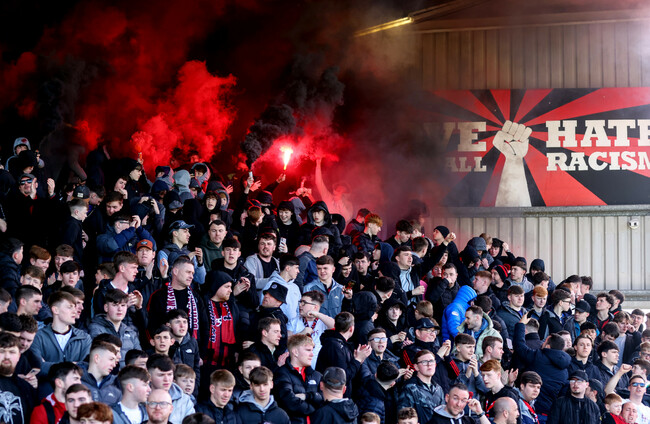
“THE BANDWAGON EFFECT has always been there,” says Dermot Looney, a historian of St Patrick’s Athletic.
When Dublin club St Pat’s achieved its record score – 10-3 against Dundalk in a League of Ireland fixture played at a greyhound stadium in Chapelizod in 1955 – there were just 100 people there to witness it.
That’s because up the road in Dalymount Park, 22,500 were at a match between Shelbourne and Waterford.
“The bandwagon had followed the famous players and the big game of the day,” Looney says.
“I think there’s still an element of bandwagoning with League of Ireland – and it’s great that it’s following us now. The challenge for League of Ireland clubs is to make it sustainable and keep the crowds – just because we have good crowds now doesn’t mean they’re always going to come.”
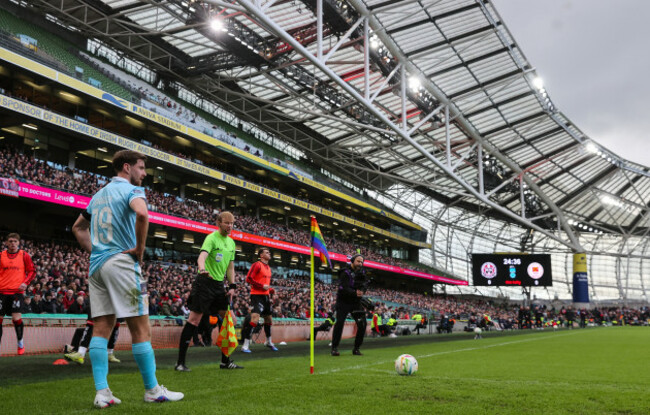
There’s no question that the League of Ireland is having a moment. Attendances have climbed rapidly since Covid – up 11% last year alone – and clubs are now enjoying a level of popularity not seen since the late 1960s, says Gerry Farrell, club historian of Bohemians.
Looking backwards, several factors were at play in the good health of the League of Ireland during what is now regarded as its golden era in the 1950s.
Low wages in English football – where a cap on earnings was in place until 1961 – meant some talented Irish players preferred to stay in the amateur game at home.
Arsenal put in bids for two St Pat’s players spotted by scouts in the 1954 FAI Cup final, says Looney. One of the players, Joe Haverty, went on to have a brilliant career in England. However, his teammate Fergus Crawford turned down the opportunity to play for Arsenal’s first team to finish his printer’s apprenticeship in Dublin.
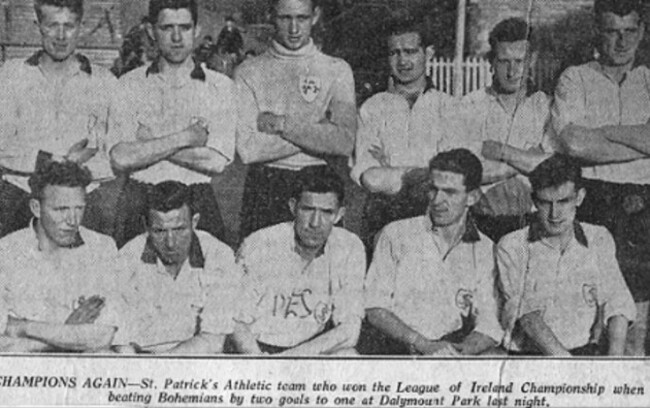
Farrell gives the example of Bohs’ 1960s captain Willie Young, a chartered accountant who turned down moves to Man City and Wolves because he’d have to take a pay cut.
The League of Ireland was also closely interlinked with the Irish national team in the 1950s and 1960s.
But perhaps the biggest factor in the League of Ireland’s last heyday was the lack of alternative entertainment options.
Between 1970 and 1979, attendances at Dublin football clubs dropped by over 70%, says Farrell – a trend almost certainly linked with the increase in television ownership over the same decade.
From there the decline continued. By the 1980s, a “gulf in class” between the English first division and the League of Ireland was apparent, he reckons.
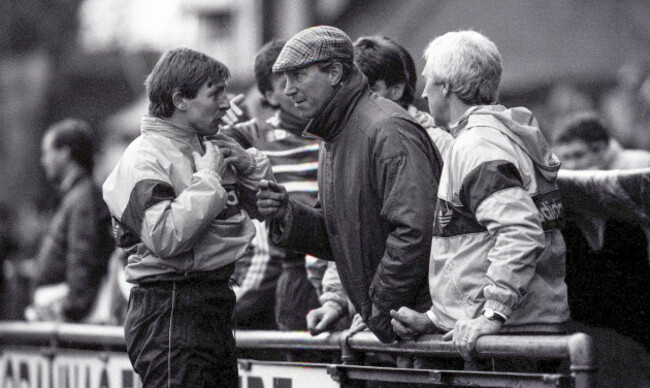
“Jack Charlton came in 1986 and the first couple of [Republic of Ireland] squads had a couple of League of Ireland players in them – Pat Byrne, Barry Murphy, people like that – and then he never selected a League of Ireland player to play the game in his nearly 10 years in charge.
“The crowds were tiny, the facilities were getting dilapidated.”
During the doldrum years of the 1990s and early 2000s, the League of Ireland and its remaining fans were probably seen by many as “a bit of a cult”, says Macdara Ferris, a reporter with ExtraTime.com and author of two books about Shamrock Rovers.
“Rovers got to a point when really, in the early 2000s, they had a hardcore fan base of about 500,” Ferris says.
You can’t run a league at that level where your crowds are just so low.
At that stage, Rovers were basically a set of jerseys and a bag of balls and whatever players we cobbled together for a squad that season.”
With attendances at Rovers’ home ground of Tallaght Stadium now averaging 6,000 per match, and Dublin derbies and European matches placed at close to capacity, what has changed? It seems ironic that a decline partly caused by the growth of television has gone into reverse at a time when on-screen entertainment options have reached saturation point – but the football historians reckon this is likely to be one of the push factors.
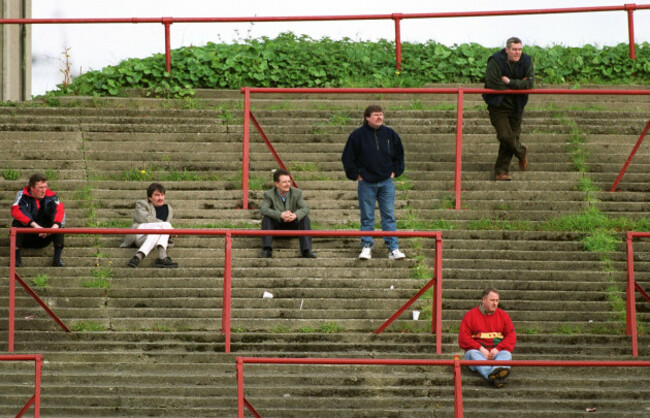
“The post-Covid factor can be underestimated,” says Farrell, who notes that the popularity of attending gigs and music festivals has also surged in recent years.
There may be more to watch on screen than ever, but this just seems to make people want more live experiences, not less. Demand for tickets in itself creates a type of self-fulfilling scarcity value.
“Tolka Park, Dalymount, Richmond Park are at capacity, they’re basically selling out for any of the big matches,” says Ferris. “So there’s a sense of occasion around the matches, you have to go and get your ticket ahead of time. Pre-Covid as an away fan you just turned up and paid cash in.”
Both Farrell and Ferris believe a desire from fans for authenticity has also sharpened the League of Ireland’s appeal to the current zeitgeist.
“There are an awful lot of people who are a bit disillusioned with the English Premier League – the cost and the ownership and the commodification of it. There’s something more authentic about League of Ireland,” says Farrell.
“I think the word authentic is correct,” says Ferris. “In the past there was this comparison between the Premier League and the League of Ireland. But the League of Ireland stands on its own merits now as its own competition and the Premier League is just so distant.”
He adds that the current format of a 10-team league is very competitive and keeps the stakes high throughout the season, with four teams vying for Europe right to the end. European money is very important for attracting players, which in turn attracts fans to come to games, he adds. Meanwhile at the bottom of the league, the threat of relegation also means there are meaningful games throughout the season.
There are some big differences between the League of Ireland now and when it last enjoyed this level of popularity in the 1960s – but maybe not as many as modern fans might expect. The most obvious difference was probably the poor quality of the pitch.
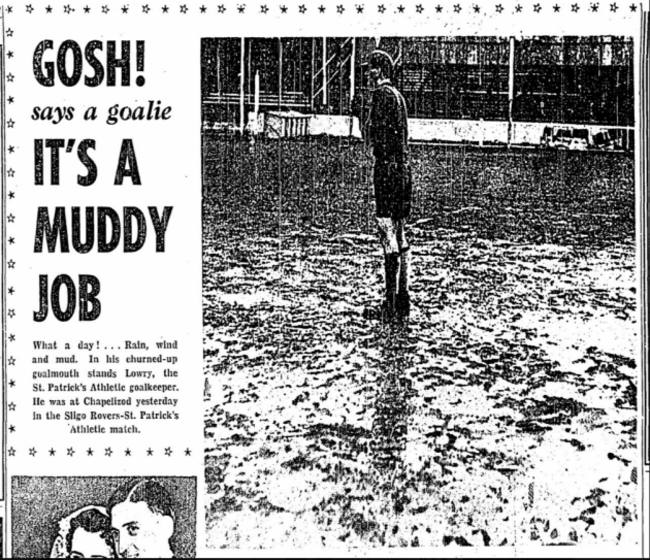
“There was a lot of mud,” says Looney. “For the wingers out on the wings where there was a bit of grass, there was a bit more of an opportunity to show a bit of skill. But the type of football that was used became very heavy in wet conditions, and the type of boots people wore and the style of football would have been really different to what we’re used to,” Looney says.
“But I’m often struck, when you talk to older fans who were at games in, say, the 1950s, they say it’s still the same game.
Fans chanted, fans booed the referee, they were delighted to see a piece of skill or a great goal and that would be the talk on the way home.
“So, in a way, it’s very different today but it’s still the same game.”
All three historians note that another thing that remains much the same is the facilities in which matches are played - something that may become one of the most limiting factors on the League of Ireland’s continued growth.
Looney says lots of tourists attend games in Richmond and Dalymount because they love the “old-school feel”, including the fact that there are still terraces.
“There’s a nice historic element to it, a nice charm to it – but ultimately it has to be better,” Looney says. “There’s infrastructure development required in terms of training facilities and everything else, not just the grounds.”
Farrell says: “If you had a time machine and brought someone from the mid-1960s to 2026, a Rovers fan would say ‘where’s Milltown and why are we in Tallaght, and what’s Tallaght?’ And they would be really impressed with this new stadium.
“But a lot of Bohs fans would probably recognise Dalymount Park. Pat’s fans would recognise much of Richmond. Tolka Park doesn’t look all that different than it would have in the 1960s and 1970s.
If you’re trying to encourage people to attend and watch these games, and build the credibility of our league, and you’re showing United Park in Drogheda and balls going over the wall into someone’s back garden, it’s not that sort of offering.”
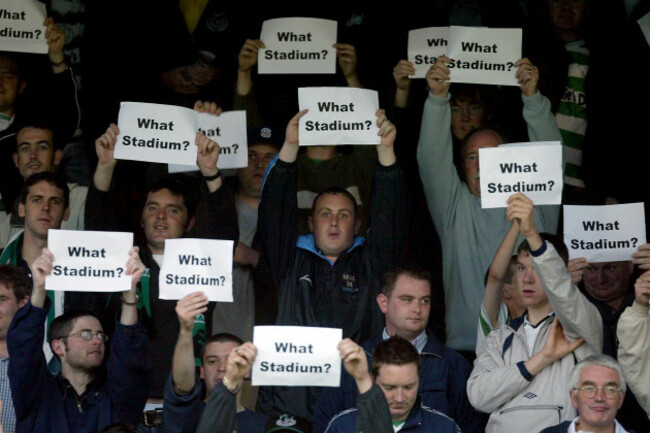
Long timelines are par for the course for any infrastructure project in Ireland, and sports grounds have been no exception. Tallaght Stadium was first proposed in the 1990s and opened in 2009, with the final stand not completed until 2024. Dalymount Park will close at the end of this season for a redevelopment that has been in the works since 2015.
Farrell says he is worried that the rising tide of League of Ireland support could ebb before facilities catch up to the point where the current potential for further growth can be fully realised.
Looking forward, there are other bright spots on the horizon, however.
Ferris highlights in particular the return of League of Ireland players to the Republic of Ireland squad, something which almost never happened in the 1990s and early 2000s. With post-Brexit rules preventing UK clubs from signing Irish players under the age of 18, talented young footballers who might have gone to England are now playing with League of Ireland academies and first teams.
“I think in five years’ time, the basis of the Ireland national team will be players that, if anyone has gone to League of Ireland grounds they’ll have seen them play for their team or the opposition team, more and more – the likes of Johnny Kenny, James Abankwah. That’s going to be a real positive for the League of Ireland,” Ferris says.
Transfer fees – Ferris gives the example of 18-year-old Rovers star Michael Noonan, who is likely to move to an English or continental Europe club for a couple of million euro – help to fund Irish clubs. Success in Europe is also an important source of income for clubs in recent years.
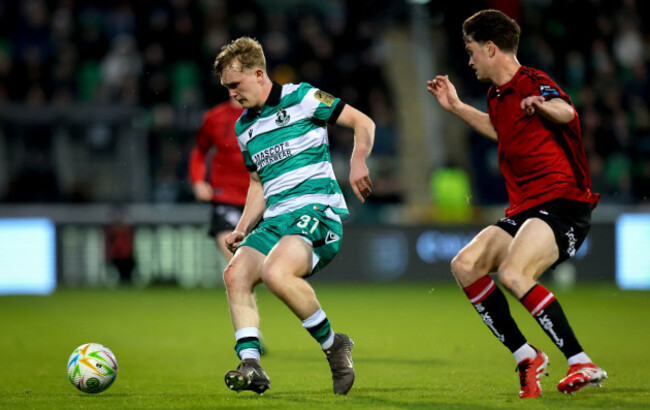
Ferris notes that Irish clubs are now very different entities to the “set of jerseys and bag of balls” of 20 years ago, with more teams, underage sides and women’s teams, all of which widens the fan base.
For Looney, staying close to this community is essential as the League of Ireland tries to sustain its current success: “I think in all the advancements that hopefully will be made, and all the money that will hopefully come into the game and professionalisation at all levels, we have to be very careful not to get too far away from the community appeal aspect of football here.”
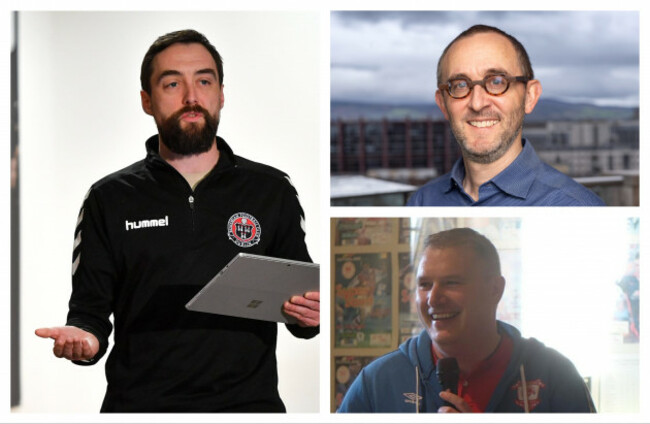
Gerry Farrell, Macdara Ferris and Dermot Looney will be in conversation with journalist Aidan Fitzmaurice as part of the Festival of Football History at Phizzfest, which runs from May 7-10.
Dermot Looney is the author of Saints Rising: The Early History of St Patrick’s Athletic FC. Macdara Ferris is co-author of From Ringsend to Tallaght – The Shamrock Rovers Players’ Stories and Tallaght Time: Shamrock Rovers 2009 to 2012. Gerry Farrell writes the A Bohemian Sporting Life blog.

To embed this post, copy the code below on your site











have your say