Sign in. It’s quick, free and it’s up to you.
An account is an optional way to support the work we do. Find out more.
Sign in. It’s quick, free and it’s up to you.
An account is an optional way to support the work we do. Find out more.
LAST UPDATE | 30 Aug 2019
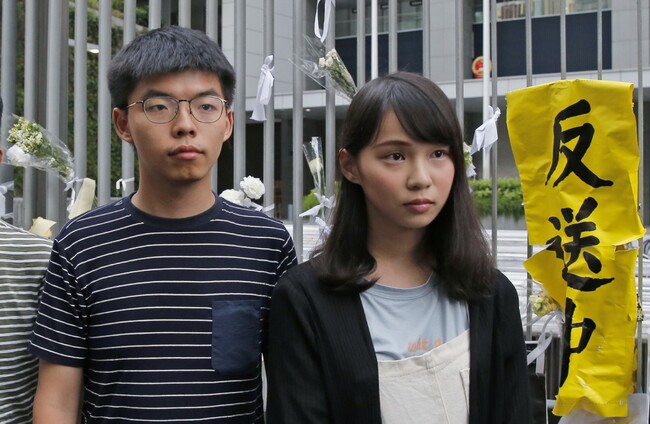
LEADING HONG KONG democracy activists Joshua Wong and Agnes Chow have been granted bail after they were arrested ahead of a planned rally in the city that has been banned by police.
Hong Kong has been locked in a three months of political crisis, with increasingly violent clashes between police and protesters that have prompted an escalating public relations campaign from Beijing.
Protesters planned yet another mass rally tomorrow – the fifth anniversary of Beijing’s rejection of a call for universal suffrage in the semi-autonomous city, a decision that sparked the 79-day Umbrella Movement in 2014.
Two of that movement’s leaders, Joshua Wong and Agnes Chow – both are well-known among the city’s youth – were arrested today, their party said.
Their arrests came just hours after the reported detention at Hong Kong’s airport of a vocal independence campaigner.
“Our secretary-general @joshuawongcf was just arrested this morning at roughly 7:30,” the party Demosisto tweeted.
The 22-year-old “was forcefully pushed into a private minivan on the street in broad daylight. Our lawyers following the case now”, it said.
Agnes Chow, also 22, was arrested at her home, Demosisto said, adding “we do not yet know what charges they are facing”.
Hong Kong police said they had arrested two 22-year-olds, naming them only as Wong and Chow, on suspicion of “inciting others to take part in unauthorised assembly” among other charges.
Both were granted bail hours following their arrests.
Isaac Cheng, the vice chair of the group, said the arrests are an attempt to spread fear and “white terror” among Hong Kong residents.
More than 850 people have been arrested in connection with protests since June, including prominent independence campaigner Andy Chan who was detained by police at Hong Kong airport last night.
Chan was stopped while trying to board a flight to Japan, the Hong Kong Free Press website reported, which cited a police spokesman saying he was suspected of rioting and assaulting an officer.
Chan’s small independence party was outlawed last year on the grounds it posed a national security threat, the first such ban since the former British colony returned to Chinese rule in 1997.
The party numbers only a few dozen members, but Beijing sees calls for independence as an absolute red line.
Defy the ban?
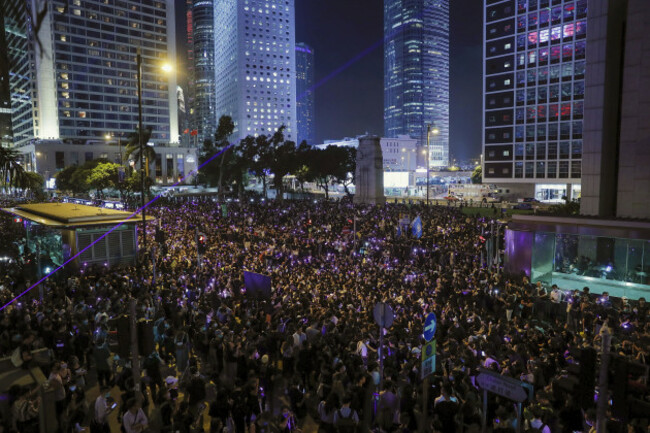
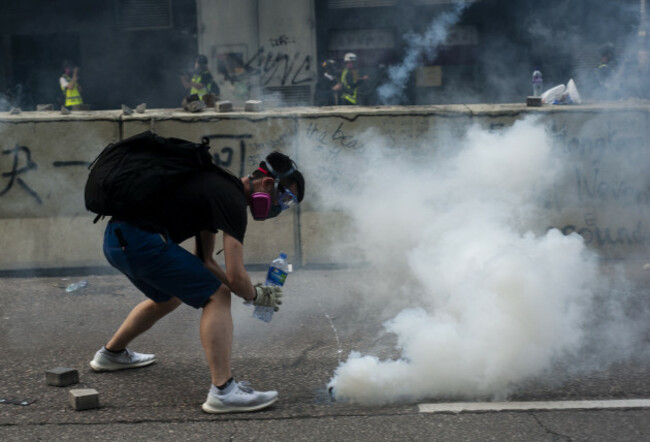
The arrests come as Hong Kong’s crisis-hit government scrambles to find an appropriate response to the unprecedented pro-democracy protests, which have by turns seen millions march, closed the airport and left city streets strewn with bricks and shrouded in tear gas.
The protests started as a kickback against a bill allowing extraditions to mainland China, but quickly billowed out into wider calls for democracy and police accountability.
Permission for another mass rally tomorrow was denied on security grounds, raising the likelihood of another weekend of clashes between police and protesters.
In a letter to rally organisers the Civil Human Rights Front (CHRF), police said they feared some participants would commit “violent and destructive acts”.
This morning, Jimmy Shan, a key organiser of the avowedly peaceful group, said the rally would be pulled for safety reasons if an appeal to police fails.
But a hardcore minority among the protesters, mainly young students, are unlikely to heed the police ban, setting up another weekend of violent clashes.
Student protester Kelly, who wanted to be identified only by her first name, said the arrests would not cow the movement.
“The police think there are leaders behind the protests and this will stop us. We are our own leaders and we will keep coming out.
“The government doesn’t understand this.”
Last Sunday, the city saw some of its worst clashes, with running battles between black-clad protesters, armed with bricks and Molotov cocktails, and police wielding batons, rubber bullets and tear gas.
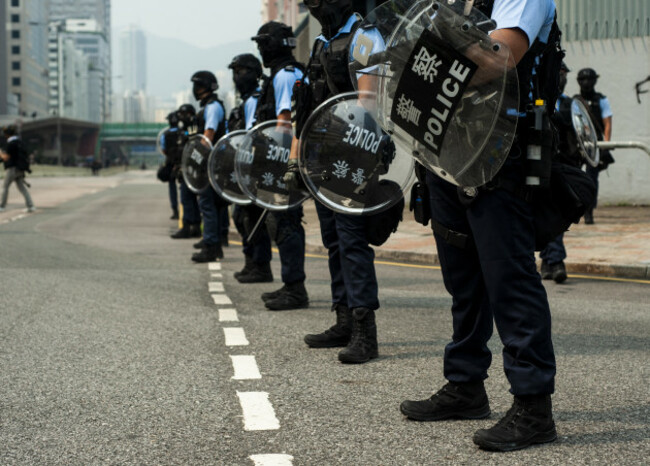
One officer fired a warning shot – believed to be the first live round used during the protests – as a mob with sticks set upon several policemen.
The violence has shredded Hong Kong’s reputation for stability and prosperity.
China has responded with a campaign of intimidation, with a slick PR video released yesterday showing troop movements into Hong Kong as part of “routine garrison rotation”.
Protesters say freedoms in the semi-autonomous city, unique within China, are being eviscerated by Beijing.
Under the terms of the 1997 handover deal, the city has rights and liberties unseen on the mainland, including an independent judiciary and freedom of speech.

To embed this post, copy the code below on your site










have your say