Sign in. It’s quick, free and it’s up to you.
An account is an optional way to support the work we do. Find out more.
Sign in. It’s quick, free and it’s up to you.
An account is an optional way to support the work we do. Find out more.
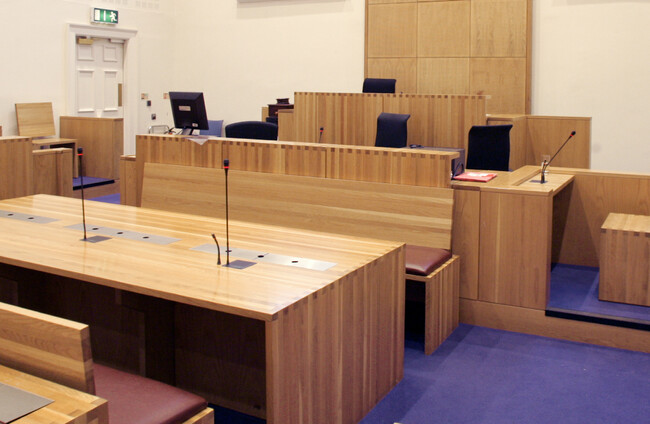
THE IN CAMERA rule in family law and child care cases “impacts people’s right to have access to justice”, according to a senior law lecturer.
In Ireland, family law cases are generally heard in camera, meaning privately. The rule exists in these proceedings, such as domestic violence or child custody disputes, to prevent those who are involved from being identified publicly when they are before the courts.
It also restricts what can be shared with others about the cases and who can access documents associated with the cases.
Dr Aisling Parkes, who is an expert in international children’s rights and child law, told The Journal that the rule also results in a lack of transparency and a lack of oversight of what goes on in family courts, as well as a silencing of survivors.
She was speaking at the launch of a Women’s Aid report on how survivors of domestic abuse experience navigating Ireland’s family law system.
The extensive report highlighted how survivors are re-traumatised by having to go through the legal system, while also underlining the lack of “appropriate mechanisms” that exist to allow the voices of children to be heard.
According to the report, many survivors felt that the in camera rule “compounds abuse and causes harm”. Others said that it affords protection to judges, legal professionals and abusers, but not adult and child survivors of abuse.
Parkes told The Journal that if a family law case comes before a new judge in court, “they may not be privy to information already heard in other courts” because of the in camera rule.
“The difficulty there is, if you’re trying to represent the best interests of the child, you need to have all of the facts. You need to have all of the information, but you may not necessarily be privy to it because of the rule.”
Parkes, along with Dr Simone McCaughren and Dr Kenneth Burns, authored a report on the in camera rule in family law proceedings. The report, which was commissioned by the Department of Justice, was published last month.
The rule comes into place once legal proceedings begin, meaning that anything discussed in court cannot be discussed outside. But according to Parkes, this “has grown arms and legs” and also extends to any documentation from the proceedings.
Her report found a difference of opinion between judges on when the in camera rule ends, with some thinking that it only lasts while a child is a minor and others believing there is no expiry date on it.
It also found that some judges believe that you have to return to court after a case has concluded to ask that the rule be lifted. This includes if a person involved in a case wants to speak to a professional, or to share information about the case with a child’s school.
“If you want to go back to court, you have to pay for a solicitor. If you don’t qualify for legal aid, but you’re not earning a whole lot of money, that can be really, really difficult. To me, that’s blocking your access to justice,” Parkes said.
McCaughren told The Journal that their report found the rule had been used as a “tool” by perpetrators to further abuse victims.
“If somebody wants to mess with the system, for example, with child maintenance, they know their name is not going to be listed publicly, so they use it to further oppress, to further abuse,” she said.
“Because the cases aren’t linked, and there isn’t one judge per family, it means that abusers know that they’re going to get away with it, and ultimately, that’s what’s happening.”
During the launch, Parkes also spoke about court ordered assessment reports – or Section 32 reports.
These are done to help a judge assess how a child’s welfare is being impacted, and to guide their decisions around access, custody and guardianship in family law and child care proceedings.
The reports must be paid for by the parties involved in a case. They are also subject to the in camera rule.
There are two types of Section 32 reports: ‘voice of the child’ reports, which take on board the views of a child for the purposes of proceedings, and child welfare reports, which takes account of any issue that could impact a child.
Parkes said that while there is a statutory instrument that sets out who can undertake a ‘voice of the child’ report, the child welfare reports can be done “by anybody”.
“You don’t have to have any qualifications,” she said. “We would have interviewed people who had level six qualifications in a related profession that were doing those Section 32 reports. No training in relation to how to interact or engage with children. We don’t even know if they’re vetted.”
The Women’s Aid report states that the court assessors who currently undertake the reports “are a wholly unregulated profession with no quality assurance or regulatory framework governing their operation”.
The launch heard of one case study from the report where a court assessor had only met a child on one occasion before writing a Section 32 report in a case that involved domestic abuse.
“I’m a parent, and if you came in as a stranger to meet my children, they probably would say very little to you,” McCaughren said. “They certainly would want to get to know you and trust you and build a rapport in order to say anything that was of substance.”
Parkes said that Article 42A of the Constitution states that children have the right to be heard and have their views considered in court cases that affect them.
“Judges have admitted that they rely heavily on the Section 32 report for that purpose,” she said. “The problem with that is, if it’s not quality assured, then how authentic is the voice of the child in those proceedings?”
Justice Minister Jim O’Callaghan has already committed to reforming family law, including the in camera rule.
Speaking at a Family Justice Development Forum in April, O’Callaghan said the rule has “restricted knowledge and understanding of how private family law justice is administered in practice”.
“The absence of scrutiny and public surveillance can lead to reduced standards and quality of service which a litigant is entitled to expect from legal practitioners,” he said.

To embed this post, copy the code below on your site














have your say