Sign in. It’s quick, free and it’s up to you.
An account is an optional way to support the work we do. Find out more.
Sign in. It’s quick, free and it’s up to you.
An account is an optional way to support the work we do. Find out more.
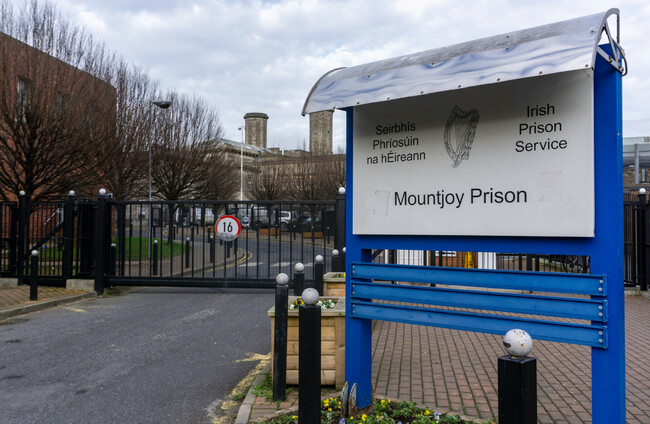
THERE WERE 213 prisoners sleeping on mattresses on the floor due to overcrowding at the end of 2024, the annual report on the Irish Prison Service has revealed.
It’s a 156% increase on the previous year, illustrating the growing prison population and the urgent need for expanded capacity.
The daily average number of prisoners in custody rose to 4,941 – 349 more than in 2023. At year end, the population hit 5,001.
In 2024, 8,704 people were put in custody, a 9.6% increase on 2023. Of these, 77% of sentence committals were for 12 months or less, while there was an increase in in the number of Judges and the number of court sittings continue to place pressure on prison capacity.
In Budget 2025, the government allocated €525 million to the prison service, an 18% increase from the previous year.
Justice Minister Jim O’Callaghan recently announced funding of €495 million for major infrastructure projects at Castlerea, Cloverhill, Mountjoy, Portlaoise, Wheatfield, Midlands, Dóchas Centre, and the former Cork prison site.
Caron McCaffrey, Director General of the Irish Prison Service said the last two years “have demanded a great deal from the Irish Prison Service, perhaps more than any point in recent memory”.
“We’ve faced a steep rise in committals, longer sentences, and population levels that have stretched our capacity far beyond its limits.
“These pressures have not only tested our operations, they’ve tested those who work and live in our prisons.”
The Irish Prison Service is mandated to accept all individuals committed by the Courts and, as such, does not have discretion over the number of people entering custody at any given time.
It has meant that in 2024 there weren’t enough beds and some prisoners had to be accommodated on mattresses on the floor, which the service said is regrettable.
“Our work is not just about managing numbers, it’s about transforming lives, promoting rehabilitation, reduce re-offending and help individuals lead law-abiding lives in turn creating safer communities,” McCaffrey continued.
“That’s our mission, our purpose that drives us, even on our most challenging days.”
In recent years, the prison service has rolled out the Recovery College Framework, an educational, non-clinical model for mental health and addiction recovery.
Dublin remains the most common county of origin (34.1%) of those imprisoned. Some 11.6% of those committed have no fixed abode.
Three quarters of commitals were Irish nationals.

To embed this post, copy the code below on your site














have your say