Sign in. It’s quick, free and it’s up to you.
An account is an optional way to support the work we do. Find out more.
Sign in. It’s quick, free and it’s up to you.
An account is an optional way to support the work we do. Find out more.

 InvestigatesSoil Invaders
TEN YEARS AGO, rhododendron in the Knockmealdown Mountains hit the headlines as being a problem when a couple in their 50s got stuck in a very dense forest of it and had to be rescued.
This plant covers much of this area and visitors go there to see the pink blanket of flowers when they bloom every summer.
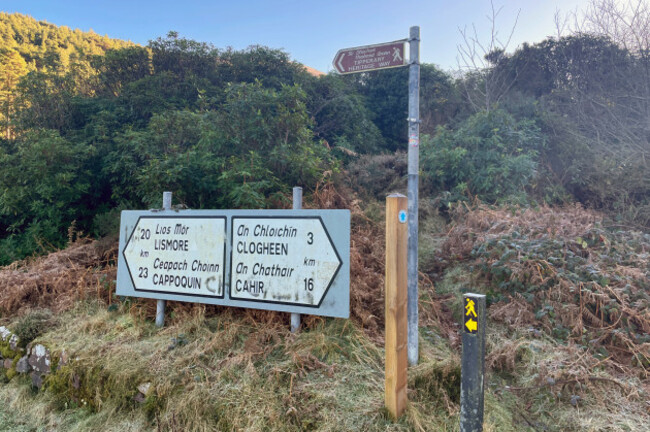
“People come from all over the country just to witness it,” local Liam Fleming from Clogheen in Co Tipperary told The Journal Investigates.
To encourage people to do more than drive through and take a photo, Fleming and an organising committee set up the Rhododendron Walking Festival which runs every June.
Tipperary County Council supports the walking festival with a community grant. At the same time the council is spending thousands each year tackling invasive species.
As well as guided walks, this event attracts walkers with “delicious food and entertainment… and of course the stunning scenery especially with the rhododendrons in full bloom”, according to one of its social media posts.
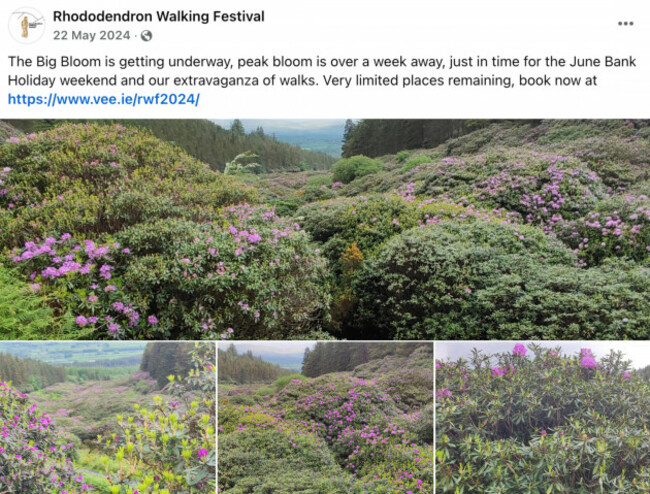
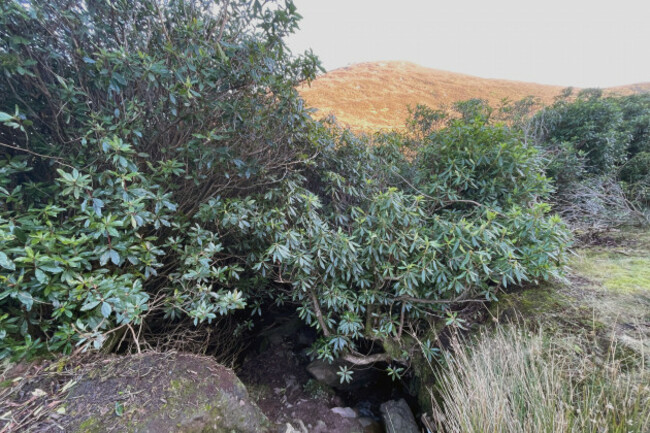
But though it looks pretty, this is one of the most invasive species impacting rural Ireland. Without management, it forms dense dark thickets, outcompeting native trees such as oak and hazel.
“Yes it’s beautiful. Yes it’s a tourist attraction in places,” according to the National Biodiversity Data Centre’s webpage on the plant, but “it severely impacts on many of our woodland and bog areas” and “slowly kills our woodlands”.
Not only are they bad for our local ecosystems, it was estimated over ten years ago that invasive and non-native species cost the Irish and Northern Irish economy €261m a year.
Management of invasive species, including rhododendron, are a huge financial drain on councils and public bodies.
Over €245k was spent by Tipperary Co Co alone on the management of invasive species over a four-year-period from July 2020 to August 2024.
From records we obtained through an Access to Information on the Environment (AIE) request, this was mainly on the spraying of Japanese knotweed.
When asked about helping to fund a festival named after such an invasive species, the council did not respond in time for publication.
Neither the council nor the festival organisers would detail the amount of money given to the festival, but Fleming said that it was “very little” and most of their funding comes from walkers.
Is the festival celebrating the rhododendron? Fleming said that they have “done plenty of workshops to educate people” about the plant.
That includes a ‘Leave No Trace’ programme where they tell attendees not to spread seeds and to wash boots after they come out of an area, he added.
“Even in our own area, most people wouldn’t be aware that they’re an invasive species. We’ve educated a lot more people.”
Fleming is not aware of any active rhododendron eradication programme in the area where the walks are run. “A variety of stakeholders” would need to be consulted for this to happen, he said.
The walking festival developed from a community enterprise, Siul Eile, whose aim is to bring communities together to form walking programs and challenges.
Fleming said that people “come on walks but were coming back for the social connection”, something he said was often gone in rural Ireland.
Our full Soil Invaders series on the impact of invasive plants is out now >>
Reporter & Editor: Maria Delaney • Additional Research: Anthea Lacchia • Social Media: Sadbh Cox

To embed this post, copy the code below on your site















have your say