We need your help now

Support from readers like you keeps The Journal open.

You are visiting us because we have something you value. Independent, unbiased news that tells the truth. Advertising revenue goes some way to support our mission, but this year it has not been enough.

If you've seen value in our reporting, please contribute what you can, so we can continue to produce accurate and meaningful journalism. For everyone who needs it.

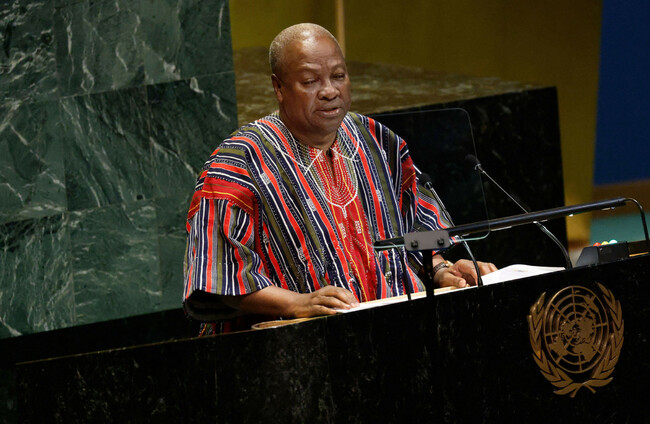
President of the Republic of Ghana John Dramani Mahama at the UN General Assembly in New York. Alamy Stock Photo

Ireland abstains in UN vote on slavery over concerns about 'hierarchy of atrocities'

Argentina, Israel and the United States voted against the resolution.

IRELAND ABSTAINED FROM a vote on a UN resolution about the atrocities of the transatlantic slave trade during a session of the General Assembly in New York last week. 

The ‘Declaration of the Trafficking of Enslaved Africans and Racialized Chattel Enslavement of Africans as the Gravest Crime against Humanity’ passed as a UN resolution with the support of 123 member states out of 193.

It recognised the more than 400-year-long trade as “the gravest crime against humanity” and also endorsed the need for preparations to be made to the African countries as “a concrete step towards remedying historical wrongs”.

The transatlantic slave trade involved the capture and enslavement of an estimated 12 million people from Africa who were transported to the Americas between the 16th and 19th centuries. 

It was the largest forced migration in recorded human history. 

It is estimated that more than two million people died on the forced journey across the ocean. 

The resolution was brought forward by Ghana on behalf of the 54-member African Group at the General Assembly last Wednesday 25 March, International Day of Rememberance of the Victims of Slavery and the Transatlantic Slave Trade. 

The Abolition of the Slave Trade Act was passed in the United Kingdom on 25 March 1807. 

Ghana was one of the main points of departure for slave ships leaving the African continent and the campaign for reparations has gained momentum in recent years – reparatory justice was the official theme of the African Union in 2025. 

The resolution said the transatlantic slave trade represented the gravest of crimes “by reason of the definitive break in world history, scale, duration, systemic nature, brutality and enduring consequences that continue to structure the lives of all people through racialized regimes of labour, property and capital”.

Speaking ahead of the vote, Ghana’s President John Dramani Mahama said: 

“Today, we come together in solemn solidarity to affirm truth and pursue a route to healing and reparative justice.”

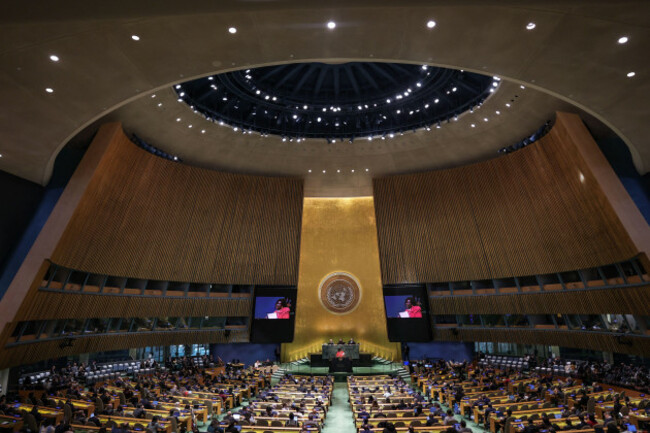
new-york-new-york-usa-25th-mar-2026-wide-angle-view-of-the-general-assembly-hall-as-shahaddah-jack-first-youth-poet-laureate-of-toronto-recites-a-poem-on-the-commemoration-of-the-abolition-of-s The UN General Assembly in New York on the day of the vote Alamy Stock Photo Alamy Stock Photo

All European members of the General Assembly, as well as a handful from Asia and former British colonies like Australia, New Zealand and Canada, abstained. Argentina, Israel and the United States voted against the resolution. 

Asked by The Journal why Ireland had abstained from the vote, a spokesperson for the Department of Foreign Affairs said that there were concerns about a number of aspects of the resolution. 

The department recognised that slavery and the slave trade, including the transatlantic slave trade, “were appalling episodes in the history of humanity”. 

“At events, including at the UN General Assembly, we recognised the immense tragedy, brutality and inhumanity of the slave trade and demanded abolition of all forms of modern slavery,” the department said. 

“Ireland and our EU partners also welcomed the initiative of the African Union to bring a focus to this important issue through a resolution.”

Despite this recognition, the spokesperson said that Ireland and other European states took issue with the wording of the resolution, specifically its use of the superlative adjective, “gravest”. 

“Unfortunately, the text put to the General Assembly for a vote was challenging in a number of respects, including its suggestion of a hierarchy amongst atrocity crimes,” the spokesperson said. 

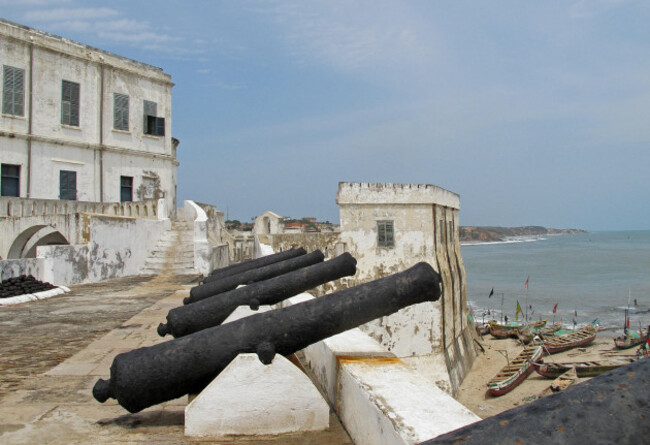
slave-castle-old-gold-and-slave-trading-centre-cape-coast-castle-cape-coast-ghana-february Cape Coast Castle in ghana, one of many slave forts that dot the country's coastline Alamy Stock Photo Alamy Stock Photo

The department also said that “other elements of the resolution were either inaccurate or inconsistent with international law”, without specifying which elements.

“Regrettably, for these and other reasons Ireland and our EU partners were not in a position to vote in favour of the resolution,” the spokesperson said.

“Out of profound respect for the subject matter and its complexities, Ireland and all EU member states abstained on the resolution.”

The department said that “a range of proposals had been made by EU and other partners throughout the negotiation process, in an attempt to agree a text that emphasised the scale of the atrocity of the transatlantic slave trade, the importance of remembrance, and the need to continue combating slavery in its contemporary forms”, adding that Ireland “remains committed to this important work”.  

The UK’s deputy ambassador to the UN, James Kariuki, voiced similar concerns about the wording of the resolution, specifically about creating “a hierarchy of historical atrocities”. 

As for those countries that voted against the resolution, the US representative to the UN Economic and Social Council, Dan Negrea, said the text was “highly problematic in countless aspects”. 

He said the UN “was not founded to advance narrow, specific interests and agendas, to establish niche International Days, or to create new costly meeting and reporting mandates”. 

He also said the US “does not recognise a legal right to reparations for historical wrongs that were not illegal under international law at the time they occurred”. 

Kiruiki of the UK similarly said that retroactive application of contemporary law to historical crimes was not supported by international legal precedent, although he acknowledged that in negotiations African countries repeatedly said the resolution (which is not legally binding) was not intended to be a legal document. 

Britain was one of the major powers the benefited financially from the transatlantic slave trade.

Ghana’s foreign minister, Samuel Okudzeto Ablakwa, told the BBC last week:

“We are demanding compensation – and let us be clear, African leaders are not asking for money for themselves.

“We want justice for the victims and causes to be supported, educational and endowment funds, skills training funds.”


Readers like you are keeping these stories free for everyone...
A mix of advertising and supporting contributions helps keep paywalls away from valuable information like this article. Over 5,000 readers like you have already stepped up and support us with a monthly payment or a once-off donation.

Close
JournalTv
News in 60 seconds