Sign in. It’s quick, free and it’s up to you.
An account is an optional way to support the work we do. Find out more.
Sign in. It’s quick, free and it’s up to you.
An account is an optional way to support the work we do. Find out more.
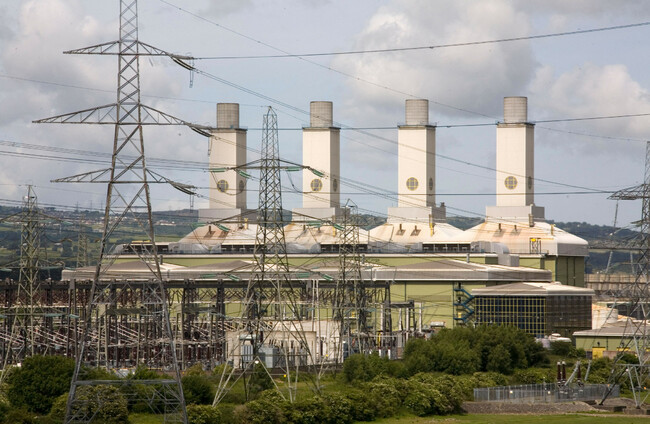
IRELAND IS “EXPOSED to global energy shocks” as a result of its dependence on imported fossil fuels, according to the Climate Change Advisory Council (CCAC).
A further warning also states that rising data centre demand is offsetting gains in renewable generation.
The CCAC is an independent advisory body tasked with assessing and advising on how Ireland can transition to climate-neutral economy.
In its 2026 annual review published today, the group said that instability in global energy markets “reinforces the importance and urgency” of the government ending Ireland’s reliance on fossil fuels by accelerating to domestically generated renewable electricity.
Renewable generation capacity reached eight gigawatts (GW) of power capacity in March, up from 1.2 GW in 2015.
This is enough capacity to power around 1.6 million homes.
However, last year only 0.8 GW of new solar and wind capacity was added, which is considerably below the 2 GW needed annually to meet the 2030 Climate Action Plan target of 80% of electricity coming from renewable sources by the end of the decade.
Meanwhile, the CCAC said around 10% of available renewable electricity could not be used last year due to grid constraints, a “progressively worsening trend” since 2021 and the highest rate since records began in 2016.
The body said the slow pace of renewable delivery and grid reinforcement is leaving Ireland “unnecessarily dependent on imported fossil fuels and exposed to global energy shocks, including market volatility linked to conflict in the Middle East”.
It added that the renewable electricity share of demand has stagnated in recent years due to any added renewable generation capacity being “matched by increasing data centre electricity demand”.
Ireland’s electricity demand increased by 2.6% last year, above the annual European average of 1%, and the CCAC said this increase is “almost entirely driven by data centre expansion”.
Collectively, the average year-on-year growth of electricity demand from data centres is 23% since 2015, with consumption directly from data centres increasing by 463% since records began in 2015.
All other non-data centre demand in Ireland has increased by only 7% since 2015.
The report states that additional data centre demand “will continue the well-established trend of data centres cannibalising any increase in Irish renewable capacity, causing stagnation of the share of renewable electricity meeting demand.”
The CCAC added that a move towards renewable energy will help save Irish households money and is already doing so.
It said that wholesale electricity prices in March fell to an average of €94/MWh on the days with the most wind energy, but doubled to €179/MWh when the grid relied on imported fossil fuels.
“These figures show the direct link between renewable electricity, energy affordability and fossil fuel dependence,” said the Council.
“Strengthening Ireland’s electricity infrastructure and accelerating renewable energy delivery are essential to reducing wasted renewable electricity and tackling the underlying causes of high and volatile energy costs.”
The review also warned that Ireland’s electricity system needs to be better prepared for extreme weather, such as Storm Éowyn, which left 768,000 customers without power.
The CCAC called for electricity resilience to be treated as a “core element of national climate adaptation planning, with investment in backup power solutions to ensure the electricity sector can better withstand future extreme weather events”.
Alex White, chairperson of the Climate Change Advisory Council, said every year of delay “leaves Ireland more exposed to imported fossil fuels, volatile global markets and avoidable costs”.
“We know renewable energy helps to reduce wholesale electricity prices,” said White, “but Irish households and businesses will not feel the full benefit unless we build the grid, storage and capacity needed to use that power.”
He said the government has “set the right ambition to end Ireland’s reliance on fossil fuels” but that the “test now is delivery”.
“Critical grid projects must be prioritised, renewable planning must be accelerated, and the benefits of clean electricity must reach Irish households and businesses to ensure energy security and affordability for all.”
The CCAC has called for urgent action to accelerate renewable electricity delivery, particularly onshore wind and solar, and for the Critical Infrastructure Bill to designate electricity grid reinforcement projects for prioritised delivery.
The Critical Infrastructure Bill will create a legal obligation for State bodies to accelerate key projects.
It will allow the government to determine what constitutes critical infrastructure and create a fast-track pathway for significant projects that are in the national interest.
Elsewhere, the CCAC has called for “Regional Renewable Energy Strategies”, which would translate national targets into county-level plans, to be adopted by the end of year.
The BODY said this would “align local plans and national policy with the clear goal of aiding short-term onshore renewable deployment”.
It has also called for private wires legislation to “explicitly exclude fossil fuel infrastructure in all circumstances”.
The private wires bill will set out a new framework for private wires, enabling direct connections, hybrid projects and EV charging.
Green Party leader Roderic O’Gorman said the report “must mark a reckoning for this government’s inaction on providing energy independence for Ireland”.
“The argument for changing our economy to run on renewables, is no longer just an environmental one,” said O’Gorman.
“People need to see action now to reinforce the grid, to drive forward with renewable infrastructures, and to help households to cut costs.”
He has called for invest in Irish ports “so they can actually support the construction of offshore wind turbines”.
“Right now, Belfast is the only port on the Island that could do that,” he added.
O’Gorman also called for the government to “give households energy independence in their own right” and proposed a scheme for free solar panels for all households who are on fuel allowance.
“People cannot face another cycle of energy shocks knowing that the Government is doing nothing to move us away from importing fuels”.

To embed this post, copy the code below on your site












have your say