Sign in. It’s quick, free and it’s up to you.
An account is an optional way to support the work we do. Find out more.
Sign in. It’s quick, free and it’s up to you.
An account is an optional way to support the work we do. Find out more.
IRISH AUTHORITIES HAVE been called upon to “improve the situation” for Traveller and Roma communities, with a recent report from the Council of Europe highlighting ongoing challenges faced by the marginalised groups.
The findings, published today by the Council’s Advisory Committee on the Framework Convention for the Protection of National Minorities, emphasised that while Irish society “continues to show respect for diversity,” there are still significant barriers that need to be addressed.
The Advisory Committee’s latest report welcomed the country’s adoption of several strategies aimed at promoting inclusion, including the long-awaited National Traveller and Roma Inclusion Strategy 2024-2028.
This strategy is seen as a step in the right direction, outlining the Government’s approach to fostering inclusion for these communities in various aspects of society.
Despite these positive steps, the report underscored ongoing issues that Traveller and Roma communities continue to face, including institutional racism, limited access to education, and inadequate accommodation.
The Committee noted the importance of improving educational outcomes for Traveller and Roma children, stressing the need for continued efforts to reduce school dropouts.
The disproportionate use of reduced timetables for Traveller students was noted, and the Committee urged that more be done to provide intercultural education.
It also recommended that the Roma genocide be included in school curricula to promote greater understanding of the Roma community’s history and experiences.
“The over-representation of Travellers in prison for minor offences should also be addressed,” the Committee stated, pointing to disparities in both the justice and education systems that affect these communities disproportionately.
The report also highlighted the alarming rates of unemployment, poor health, and mental health issues, including high suicide rates, within the Traveller population.
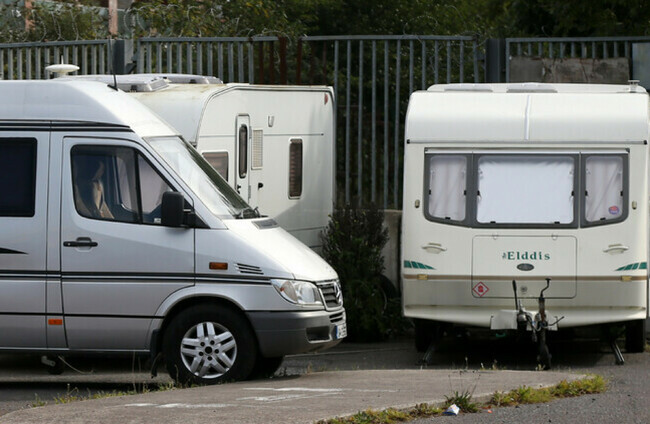
In terms of accommodation, the Committee noted that culturally appropriate housing remains a significant challenge, contributing to the ongoing poverty and social exclusion of the Traveller community.
The Traveller and Roma populations are also notably over-represented among Ireland’s homeless, the Committee found, with many halting sites for Travellers situated in hazardous, unhealthy areas.
The report’s concerns are compounded by the continuing prejudice and institutional racism faced by Travellers and Roma.
These groups continue to experience discrimination and marginalisation, despite a generally positive societal attitude towards diversity.
The Advisory Committee also called for increased participation of the Traveller community in public life, noting that, despite some progress – such as the recent appointment of a Traveller woman to the Seanad – the community’s involvement remains alarmingly low.
Minister for Equality Norma Foley acknowledged the importance of the issues raised by the report, stating that Ireland “ takes its responsibilities to the Council of Europe very seriously”.
“The work to support Travellers and Roma will continue in the years ahead,” Minister Foley said.
“In particular, the National Traveller and Roma Inclusion Strategy II 2024 – 2028 represents a whole-of-Government approach to ensuring and facilitating the full inclusion and active participation of the Traveller and Roma communities in Ireland’s social, economic, cultural, and political life.”
Minister Foley reiterated the Government’s commitment to creating a “safe, fair, and inclusive Ireland” where Travellers and Roma are supported in leading “inclusive, healthy, and fulfilling lives”.

To embed this post, copy the code below on your site












have your say