Sign in. It’s quick, free and it’s up to you.
An account is an optional way to support the work we do. Find out more.
Sign in. It’s quick, free and it’s up to you.
An account is an optional way to support the work we do. Find out more.
LAST UPDATE | 10 Jun 2025
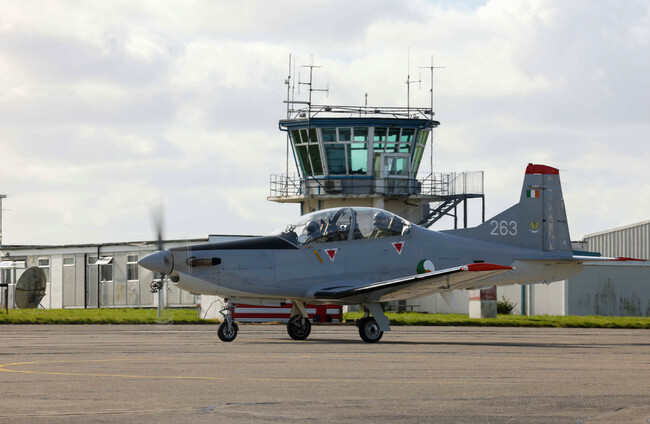
THE TÁNAISTE HAS said that the Cabinet has agreed to implement an emergency measure to solve the military air traffic control service crisis by offering a payment scheme to the controllers to keep them in service.
As reported by this news site the Irish Air Corps has shifted to a part-time twelve hour and five-day-week due to a shortfall of qualified air traffic controllers at its Baldonnel, Co Dublin base. This is because a number of experienced operators are leaving for higher paid jobs in the private sector.
The Government intervention has come just two weeks since the Taoiseach Micheál Martin, who took over as Defence minister in December 2022 from Simon Coveney, said it was a matter for the military leadership to solve.
The Journal had also obtained an internal report that proved that the Government and Department of Defence had been warned about the impending crisis in 2021 but that no action was taken on a recommendation for a payment scheme to keep the controllers.
It has now emerged that later today, Harris, who is Minister for Defence will seek Cabinet approval for a plan designed to retain and incentivise highly skilled specialists in the Air Corps.
Under the proposals, a Service Commitment Scheme, that is currently availed of by Air Corps pilots, will be extended to Air Traffic Control personnel.
The scheme for the pilot officers kicks in if they agree to stay in service for a specific period of time – there were incremental increases in salary and a bonus payment which reached several thousand euro if they signed on for up to eight years.
It was introduced at a time when the Air Corps was struggling to keep the pilots from going to better paid private sector jobs.
The air traffic controllers scheme will likely follow an identical increase the longer they agree to stay in the Defence Forces. The Journal understands that the payments to the pilots would have worked out as €25,000 per year.
It is not the only measure and the Tánaiste has also ordered military management and the Department of Defence to find a number of other recruitment boosting measures along with a regeneration of staffing in Baldonnel.
It is understood that there were detailed negotiations between the Department of Defence and the Department of Public Expenditure, NDP Delivery and Reform in recent days.
In those discussions it is believed the Tánaiste’s team and the Department of Defence have raised the major issue of a shortage of qualified air traffic controllers across the world.
This will likely form part of the argument that the Tánaiste will bring to Cabinet and explain the critical importance of a 24 hour service at Baldonnel.
It’s understood that the scheme being proposed by the Tánaiste, once greenlit by Cabinet, will be brought in with immediate effect.
This afternoon the Tánaiste confirmed that the measure will be introduced.
“I’m pleased that the Government is today taking this important step, which is designed to stabilise the air traffic control service as we work towards having it restored on a 24/7 basis.
“The security of the State is dependent on a 24-hour air traffic control service being operated by the appropriate number of highly trained personnel.
“While this immediate measure is a short-term solution aimed at stabilising service provision, it is essential that long-term options are also delivered, to ensure the viability of the service into the future,” he said.
In a statement the Tánaiste thanked his Government colleague and Public Expenditure Minister Jack Chambers of Fianna Fáil for his work on getting the package over the line.

To embed this post, copy the code below on your site











have your say