Sign in. It’s quick, free and it’s up to you.
An account is an optional way to support the work we do. Find out more.
Sign in. It’s quick, free and it’s up to you.
An account is an optional way to support the work we do. Find out more.
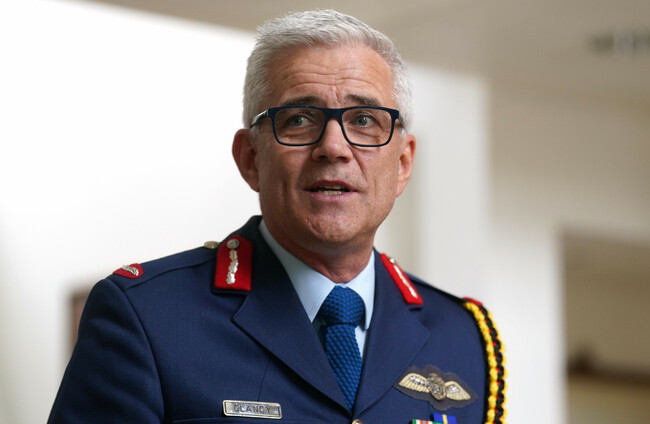
A TEAM OF Irish military experts has been selected to go to Brussels as the Irish military chief prepares to take up the chair of the EU military committee.
Defence Forces Chief of Staff Lieutenant General Sean Clancy will take up the role of the head of the European Union Military Committee (EUMC) in June.
Clancy will take over the top job from Austrian General Robert Brieger.
The Chief of Staff will leave his role as the leader of the Irish Defence Forces and will serve outside the State at the rank of General.
The EUMC is the highest military body within the EU and was established in January 2001. The committee directs all military activity by the EU with particular attention on European Union military activities with the Common Security and Defence Policy.
Official information about the team is sparse as the Defence Forces awaited the sign off from the Government. It is understood that sign off came on Wednesday.
The Journal spoke to a number of security sources who said approximately 10 military officers and non-commissioned personnel will have a number of roles and will be in Brussels for the next three years at least.
The participants were selected after an internal selection competition was carried out by the Irish Defence Forces.
Those selected are as senior as a Brigadier General and Lieutenant Colonel and also from experienced non-commissioned ranks. Their expertise includes strategic planning but also managing projects and teams in administration roles.
In recent weeks the group, known in the military as a ‘Cabinet’, travelled to Brussels where they underwent induction training and met the Austrian personnel they will be replacing.
It is understood that along with the administrative roles there will also be a seperate Irish close protection team – these will likely be a small detachment from the Army Ranger Wing.
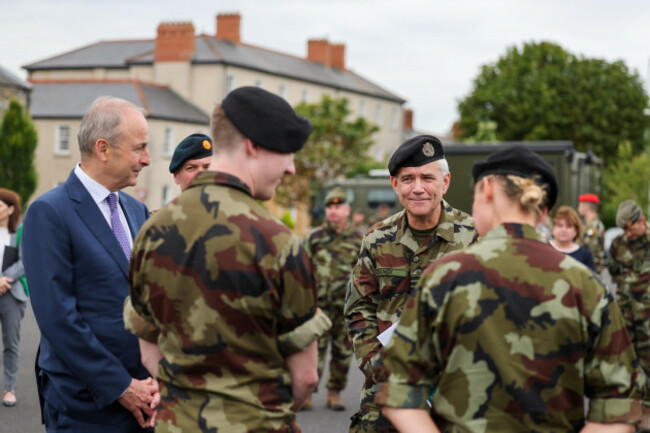
Sources have said that Clancy will “plug out” of Ireland’s diplomatic policy to allow him to comment on defence and security matters more freely.
At home, Assistant Chief of Staff Brigadier General Rossa Mulcahy is set to take over Clancy’s role of leadership of the Irish Defence Forces.
He will take over as Chief of Staff once the current move is made. He is well thought of in military circles and sources said he is affable and approachable.
He has had significant overseas experience and served on missions to locations including the NATO mission in Afghanistan.
The Kildare man has completed three deployments to Lebanon as a peacekeeper with UNIFIL, and has served for two years on deployment to Syria and Lebanon as an unarmed peacekeeper with UNTSO.
His background is in the Communications and Information Services Corps (CIS) which, besides maintaining and operating radio systems and other communication methods, was also involved remedying HSE systems after its hacking disaster.
He will lead the Defence Forces through the biggest change and reorganisation programme since the foundation of the State.
Behind the scenes, a number of sources have said there is concern about the restructuring that is due to the happen in the Irish military in the next two years.
One key redesign will be that the Chief of Staff role will end and a new Chief of Defence (CHOD) will replace it.
This will likely see Rossa Mulcahy have to reapply for that job – this is the root of the concerns in the military.
A source with knowledge of the inner workings of the system said that the likely outcome is that Mulcahy will be the sole applicant for the job of CHOD.
The concern for military sources is that if another external candidate comes forward and is successful, the head of the Defence Forces would likely be faced with having to leave the Defence Forces as the Defence Act does not allow for a senior officer be sent back to a lower rank.

To embed this post, copy the code below on your site










have your say