Sign in. It’s quick, free and it’s up to you.
An account is an optional way to support the work we do. Find out more.
Sign in. It’s quick, free and it’s up to you.
An account is an optional way to support the work we do. Find out more.
RESEARCHERS HAVE CRUNCHED the numbers on how much retrofitting adds to house prices in the current market.
Progress on retrofitting in Ireland is behind target, with the high cost a major barrier to uptake. Being clear about how much an upgrade could add to asking prices would incentivise more people to start the process, economists at University College Dublin (UCD) believe.
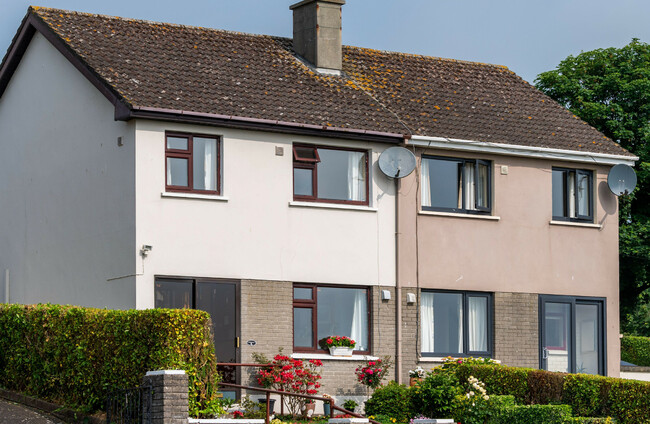
Retrofitting an average-sized three-bedroom, semi-detached Dublin house worth €470,000 from D to B on the building energy rating (BER) scale adds €12,200 to its likely asking price, the researchers’ modelling indicates.
This could represent anywhere from 43% to the full cost of the works, after grants from the Sustainable Energy Authority of Ireland (SEAI) are taken into account. That means if homeowners sell a house after retrofitting, they could make back the cost of the project, on top of any savings on their energy bills.
In general, each 10% reduction in a building’s energy use – for instance going from D1 to C3 on the BER scale – adds 0.6% to the value of the property, the study published in the journal Sustainable Futures found.
The researchers based their modelling on a data set of 11,000 Dublin homes’ asking prices between 2019 and 2022, controlling for factors including the size and location of the property. Asking prices are typically lower than sale prices in Dublin’s constrained housing market.
The SEAI and retrofitting firms often cite older research which has also found house prices are likely to increase for every letter you go up on the BER scale.
This claim is based on studies that used data that is now over 10 years old, so the UCD paper provides evidence that retrofitting is likely to provide an investment return for households that plan to sell their home. However, a recent paper by the Economic and Social Research Institute has highlighted that the upfront cost of retrofitting and the intrusiveness of the work remain significant barriers.
The researchers cautioned that their results reflected a statistical association and not a causal estimate, and some factors such as non-energy renovations and buyer preferences for newer or better maintained homes could also play a role.
The researchers also noted that with the demand outstripping supply in Dublin and further house price inflation expected, energy performance may not be that influential a factor for prospective buyers. BERs are likely to play a stronger role when prospective buyers have more choice.
The SEAI said this weekend that it’s not possible to compare different studies in this area as they have all covered different regions of the country and used different methods, but all studies have indicated a “positive uplift in house prices” from completing energy efficiency work.
Heating homes causes about 12% of Ireland’s greenhouse gas emissions.
It is compulsory to publish an up-to-date BER assessment when placing a house on the market for sale in Ireland, except for protected buildings.

To embed this post, copy the code below on your site












have your say