Sign in. It’s quick, free and it’s up to you.
An account is an optional way to support the work we do. Find out more.
Sign in. It’s quick, free and it’s up to you.
An account is an optional way to support the work we do. Find out more.
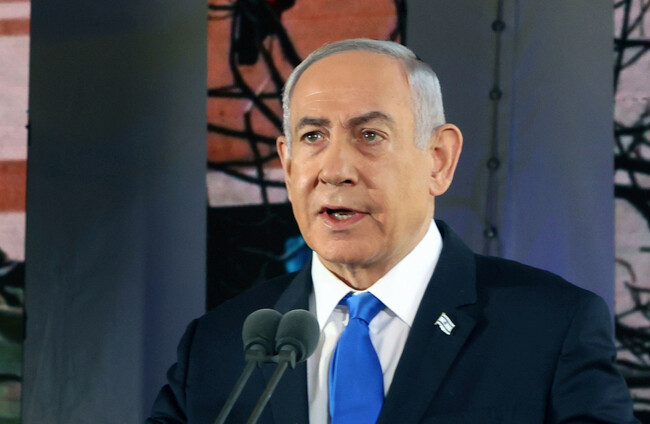
A NUMBER OF Israeli MPs have threatened to resign from Cabinet if it ratifies a “reckless” ceasefire deal with Hamas, but this would not likely scupper the controversial agreement.
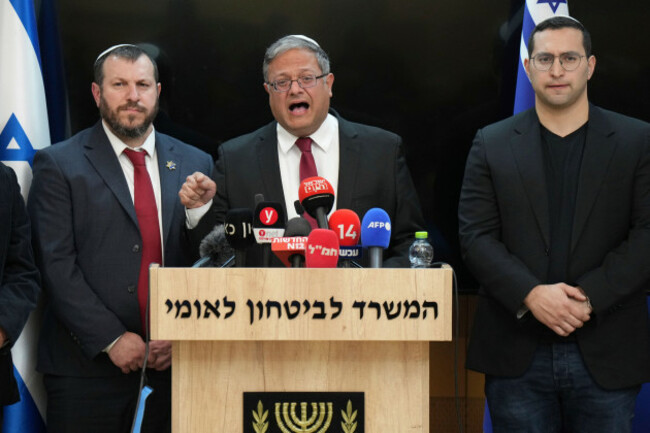
Itamar Ben-Gvir, Israel’s national security minister and head of the ultra-nationalist Jewish Power, has threatened to leave his cabinet post along with other cabinet members in protest over the deal.
His resignation from that position would be more of a symbolic move rather than a consequential blow to the cabinet’s ability to implement the ceasefire.
This is due to his unwillingness to completely withdraw his party from the coalition as doing so in conjunction with other dissenting parties would topple the delicate balance of power in Netanyahu’s slim majority government, which Ben-Gvir promises he does not intend to do.
He addressed the agreement in a televised statement yesterday in which he claimed it will undo all progress made in Israel’s 15-month bombardment of Gaza.
“The deal that is taking shape is a reckless deal,” he said, stating that it would “erase the achievements of the war” by permitting the release of Palestinian militants, many of whom have been convicted of terrorist offences, back into the ranks of Hamas.
“If this irresponsible deal is approved and implemented, we the members of Jewish Power will submit letters of resignation to the prime minister.”
Finance Minister and leader of the Religious Zionist Party, Bezalel Smotrich, is also on record as having made mild threats to pull his party from the coalition entirely, a move which could doom the government and thus derail the ceasefire.
However, there is no evidence that these threats are substantial.
The conditions of the ceasefire were agreed upon by Israeli and Hamas negotiators in Doha on Wednesday and were approved this morning by Netanyahu’s security cabinet which endorsed the deal as supporting “achieving the war objectives”.
It is expected to be further ratified by Netanyahu’s 34-member parliamentary cabinet in a vote later today, ensuring its implementation from Sunday.
In the first phase of the “permanent” agreement announced by the Qatari Prime Minister on Wednesday, 33 of the 94 remaining Israeli hostages held captive by Hamas in Gaza will be exchanged for the release by Israel of several hundred Palestinian prisoners.
This first phase is projected to last six weeks from Sunday, during which both sides will refrain from armed conflict.
The deal also stipulates that Israel Defence Forces (IDF) will withdraw from densely populated areas of Gaza.
Ben-Gvir has also called for all flows of humanitarian aid to Gaza to be “completely stopped”.
Ben-Gvir’s calls coincided with large public protests in Jerusalem by bereaved families of dead hostages on Wednesday and Thursday which took place at the Prime Minister’s Office in opposition to the deal.
Why has Israel delayed agreeing to the deal?
On Thursday, the day after the ceasefire was agreed, Netanyahu claimed that he would delay his cabinet’s vote after he alleged that Hamas was “reneging” on the terms set out between both parties during negotiations.
Gaza’s civil defence reports that the subsequent resumption of Israeli airstrikes on the Gaza Strip have claimed the lives of 113 Palestinians, including 28 children and 31 women, within hours of the initial agreement being made.
A statement by Netanyahu’s office said on Thursday: “Hamas is reneging on the understandings and creating a last-minute crisis that is preventing an agreement,” delaying his cabinet’s meeting to discuss the issue.
The statement added: “The Israeli cabinet will not convene until the mediators notify Israel that Hamas has accepted all elements of the agreement.”
The BBC reports that a demand by Hamas to add certain additional names to the agreed list of Palestinian prisoners to be released by Israel was a significant element responsible for the delay in the cabinet vote.
US Secretary of State Antony Blinken echoed Israel’s version of events, describing the contentious issue as a simple “loose end” which will be tied up in time for the implementation of the ceasefire which had been hoped to begin on Sunday.
If Netanyahu’s cabinet votes in favour of the deal, it would represent the most significant breakthrough in securing peace between Israel and Hamas.
Due to kick in on the eve of Donald Trump’s inauguration, it will allow for the gradual return of all Israeli hostages and the beginning of a rebuild of Gaza estimated to cost €18 billion.
To embed this post, copy the code below on your site
















have your say