Sign in. It’s quick, free and it’s up to you.
An account is an optional way to support the work we do. Find out more.
Sign in. It’s quick, free and it’s up to you.
An account is an optional way to support the work we do. Find out more.
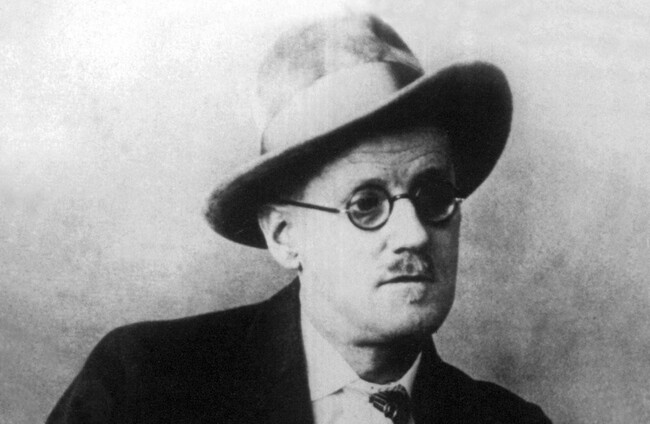
TAOISEACH JACK LYNCH was confused by indications that James Joyce’s son wanted the Irish State to repatriate the body of the literary giant back to Ireland, according to newly released State Papers.
Confidential files released this month revealed that the government wanted to clarify precisely what was involved in the proposal to bring home the body of the Dublin-born poet and novelist from Switzerland.
Joyce is regarded as one of the most influential literary figures of the 20th Century and his novel Ulysses, while initially banned, is now considered one of the greatest works of modern literature.
Joyce spent most of his adult life living outside Ireland in France, the UK and finally Switzerland. However, he frequently travelled back to Ireland.
He died in Zurich in January 1941 aged just 58, following complications from surgery.
On 29 May 1968, then-Health Minister Seán Flanagan wrote to then-Taoiseach Lynch regarding a proposal to bring Joyce’s body back to Ireland.
Flanagan wrote that he recently met the Irish writer and historian Ulick O’Connor “and in the course of the conversation he mentioned that Mr Giorgio Joyce, son of James Joyce, would be glad to have his father’s body brought back to Ireland if the Government would formally approve it”.
“I told him I would mention it to you and to my colleagues. Perhaps you would let me know if I might raise it informally at Cabinet?”
Lynch wrote back to Flanagan on 5 June.
“I have no objection to you raising this matter informally at a Government meeting but I do not understand Mr Joyce’s reference to formal Government approval,” Lynch queried.
“Unless, of course, it is his intention that the Government would make all the arrangements for the repatriation.”
In this connection, can you say to what extent Mr Joyce would expect that the Government would be involved in the financial or other arrangements?
In a hand-written note on the Taoiseach’s letter, a civil servant wrote: “They are awaiting further information from Mr Ulick O’Connor.”
Ultimately, the body of James Joyce remained at Fluntern Cemetery in Zurich.
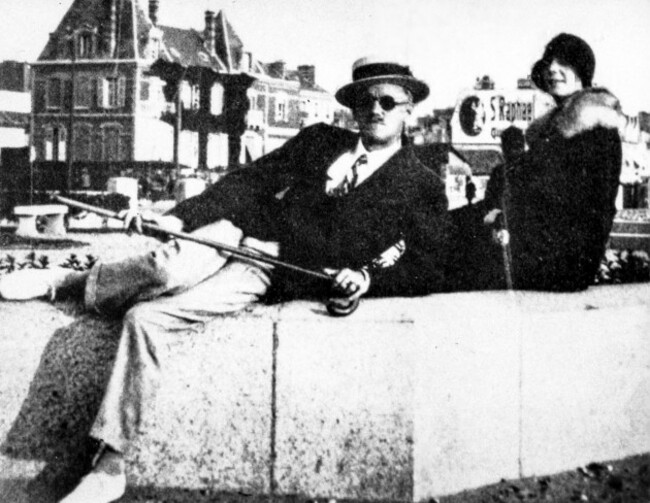
While James Joyce had been born a citizen of the UK, his work made him one of the most globally recognised Irish literary figures of his era.
Two Irish diplomats were in Switzerland but neither attended the funeral. In contrast, the British Consul did attend the ceremony.
It subsequently emerged that records from the Department of External Affairs (now Foreign Affairs) at the time of Joyce’s death asked: “Did he die a Catholic?”
Formal sympathies were later extended to Joyce’s widow, Nora, as was an explanation for the absence of Irish diplomats.
Nora lobbied for her husband’s remains to be repatriated in the late 1940s but her request was effectively denied by the government.
The decision was made in light of the hostility towards Joyce and his works from the Catholic hierarchy in Ireland, conservative academics and some politicians.
Joyce’s grave is now a major attraction for literary fans visiting Zurich. The grave is also the resting place of Nora and Giorgio.
Nora died in 1951 while Giorgio died in 1976, eight years after the exchange of letters between Lynch and Flanagan.
There was also a brief campaign to repatriate James Joyce’s remains to Ireland in 2019, but it was unclear if it was supported by the Joyces’ surviving relatives and was ultimately abandoned.
State Papers reference number: 2024/5/28

To embed this post, copy the code below on your site










have your say