We need your help now

Support from readers like you keeps The Journal open.

You are visiting us because we have something you value. Independent, unbiased news that tells the truth. Advertising revenue goes some way to support our mission, but this year it has not been enough.

If you've seen value in our reporting, please contribute what you can, so we can continue to produce accurate and meaningful journalism. For everyone who needs it.

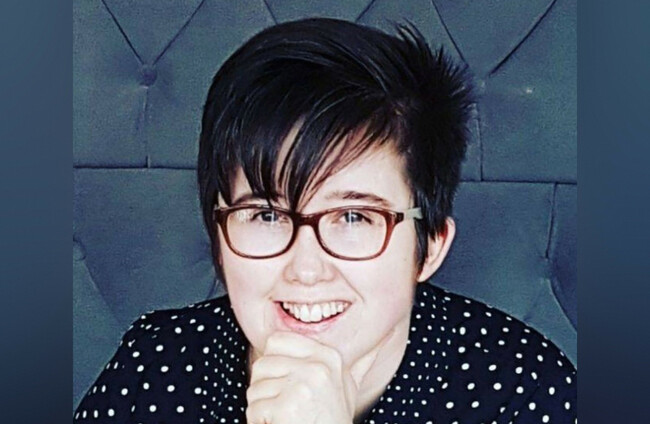
Lyra McKee was shot dead during rioting in Derry in 2019. Family handout/PA

Judgment reserved after trial of three men accused of murdering Lyra McKee

The non-jury trial of the trio started at Belfast Crown Court almost two years ago.

JUDGMENT HAS BEEN reserved following the trial of three men for the murder of Belfast journalist Lyra McKee.

The non-jury trial at Belfast Crown Court, which started in May 2024, heard evidence supporting a total of 52 charges against nine men accused of being involved in rioting and attacks on police in April 2019.

Defence barristers have criticised the standard of the evidence in the case, which is almost entirely circumstantial.

A barrister for one of the men accused of murder said police “properly left no stone unturned” in their investigation into the victim’s death, which he described as undoubtedly a tragedy.

But Mark Mulholland went on to contend: “Sadly some officers strayed outside of their duties, lines were crossed and expert witnesses were compromised.”

The 29-year-old author died after being hit by a bullet as she stood close to police vehicles while observing the disturbances in the Creggan area of Derry on 18 April 2019.

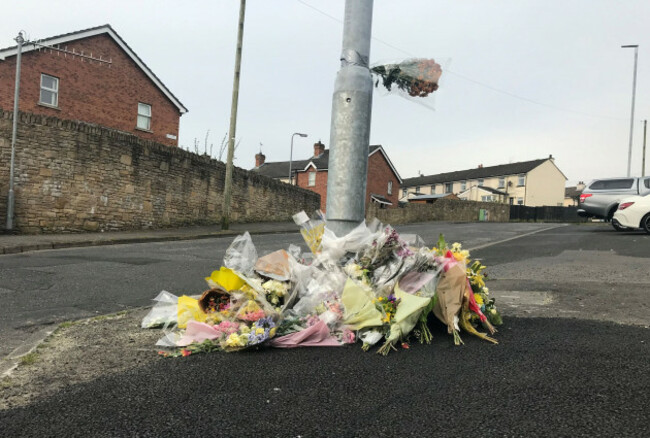
embedded242489266 Flowers at the spot where Lyra McKee was killed. PA PA

It came as TV presenter Reggie Yates and an MTV crew were filming in the area for a documentary which included interviewing members of Saoradh, a fringe republican political party with an office in Derry.

Several petrol bombs had been directed at police and a car was set on fire during chaotic scenes which culminated in four shots being fired towards officers, which the prosecution contends were aimed and deliberate.

The New IRA claimed responsibility for the death.

Paul McIntyre, 58, of Kells Walk in Derry, Peter Cavanagh, 37, of Mary Street, and Jordan Gareth Devine, 25, of Bishop Street, are facing a joint enterprise murder charge.

They are also facing other charges connected to the shooting and the rioting.

Six other Derry men are facing charges including rioting and throwing petrol bombs in the non-jury trial.

Another man accused of rioting and throwing petrol bombs on the night of the murder died during trial proceedings last year.

It is the prosecution’s case that the three men accused of murder had accompanied a lone gunman to the firing point on the night and encouraged or assisted him.

They say the men, who deny the charges, are linked to the scene by clothing and physical features.

The trial has continued in bouts over the course of two years.

In February, Judge Smyth rejected a defence application that there was no case to answer.

The trial previously heard evidence of a “horrifying” scream being heard after the shot which killed the victim was fired.

A police witness described the decision being taken to transport the victim to hospital in a police Land Rover rather than waiting for an ambulance, and travelling “through the burning vehicles, through the crowd, headed down to Letterkenny Road, across the bridge and up to Altnagelvin (Hospital)”.

The officers carried out CPR on that journey, which took around five minutes, however the victim’s death was confirmed shortly after her arrival at the hospital.

The prosecution completed its closing submissions in March, prior to the Easter recess.

Defence barristers delivered their closing submissions across this week.

On Thursday morning, Mulholland, who represents McIntyre, built on his questioning of the quality of evidence on Wednesday.

Mulholland said three witnesses contradict the identification of his client as person D in footage on 18 April in terms of his height, and that no police officer was able to “reliably” identify McIntyre in the disturbances.

He also queried why D was not seen wearing glasses as McIntyre does.

Judge Smyth suggested McIntyre did not wear glasses all the time.

Mulholland said if a person was intending to pick up bullet cartridges or throw petrol bombs at police, “you would wear your glasses”.

Concluding, Mulholland referred to the prosecution case as a “white dot on a coat”, and urged the court to acquit his client.

Judge Smyth thanked all the counsel for their work and submissions in a “very complex case”.

She described a number of perspectives, and said each defendant is entitled to be considered separately.

“For that reason, I cannot gave a date of final judgment,” she said.

“It will take some time, but this case will have my prioritisation.”

Close
JournalTv
News in 60 seconds