We need your help now

Support from readers like you keeps The Journal open.

You are visiting us because we have something you value. Independent, unbiased news that tells the truth. Advertising revenue goes some way to support our mission, but this year it has not been enough.

If you've seen value in our reporting, please contribute what you can, so we can continue to produce accurate and meaningful journalism. For everyone who needs it.


A screenshot of a National Lottery advertisement on Youtube. National Lottery/Youtube

Talking toys and water slides: Lotto ads ‘luring children’ with child-friendly imagery, study finds

The National Lottery have argued that the ads in question are no longer in use, and were made “within a different regulatory and operational environment”.

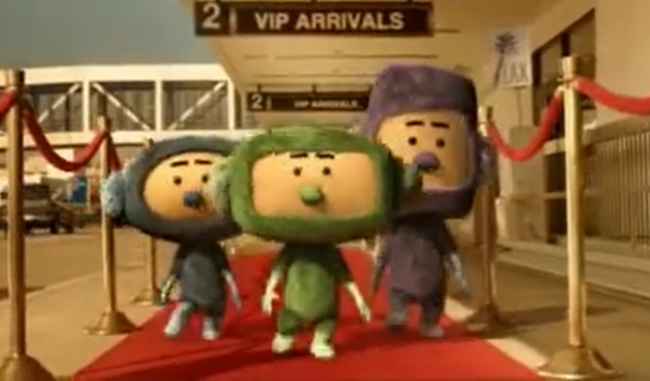
RESEARCHERS HAVE SLAMMED the National Lottery for what they describe as advertising that “lures children,” with previous ads featuring talking toys, tyre-swings, treehouses, and games like rock-paper-scissors.

Their study found that more than 20% of Lotto’s archival advertisements on Youtube include imagery that is clearly aimed at young audiences.

The study, published yesterday, involved researchers from Technical University of the Shannon, Queen’s University Belfast, University of Limerick, and University College Cork.

It examined 127 Lotto advertisements and found that more than 20% included child-friendly imagery.

This imagery included such concepts as talking soft toys, anthropomorphic machines, treehouses, tyre-swings, waterslides, wooden toys, and games like rock-paper-scissors.

Screenshot (172) A screenshot of an archived National Lottery advertisement. YouTube YouTube
6.3% of the adverts analysed also featured children directly.

Dr Frank Houghton, lead author and Principal Investigator of the Tobacco, Alcohol & Gambling (TAG) Research Group at Technological University of the Shannon, said that “more robust oversight” of National Lottery advertising is “urgently required”.

“The National Lottery is a form of gambling that we all collectively pretend is not actually gambling. National Lottery advertising is everywhere, and it is disturbingly child-friendly,” Dr Houghton added.

Co-author Prof. Anne Campbell of Queen’s University Belfast described Lotto tickets as “highly addictive”.

“Children are also at risk. More controls on the timing, placement and content of Lotto advertising are essential. For example, children should never appear in a lotto advertisement,” Campbell said.

This latest paper is the fourth in a series examining the National Lottery’s practices.

Screenshot (174) A screenshot of an archived National Lottery advertisement.

Earlier studies highlighted Halloween-themed advertising aimed at children, gaps in the age verification system on the Lottery’s website, and sanitised regulator reports that fail to mention addiction risks.

Dr Houghton described the findings as “wholly unacceptable”:

“We identified 127 adverts, and what we found was really quite an alarming level of child-friendly material,” Houghton said.

“There’s absolutely no reason why you should ever feature children in a gambling advert.”

Soft toys, tyre-swings, treehouses, wooden puppets—these are all designed to catch the eye of children. It needs to be tackled immediately, 100%.

He also pointed to broader systemic concerns in the regulation of the National Lottery.

“The Office of the Regulator of the National Lottery is in moral jeopardy. They are supposed to protect players but also safeguard the National Lottery’s financial success,” Dr Houghton said.

“You cannot do both effectively.”

Dr Houghton stressed that the new Gambling Regulation Act 2024, which strengthens oversight of gambling advertising, currently does not cover the National Lottery, leaving child-focused marketing unchecked.

The study concluded that child-friendly Lotto advertising is a serious public health issue and recommended that these videos be removed from YouTube immediately.

The researchers called for the Office of the Regulator of the National Lottery (an independent statutory body established to oversee and regulate the operation of the National Lottery) to adopt a “robust assessment process”, and urged the Irish Government to extend the Gambling Regulation Act to cover the National Lottery.

He also criticised the dual role of the ORNL, which is tasked both with protecting players and maximizing revenue for good causes.

“It’s incompatible. You’ve got the same office trying to protect gamblers while also raising funds for the Lottery. That’s moral jeopardy,” he said.

In response, a spokesperson for the National Lottery said the advertisements referenced in the study were “historical and no longer in use,” and had been retained solely for archival purposes.

“Most of these [ads] were produced within a different regulatory and operational environment, which existed before the current licence, the establishment of a dedicated Regulator, and the current Advertising Code of Practice,” the spokesperson said.

“Today, all National Lottery advertising is subject to a comprehensive and multi‑layered review process to ensure it complies with the Advertising Code of Practice,” they added.

Readers like you are keeping these stories free for everyone...
A mix of advertising and supporting contributions helps keep paywalls away from valuable information like this article. Over 5,000 readers like you have already stepped up and support us with a monthly payment or a once-off donation.

Close
4 Comments
This is YOUR comments community. Stay civil, stay constructive, stay on topic. Please familiarise yourself with our comments policy here before taking part.
Leave a Comment
    Submit a report
    Please help us understand how this comment violates our community guidelines.
    Thank you for the feedback
    Your feedback has been sent to our team for review.

    Leave a commentcancel

     
    JournalTv
    News in 60 seconds