Sign in. It’s quick, free and it’s up to you.
An account is an optional way to support the work we do. Find out more.
Sign in. It’s quick, free and it’s up to you.
An account is an optional way to support the work we do. Find out more.
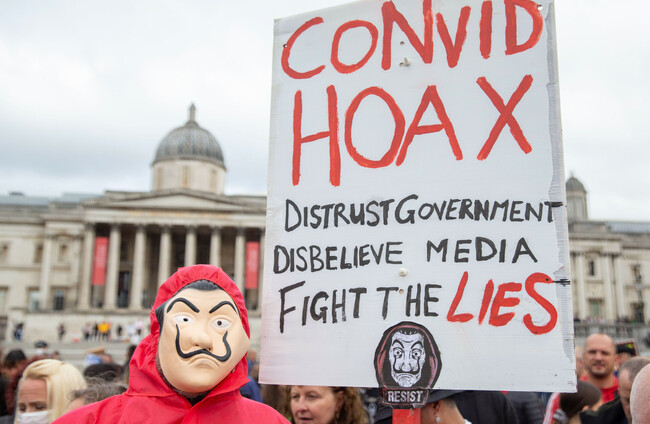
A NEW REVIEW from University College Cork into methods for reducing conspiracy beliefs has shown that most methods are ineffective.
While holding conspiracy beliefs has been associated with several detrimental social, personal, and health consequences, little research has been dedicated to systematically reviewing the methods that could reduce conspiracy beliefs.
Conspiracy beliefs have been on the rise globally in recent years, many of which are linked to the Covid-19 pandemic, the 2020 US presidential election or the invasion of Ukraine.
UCC researchers conducted a systematic review to analyse 25 previously published studies, with a total of 7,179 participants.
Some studies employed straightforward counterarguments against conspiracy theories, and others used ways of priming participants to have a more analytical mindset before asking them about their conspiracy beliefs.
UCC’s study is the first comprehensive review of the effectiveness of existing methods for tackling conspiracy beliefs
Only half of the interventions reported any significant changes in participants’ conspiracy beliefs, and only a handful produced changes with moderate or large effects.
Rational counterarguments that described the factual inaccuracies of conspiracy theories were found to have only very small to small effects.
Similarly, counterarguments that appealed to participant’s sense of empathy, outlining the damages that can result from conspiracy beliefs was found to have very small effects.
An analytical mindset and critical thinking skills are the most effective means of challenging conspiracy beliefs.
It was found that participants who were primed to have an analytical mindset – an approach often referred to as ‘information inoculation’ – were less likely to have conspiracy beliefs than controls.
A three-month educational course on differentiating between scientific and pseudoscientific practices was most effective.
UCC School of Applied Psychology and study lead researcher Cian O’Mahony said:
“While the intuitive solution to countering unfounded conspiracy beliefs is to present facts and arguments that contradict the conspiracy explanation, our review indicates that this approach is among the least effective.”
“Our analysis highlights that fostering analytical mindsets and explicitly teaching critical thinking skills is a more promising method for challenging conspiracy beliefs. While there is no currently silver bullet that can completely mitigate misinformation spread by conspiracy beliefs, our review highlights some promising trends for future research.”
“Further research is needed to identify strategies that best counter conspiracy beliefs through critical thinking and analytical mindsets. Our aim is not to tell the public what to believe or disbelieve, but to encourage them through these interventions to critically appraise conspiracy beliefs to determine themselves what they should believe,” O’Mahony said.

To embed this post, copy the code below on your site















have your say