Sign in. It’s quick, free and it’s up to you.
An account is an optional way to support the work we do. Find out more.
Sign in. It’s quick, free and it’s up to you.
An account is an optional way to support the work we do. Find out more.
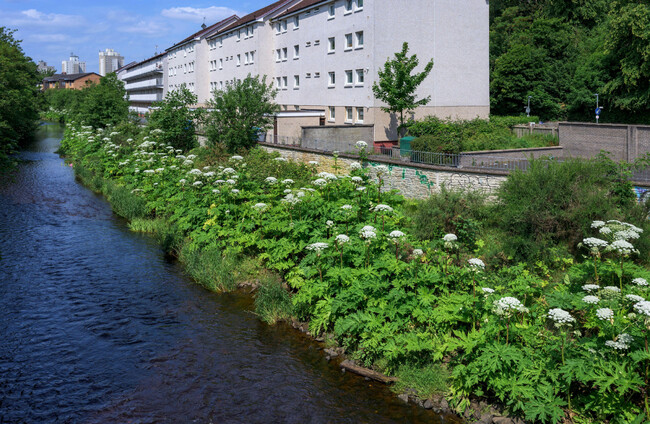

THE VIBRANT PINK-PURPLE flowers of rhododendrons leading to the degradation of ancient woodlands in Killarney, the congestion of watercourses with gunnera in Achill, the growing concern over Asian hornets; the impact of invasive species in Ireland has moved from a niche conversation to a relatively mainstream one. It has been well established that invasive species are one of the key drivers of global biodiversity loss. Communities all over Ireland are already seeing the consequences.
Plants make up nearly half of the invasive species of concern in Ireland, and they tend to be fairly recognisable and well-established on private and public land. The Department of Housing, Local Government and Heritage, which has responsibility for biodiversity and national parks, announced their Invasive Alien Species Bureau in May this year. Two months later, it still has no personnel or clarity of purpose.
‘Bureau’ is not a commonly used term in the Irish civil service. Social Democrats TD Jennifer Whitmore’s office agreed to put a parliamentary question in asking about the staffing and management of this bureau at the beginning of July and confirmed that it has no staff and no hiring plan yet in place.
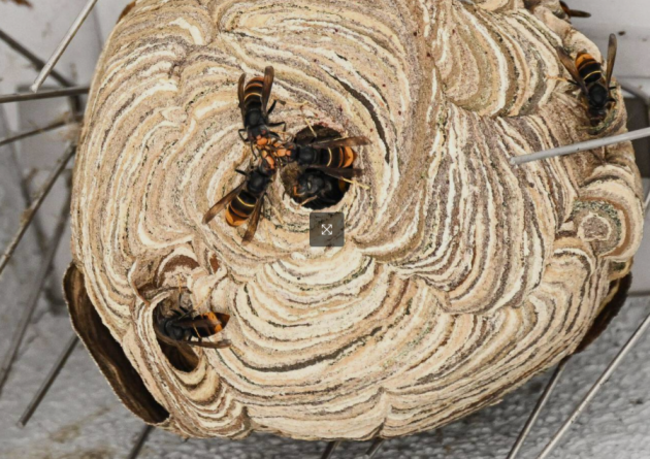
From the answer provided to PQ 383 (14 July 2026), the Invasive Alien Species Bureau appears to be a rebrand of ongoing projects between the National Parks and Wildlife Service (NPWS) and the National Biodiversity Data Centre (NBDC). Collette O’Flynn is the invasive species officer with the NBDC, and she raised with Pádraic Fogarty in February of this year that the NBDC’s role is to receive and organise sightings, rather than intervene, and that she was not clear who was responsible for the removal of listed invasive species.
The answer is currently no one unless a local council decides to do it on an ad hoc basis. Where government policy fails, local community groups or voluntary organisations often step up to fill the gap. In this case, they are being actively discouraged by councils and national policy.
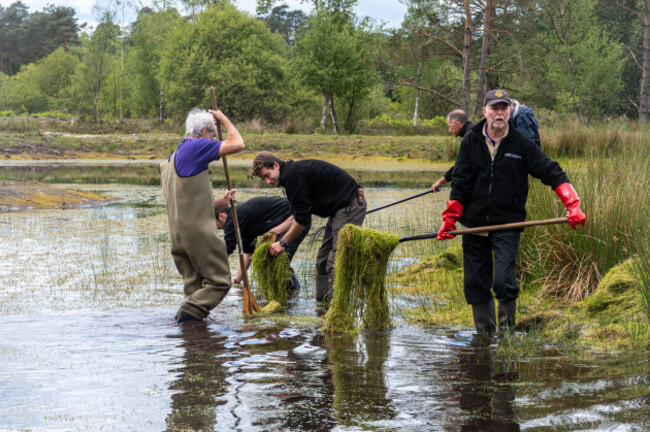
To remove an invasive plant species that has become established it needs to either be killed with herbicide or be physically removed. The main barrier to poisoning is that many invasive plants became invasive, at least in part, because they are resistant to herbicides.
Clearing invasive species manually from an area often means interfering with them in a way that could, theoretically, run the risk of spreading that species further. In an attempt to highlight the seriousness of this, it is possible that any sensible action has been paralysed.
Attempts to seek out advice are met with “do nothing” or that only “qualified” persons can do the work of eradicating a given species even in areas of the country so badly affected that to do nothing holds just as high a risk. Other barriers to manual removal are a lack of clarity on who is qualified to do this work and how to manage the plant waste appropriately.
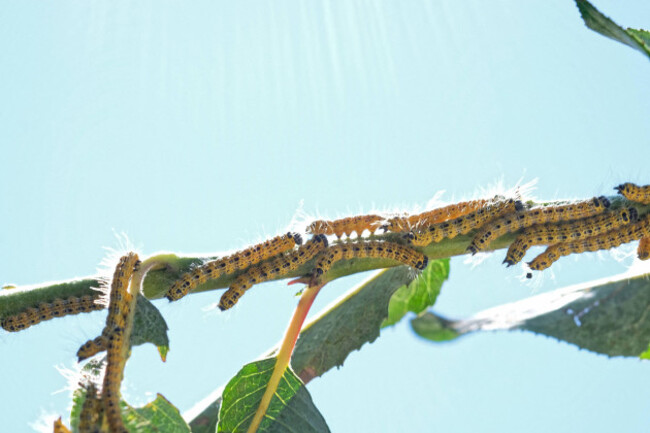
The legal framework for invasive species in Ireland is based around a list of third schedule species covered by EU regulation. Breeding, transporting, releasing or dispersing a third schedule species without a licence is an offence. It is usually down to each member state how to apply and regulate those licences.
Some species included on this list in Ireland are rhododendron ponticum, Japanese knotweed, Spanish bluebells or giant hogweed. Of these four, only one, giant hogweed, is considered dangerous to human health. Spanish bluebells are still available to buy in gardening centres all over Ireland and yet the same legislation that is ignored for that is actively preventing action on invasive species elsewhere.
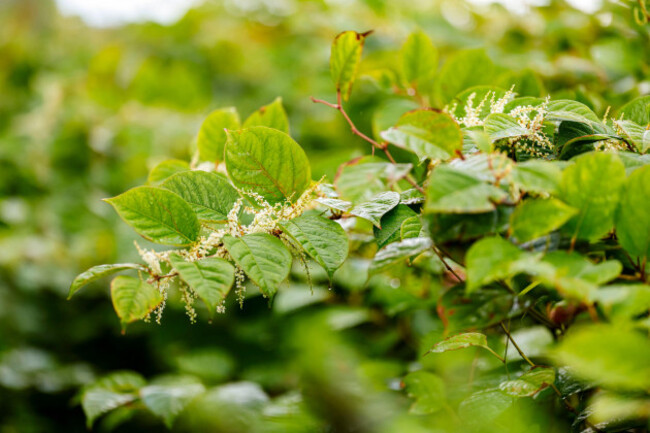
The use of powerful herbicides, like glyphosate, is considered best practice in the treatment of many invasive plant species, in particular because if the plants are killed on-site it reduces the risk of spreading through transportation. While glyphosate is controversial in environmental circles, due to its links to rapidly declining insect numbers worldwide, it is still commonly used by county councils and in agriculture. It can be used by landowners on their private land without a licence. A licence is required for professional use, which would likely apply for anyone tendering for work on a clearance project that drew down public funding. That professional pesticide licence has a short training requirement and sets a clear baseline for “qualified” to use glyphosate in this context.
There is no equivalent for manual work on invasive species. There isn’t even a clear legal basis under which you could require a licence for using a spade, outside of site safety regulations, even if the species of plant you’re using it on is regulated. That would only apply to transporting the species on or off site. If a local community group did organise the labour, there is no scheme available currently that would provide funding assistance.
The Local Environmental Action Fund (LEAF) could theoretically provide up to €9,000 towards this, but I was informed that they would not fund the removal of invasive species unless it was invoiced by a “qualified” professional. When I pressed for what “qualified” meant, there was not a firm answer.
If the labour was voluntary, the local group would still need a licensed haulier to apply for an additional licence from the NPWS to transport the invasive species waste. That application requires confirmation of an “approved” disposal site, for example a specialist landfill or incinerator. When I contacted the NPWS licensing office to ask for a list of approved sites, they told me in writing that they had no such list and to ask the Environmental Protection Agency (EPA).
I then followed up, asking how the transportation licence could be approved if their office had no list of waste facilities to compare to those named on the application. Their reply was, functionally, that the applicant should ask a facility to provide them with a letter that claimed they had the appropriate licences from the EPA and that letter was attached to the application for the NPWS. There were no further checks or confirmations included in the explanation I received.
When I contacted the licensing office of the EPA, who has responsibility for these waste facilities, they also denied, in writing, the existence of any such list. I was advised to contact these businesses myself and ask them to vouch for their qualifications themselves. EPA licences are a matter of public record.
What I’ve learned from my experience with invasive species and their handling is that we have a government that appears to be in no great rush to face this growing issue. Invasive species will not wait for government departments to settle questions of responsibility, nor will they stop spreading while community groups struggle to establish which licences they need to weed them out.
We now understand the threat posed by invasive species, but that alone doesn’t stop their spread. In a climate crisis, this problem is only going to escalate, so the agencies responsible urgently need to provide clear guidance, workable procedures and a practical route for the affected communities to take action.
Orla ní Dhúill is an Irish environmentalist, podcaster and writer from Dublin, based on Achill Island.
To embed this post, copy the code below on your site














have your say