Sign in. It’s quick, free and it’s up to you.
An account is an optional way to support the work we do. Find out more.
Sign in. It’s quick, free and it’s up to you.
An account is an optional way to support the work we do. Find out more.


THE US SECRETARY of Health, Robert F. Kennedy Jr, “Make America Healthy Again” supporters and online influencers are promoting them, while social media is awash with the putative ability of peptides, advertised as “not fit for human consumption” to enhance fitness, wellness, scar-free skin and luxurious mops of hair.
A recent RTÉ Prime Time investigation has explored the claims, the safety standards and the possible long-term risks of peptide injectables that are being sold on a grey market in Ireland.
Do the claims for enhanced performance, longevity and healing from the use of injectable peptides live up to the hype?
Here’s what the science says…
Peptides are molecules that our body uses to send signals from cell to cell and tissue to tissue. They are short strings of amino acids – the building blocks of proteins. Scientists have identified about 7,000 peptides in the human body.
They act as lightning-fast messengers, conveying signals from one organ to another – “just ate lunch,” “time to sleep,” or “I’m hungry.” The GLP-1 peptide is produced in the gut when we eat a meal and travels to the brain and pancreas, telling these organs we are full and to start releasing insulin into the bloodstream.
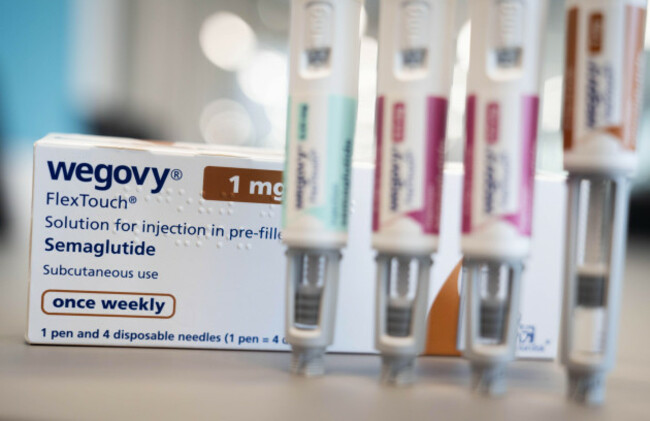
The first peptide-based medicine, insulin, was discovered in 1921. It also became the first synthetically manufactured peptide in 1982.
Since then, the US FDA has approved 100 different peptide therapeutics for conditions ranging from diabetes to multiple sclerosis to septic shock.
Injectable peptides, containing synthetic sequences built in a lab that are promoted on social media, are different. Most of them, whether it’s helping to heal a sports injury or building muscles, were never developed as medications. There’s not much information on the products’ effectiveness and even less on their safety.
There is a whole plethora of these peptides available online including BPC-157, TB-500, GHK-Cu, MOTS-c that are marketed as having muscle building, fitness, recovery, longevity and other beauty benefits. The social media craze seems to have taken off around 2022, when injecting drugs became “normalised,” including GLP-1 drugs such as Ozempic that were shown to be effective for weight loss.
The Health Products Regulatory Authority (HPRA) has warned against using any injectable substance from unregulated sellers, pointing to risks of infection, contamination and dosage errors. The problem with many of these injectable peptides is that the widely touted benefits refer to what has been seen on a petri dish or in animal studies with limited evidence of what happens in humans.
The gap between what works in animal research and what works in humans is enormous. A paper in JAMA (2020) suggested that the vast majority (85%) of drugs that show promise in early research fail in clinical trials.
This is very relevant when we look at the claims that are being made for injectable peptides, based on the results of animal studies, in products that have never undergone a high-quality clinical trial.
BPC-157 – the “Wolverine” peptide is a good example. One of the most aggressively marketed peptides, the label “Wolverine” comes from the Marvel character that possesses a range of superpowers including highly advanced self-healing abilities and a prolonged lifespan.

BPC-157 is promoted as having powerful regenerative abilities – capable of healing tendons, ligaments and muscle injuries. On the recent Prime Time investigation, bodybuilder Neil Rennie took what is known as the “Wolverine peptide stack,” a combination of peptides BPC-157 and TB-500, following a serious hamstring and adductor tear. He said the estimated recovery time was six months, but he returned to training in just two months.
In terms of the evidence, animal studies – predominantly in rodents – show it may influence angiogenesis (new capillary blood cell formation), collagen synthesis and growth factor signalling in tissue repair.
To date, one human clinical study, published in HSS Journal (2025), involved just 12 patients with chronic knee pain receiving BPC-157 injected into the joint. Seven patients reported pain relief lasting more than six months, but the study had significant flaws including no control group to compare results in those who were treated with those who were not.
A recent review in the American Journal of Sports Medicine concluded that no randomised controlled trials exist for BPC-157 in humans and the compound remains investigational with unknown safety profiles.
Despite this, BPC-157 is widely sold in Ireland and hugely popular among biohackers, fitness enthusiasts and athletes, driven by online wellness suppliers and social media interest.
TB-500, which forms part of the “Wolverine stack,” is also marketed for its regenerative properties. In terms of the benefits of injectable use for musculoskeletal injuries and anti-ageing in humans, there is no clinical evidence.
MOTS-c has gained popularity because it originates from mitochondrial DNA and appears to influence metabolic pathways related to exercise and energy metabolism, leading to enhanced performance.
Animal studies demonstrate biological effects in terms of preventing insulin resistance, enhanced physical performance, reduced blood glucose and improved health span. All of these results are in mice – not in humans.

There are no human clinical trials. There is evidence that human exercise leads to a natural increase in MOTS-c levels. What happens when MOTS-c is injected into humans? We just don’t know.
Without carefully designed human clinical trials, we have no idea whether that exciting laboratory discovery may translate to have similar exciting benefits in humans.
With all the hype around peptides, the question of immunogenicity – how these products trigger an immune response – receives little attention. All biological drugs, including peptides, are capable of inducing an immune response. This can either neutralise the peptide or provoke unintended immune reactions.
Immunogenicity is carefully explored in clinical trials, as well as an evaluation of long-term safety and the efficacy or ability of the drug to work effectively.
When these long-term safety studies do not exist, the long-term immune effects are anybody’s guess. That is a concern – especially when peptides are being used regularly over long periods.
Injectable peptides are big business. The industry is valued at up to $164 billion (€145.74 billion) in 2026 and is expected to expand significantly over the next decade. When huge profits are at stake, a dollop of scepticism is paramount.
History is scattered with products that were enthusiastically endorsed before their risks became all too apparent.
In the late nineteenth century, cocaine was widely marketed as a medical tonic before its addictive properties became apparent. Tobacco was endorsed for weight management, digestion and stress before links between smoking and lung cancer emerged; and many pregnant mothers in the 1970s were advised to drink Guinness to “boost their iron.”
The historical pattern should be noted when it comes to the widespread audacious claims about injectable peptides that have limited known benefits beyond a placebo effect, and even less is known about their long-term safety.
The bottom line is that right now, based on the evidence we have, using injectable peptides is an expensive habit with unproven benefits, and a significant gamble with your long-term health.
Dr Catherine Conlon is a public health doctor in Cork and former director, human health and nutrition, safefood.
To embed this post, copy the code below on your site















have your say