Sign in. It’s quick, free and it’s up to you.
An account is an optional way to support the work we do. Find out more.
Sign in. It’s quick, free and it’s up to you.
An account is an optional way to support the work we do. Find out more.
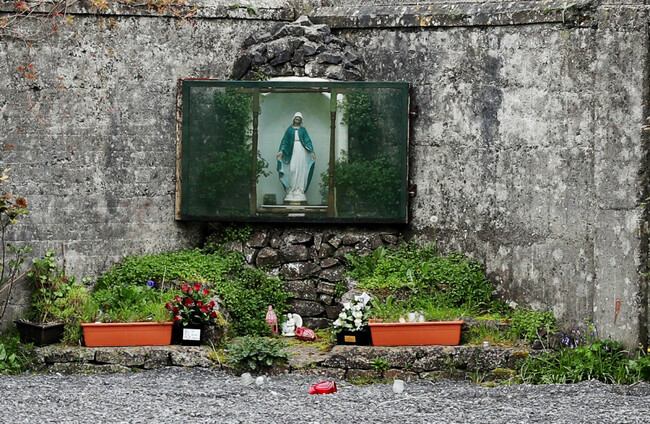
THE ATTORNEY GENERAL is to be consulted to see what next steps can be taken to ensure that five religious orders that have offered no contributions at all to a redress scheme for survivors of mother and baby homes pay their fair share.
A report published yesterday, conducted by negotiator Sheila Nunan, involved negotiations with eight religious bodies with historical involvement in mother and baby institutions.
The process was seeking a financial contribution towards the cost of reparations to women in the homes. The State has already set aside €800m to compensate the survivors.
According to the report, only two out of eight religious bodies have offered a financial contribution towards the scheme since negotiations began, and only one of these was seen as realistic.
The religious organisations which have made no financial contributions are:
Equality and Children’s Minister Norma Foley said in a statement this was a voluntary process whereby the negotiator could not compel bodies to produce information or offer contributions.
She urged the religious orders who have not come forward to contribute to reflect on their decision.
“To that end, I will ask my officials to liaise with the Office of the Attorney General to consider if any further options are available to the State in this regard,” she said.
It is understood this is being done to ascertain what further measures the government can take to ensure the religious bodies pay up.
Last year, Tánaiste Simon Harris said the government would pursue legislation to make sure religious orders do not “get off the hook” in terms of redress owed for historical abuse.
“I’ve specifically asked the Attorney General to draft legal advice for Government about what mechanisms we can deploy or indeed legislation to introduce to make sure that those institutions do have to contribute.
“Let me be really clear: My first approach is we should ask people to do the right thing. That’s not to suggest that we’re naive and presume they want to do the right thing. If they don’t do the right thing, we need to legislate to make sure that they do,” he said.
Harris confirmed that had also asked the Attorney General to review legislation put forward by Labour leader Ivana Bacik on the issue.
He added:
“In the past, they got off the hook and they’re not going to this time. And they’ve been issuing statements talking about how sorry they are. We’ll decide how sincere that sorrow is depending on what they do next.”
Harris said he believed options to pursue payments from religious orders will most likely require legislation.
When asked if legislation is the next step here in terms of ensuring the five religious bodies pay redress, a spokesperson for the Tánaiste said Simon Harris is “happy” with the process of consulting with the attorney general that the minister announced today.
He said the Tánaiste is of the view the consultation with religious orders on redress has been going on for a long time, stating that “it’s just not good enough” that a number of religious orders have made no offers.
The orders that have made offers include the Sisters of Bon Secours, which ran the Children’s Home in Tuam, which offered a cash contribution of €12.97m.
Foley said this is in line with what negotiators determined to be a “meaningful contribution”, and which the State has accepted.
An estimated 802 children died inside the Tuam home during its 36 years in operation.
The Sisters of St John of God offered a conditional donation of €75,000 to be used as a charitable donation towards a charitable purpose associated with mother and baby home survivors.
The group oversaw St Columba’s County Home in Co Kilkenny, where 140 infants died between 1922 and 1960.
A third body, the Daughters of Charity of St Vincent de Paul, offered a contribution of a building, which the government is considering accepting.
Two mother and baby homes, Pelletstown and the Belmont Flatlets, were run by the Daughters of Charity of St Vincent de Paul.

To embed this post, copy the code below on your site










have your say