Sign in. It’s quick, free and it’s up to you.
An account is an optional way to support the work we do. Find out more.
Sign in. It’s quick, free and it’s up to you.
An account is an optional way to support the work we do. Find out more.
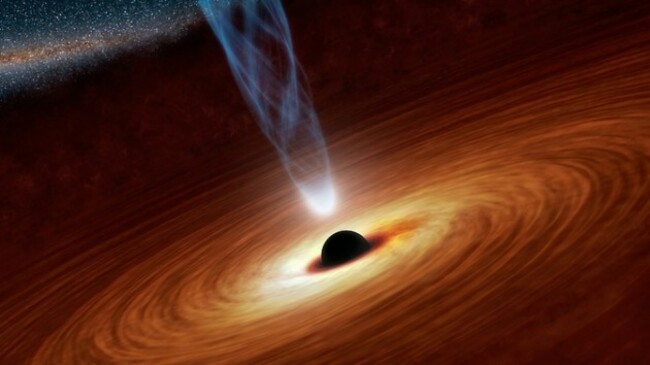
NASA’s NUCLEAR SPECTROSCOPIC Telescope Array (NuSTAR) has captured an extreme and rare event in the regions immediately surrounding a supermassive black hole.
A compact source of X-rays that sits near the black hole, called the corona, has moved closer to the black hole over a period of just days.
“The corona recently collapsed in toward the black hole, with the result that the black hole’s intense gravity pulled all the light down onto its surrounding disk, where material is spiralling inward,” said Michael Parker of the Institute of Astronomy in Cambridge, United Kingdom, lead author of a new paper on the findings.
As the corona shifted closer to the black hole, the gravity of the black hole exerted a stronger tug on the X-rays emitted by it.
The result was an extreme blurring and stretching of the X-ray light.
Such events had been observed previously, but never to this degree and in such detail.
Supermassive black holes are thought to reside in the centers of all galaxies. Some are more massive and rotate faster than others. The black hole in this new study, referred to as Markarian 335, or Mrk 335, is about 324 million light-years from Earth in the direction of the Pegasus constellation.
The new data could ultimately help determine more about the mysterious nature of black hole coronas, NASA says.

To embed this post, copy the code below on your site












have your say