We need your help now

Support from readers like you keeps The Journal open.

You are visiting us because we have something you value. Independent, unbiased news that tells the truth. Advertising revenue goes some way to support our mission, but this year it has not been enough.

If you've seen value in our reporting, please contribute what you can, so we can continue to produce accurate and meaningful journalism. For everyone who needs it.

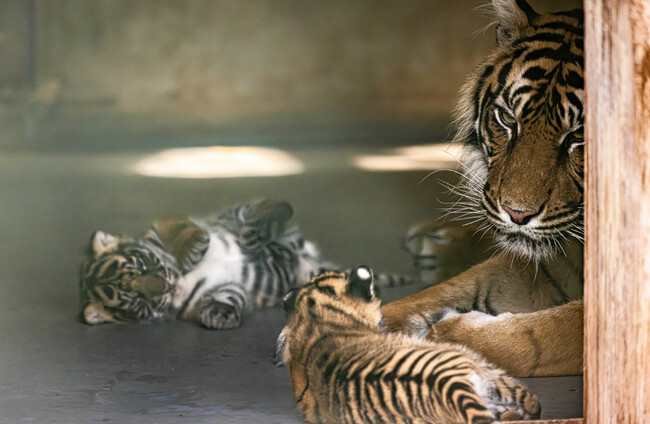
Mother Jambi with he newborn cubs Michael O'Sullivan/OSM PHOTO

Fota Wildlife Park welcomes the births of endangered tiger and lion cubs

Meanwhile, Dublin Zoo has announced the arrival of two new species.

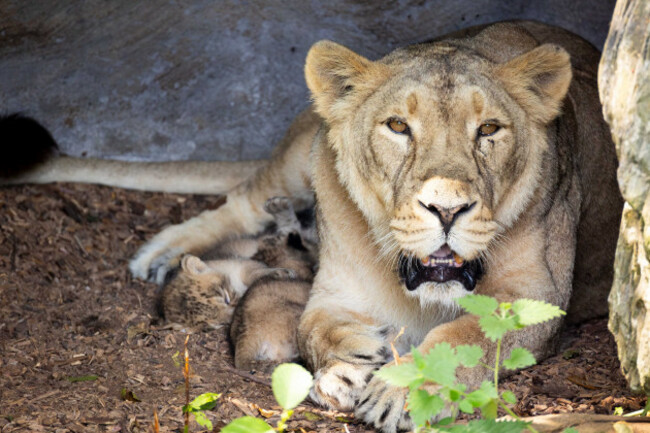
FOTA WILDLIFE PARK has announced the births of two Sumatran tiger cubs and three Asian lion cubs, calling their arrival a “landmark moment” for its conservation breeding programme. 

The Sumatran tiger cubs were born on 16 June to mother Jambi and father Batak while the lion cubs arrived on 1 July to mother Arya and father Yali.

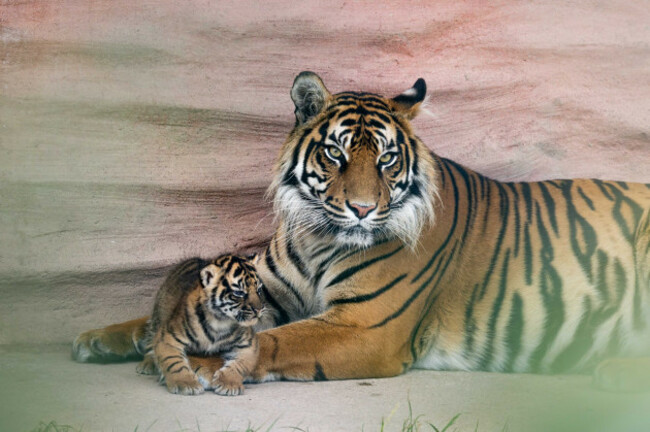
Sumatran tigers are critically endangered, meaning they are close to being extinct in the wild. The smallest subspecies of tiger, they come from the Indonesian island of Sumatra and have a deeper orange coat that their larger counterparts. 

0M8A9203 (1) Jambi and one of her cubs Michael O'Sullivan / OSM PHOTO Michael O'Sullivan / OSM PHOTO / OSM PHOTO

There are only around 350 Sumatran tigers left in the wild. 

Asian lions are classified as endangered and the only wild population is located in India’s Gir Forest, where there were 891 individuals last recorded in 2025. 

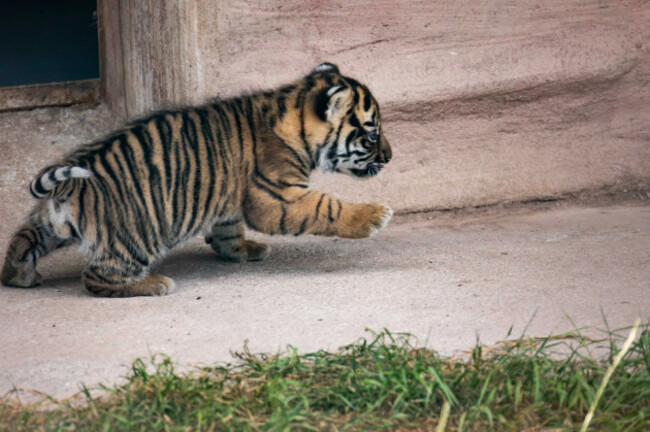
0M8A9275 One of the tiger cubs Michael O'Sullivan / OSM PHOTO Michael O'Sullivan / OSM PHOTO / OSM PHOTO

“These latest births demonstrate Fota Wildlife Park’s ongoing commitment to global conservation programmes and its significant role in supporting efforts to raise awareness, educate and protect some of the world’s most endangered species,” the park said in a statement. 

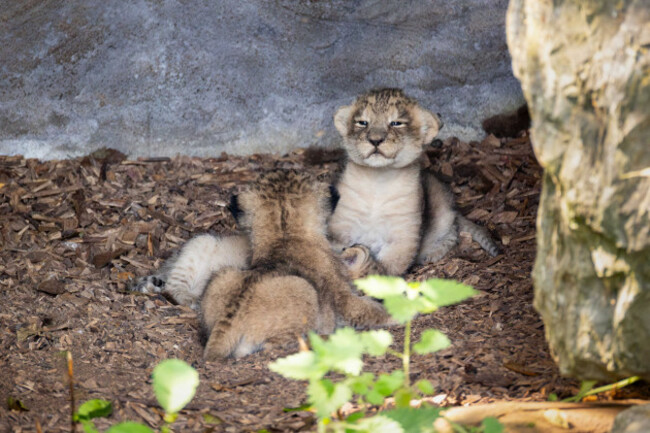
0M8A8609 The three Asian lion cubs Michael O'Sullivan / OSM PHOTO Michael O'Sullivan / OSM PHOTO / OSM PHOTO

Lead ranger John Leahy said the park’s staff were “absolutely thrilled” to announce the birth of both sets of cubs.

“I have to pinch myself when I think about the fact that we’re announcing both Sumatran tiger and Asian lion cubs this summer,” he said. 

He said the cubs are currently getting the space they need to develop with their mothers, so they are not on public view yet.

0M8A8220 Arya and her cubs Michael O'Sullivan / OSM PHOTO Michael O'Sullivan / OSM PHOTO / OSM PHOTO

“It’s Jambi the Sumatran tiger’s first time being a mother, and she’s been amazing,” Leahy said.

“The two tiger cubs are feeding really well. At this stage of their growth, we really take a hands-off approach and allow the young cubs to nurse naturally.

“Jambi has kept them mostly in their house and only brings them out in the evenings, after the Park has closed, when the temperatures have cooled.

He said that Arya, the lioness, “has been an incredibly protective and attentive mother”.

“She gave birth in the den, which faces the visitor viewing area, and we have to restrict the area for now to allow her the privacy and space she needs while nursing and caring for her cubs.

“As a result, the cubs are not visible publicly, but we hope to reopen access within the next few weeks as they continue to settle.”

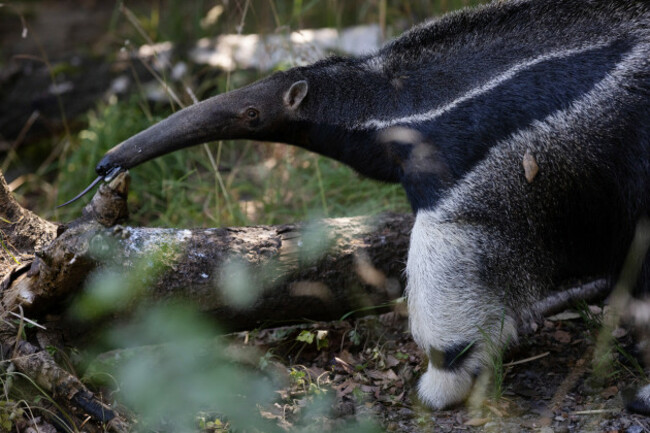
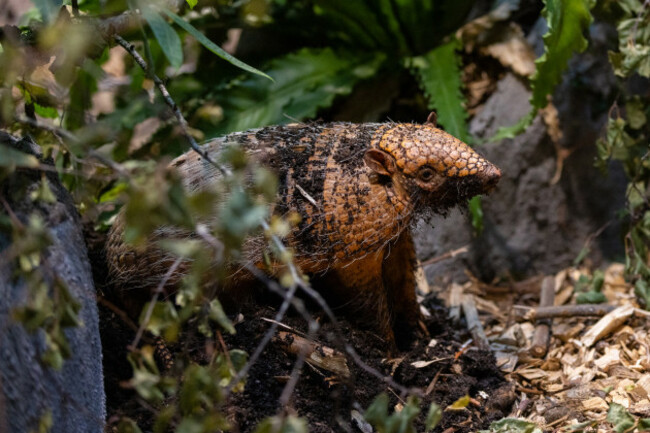
Meanwhile, Dublin Zoo has announced the arrival of two new species: the six-banded armadillo and giant anteater.

Milo, a ten-year-old female giant anteater and Junio, an eight-year-old male, both arrived from Allwetter Zoo in Germany.

REPRO_FREE_Dublin_Zoo_Anteater_06 One of the giant anteaters Patrick Bolger Patrick Bolger

The largest of the anteater species, giant anteaters can weigh more than 40kg and grow to more than eight feet in length. They are classified as vulnerable and the most threatened mammal in Central America.

REPRO_FREE_Dublin_Zoo_Armadillo_05 Ozzy the armadilllo Patrick Bolger Patrick Bolger

The zoo received one one-year-old six-banded armadillo named Ozzy, from Hagenbeck Zoo in Germany.

Native to South America, the species gets its name from their six bands of armour.

All three new animals are already on display in Dublin Zoo’s Rainforest House. 

Close
3 Comments
This is YOUR comments community. Stay civil, stay constructive, stay on topic. Please familiarise yourself with our comments policy here before taking part.
Leave a Comment
    Submit a report
    Please help us understand how this comment violates our community guidelines.
    Thank you for the feedback
    Your feedback has been sent to our team for review.

    Leave a commentcancel

     
    JournalTv
    News in 60 seconds