Sign in. It’s quick, free and it’s up to you.
An account is an optional way to support the work we do. Find out more.
Sign in. It’s quick, free and it’s up to you.
An account is an optional way to support the work we do. Find out more.
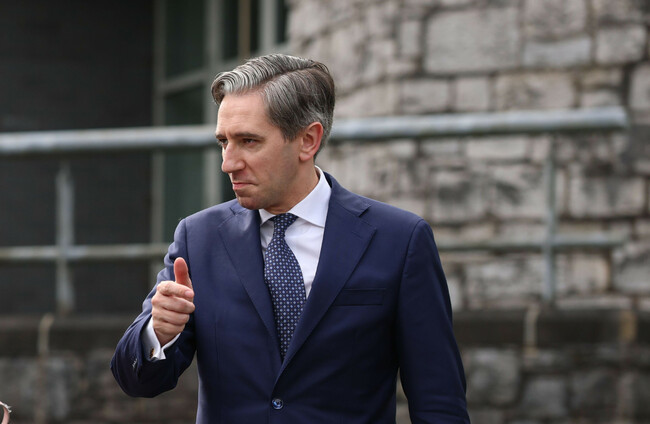
FINANCE MINISTER SIMON Harris has stressed that improving people’s disposable income will be a core focus of Budget 2027, with cuts to income tax and more support in areas like childcare key priorities for the government.
Harris was speaking at the launch of the Summer Economic Statement in the Department of Finance this afternoon alongside Public Expenditure Minister Jack Chambers.
The Summer Economic Statement essentially kicks off the negotiations between different government departments over the Budget by setting out the parameters of what money is available.
This year’s Budget will take place on 6 October and will have an overall spending expenditure ceiling of €125.5 bn.
This includes an additional €7 bn in public spending compared to last year, alongside an additional tax package of €1.5 bn in new measures.
This amounts to a rise in public spending of 5.9%, with a total additional spend of €8.5bn on last year’s Budget.
The increase in spending is in line with the ceiling set in the medium-term fiscal plan published last December.
Details of the Budget won’t be revealed until October (although, as is now normal, much will likely be leaked beforehand), but for now the Government has said the focus of this year’s package will be on “making work pay”.
In recent weeks, Harris has said one of his priorities for this year’s Budget is to put more money back in ordinary workers’ pockets via a tax package and changes to income tax bands.
Speaking today, the Tánaiste and Finance Minister said while he believes the social welfare system is “extraordinarily important”, it can’t be seen as the only lever the government can use to address the cost of living.
He pointed to cutting childcare costs and introducing his proposed personal investment accounts as two other “levers” the government can use to help people with the cost of living.
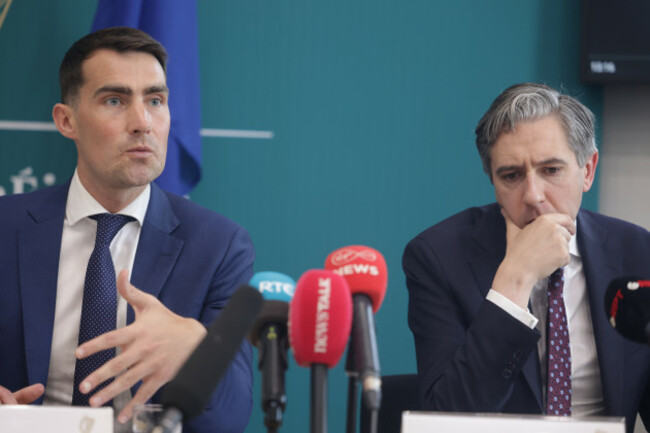
Public Expenditure Minister Jack Chambers said that alongside an income tax package, the other way the government is planning to “better reward workers” in the forthcoming Budget is by driving better value and return on investment in public services like housing and public transport.
He said the government’s approach to spending in this Budget will be built on two key priorities: firstly, continuing to invest in critical infrastructure and secondly, slowing the rate of growth in current government spending.
“Public spending has increased significantly in recent years, 52 billion [euro] more since 2019, and this is supporting policy outcomes across key areas of health, social protection, and education. However, I believe there is room for much better value to be achieved for the level of investment currently taking place,” Chambers said.
Speaking alongside Chambers and Harris this afternoon, chief economist at the Department of Finance, John McCarthy, said that the Irish economy is being shaped this year by the supply-side shock of the conflict in the Middle East and by the shake-up in Artificial Intelligence (AI).
“Ireland and a few other jurisdictions are seeing a rapid increase in AI-related investment,” McCarthy said, adding that this is contributing to strong growth in modified domestic demand (a spending metric) in Ireland.
From a labour market perspective, McCarthy said the Irish economy is “in good health”, with unemployment consistently at or below 5% for 54 consecutive months, the longest streak of low unemployment the State has ever seen.
From a public finance perspective, however, McCarthy warned that Ireland remains heavily reliant on a small number of firms for corporation tax, with just three or four products driving the overall increase in corporation tax intake.
With reporting from David Mac Redmond

To embed this post, copy the code below on your site












have your say