Sign in. It’s quick, free and it’s up to you.
An account is an optional way to support the work we do. Find out more.
Sign in. It’s quick, free and it’s up to you.
An account is an optional way to support the work we do. Find out more.
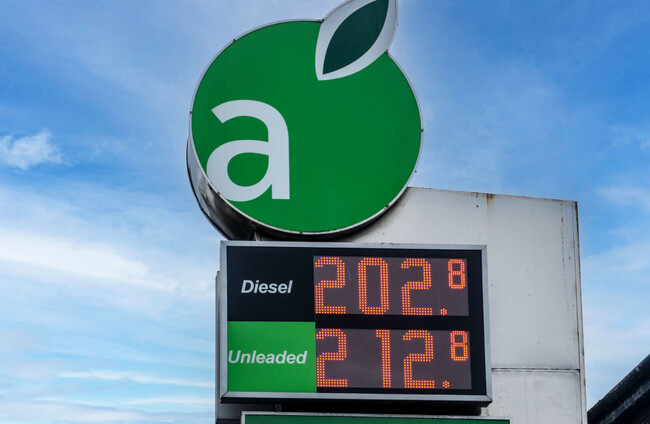
SINCE WAR BEGAN in Iran on Saturday, the most stark direct impact on Ireland is a spike in fuel and energy prices.
Consumers have reported massive hikes in the cost of home heating oil while anxiety surrounds fuel prices at the pumps. Increases of up to 16 cent per litre for motor fuel have been reported.
The Irish Road Haulage Association has warned diesel prices are likely to reach and surpass €2 per litre, and has urged the government to introduce temporary supports for operators. Opposition TDs have suggested cutting some of the taxes levied on motor fuel.
Fuel card company DCI yesterday informed its customers its prices per litre of fuel would increase by 12.5c, effective from midnight last night. This is due to “significant volatility across global oil markets”, it said.
Home heating oil has seen larger increases in price. This is because it has fewer excises and taxes than motor fuel and is therefore more vulnerable to shifts in the market.
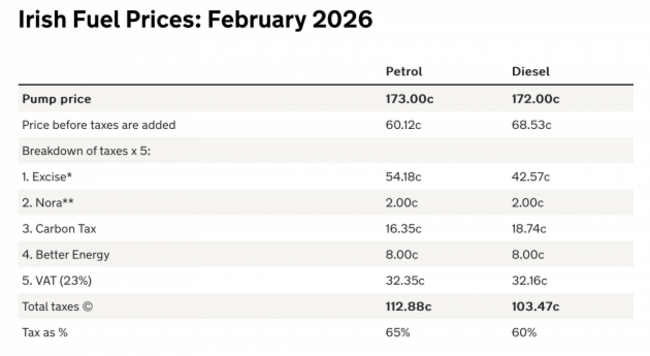
Between 60 and 65% of the cost of motor fuel is tax. The highest tax is excise, which is a fixed amount which is charged per litre and hence does not change as the price fluctuates. Carbon Tax is effectively the same although it is calculated per ton of CO2 generated.
On Friday, 27 February before markets closed for the weekend, a barrel of crude oil was sitting at around $67. Now, it’s at $77. Brent oil, a type of crude oil, is trading at above $80 a barrel.
At the peak of the energy crisis as a result of the Ukraine invasion, the price of a barrel topped $120.
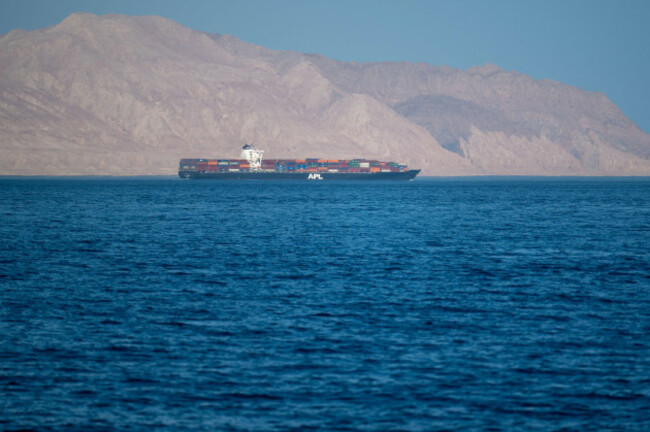
The current market volatility is due to the ongoing conflict and the situation with a narrow 21-mile sea passage called the Strait of Hormuz, a vital route for world oil and gas supplies.
Iran claimed “complete control” of the Strait of Hormuz, through which around 20% of the world’s crude oil is transported.
It was previously reported that the strait had been effectively closed by Iran. While the Taoiseach yesterday said this closure shouldn’t have a substantial impact on oil and fuel prices in Ireland, given much of our oil comes from the North Sea, it has nonetheless placed pressure on global markets and shock has been felt here.
The situation remains dynamic and there’s no way to predict how this will play out in the long term. So, what do we know right now?
Oil and gas prices are set internationally by the markets. This is because oil is a very substitutable good and used for different purposes, for example crude oil is refined into fuels like petrol, diesel and kerosene.
“It’s a very specific chemical compound,” ESRI senior research officer Muireann Lynch told The Journal. “If the price jumps in Iran, of course it’s going to jump in Norway or in the UK [or elsewhere]. If you can sell your oil at this higher price, why wouldn’t you?”
Lynch specialises in the research of energy economics and electricity market regulation.
“The oil market is notoriously not competitive,” she said. She referenced the massive surge in gas prices across the world after the Russian invasion of Ukraine, even in the US, which weren’t importing any gas from Russia.
So is it likely for Irish consumers to see an increase in fuel prices like we did after the Russian invasion of Ukraine?
The Ukrainian invasion impacted gas more than oil, this is going to impact oil more than gas.
“But because those two fuels are kind of substitutes, what happens to one affects the other. A lot of it just depends on the duration of this [the war in Iran],” she said. “An energy company can absorb a shock in prices in the short term, but eventually they have to pass on that increase.”
Permanent changes were made to supply chains to mitigate the hit on energy prices seen after the Russian invasion of Ukraine, which has been ongoing for four years.
“What’s uncertain here is first of all, how long is this military intervention going to last? Could it be a few weeks, or could it grind on for a longer period of time? But also, assuming it is only a few weeks, what happens after that?
“Do we get a stable regime in place, in which case hopefully prices will stabilise and go back to the way they were, or do we get an unstable regime in place, in which case we might have to move to a new equilibrium in oil in the way we had to move to a new equilibrium in gas in the wake of the Russian invasion of Ukraine.”
She said the Iranian and Ukrainian conflicts are “very different” in that they affect two different types of fuels, though the effect on one price influences the other.
“What we’re seeing right now is a massive shock, and that shock is being responded to in a short term manner.” How the price moves in the medium to long term depends on how lasting the shock may be.
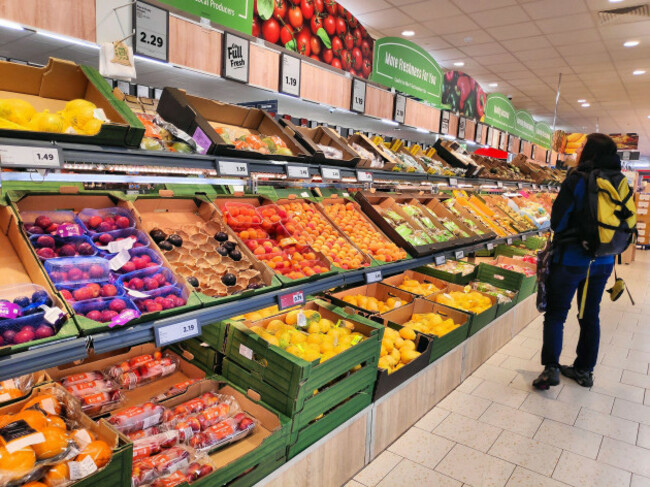
Despite being a leading force in the global beef and dairy market, Ireland imports around 80% of its food, beverage and animal feed needs – and the cost of these importations can, over time, increase if shipping and transportation costs rise substantially.
This was also something seen in the aftermath of the Russian invasion of Ukraine, but it has levelled out as wages later grew at a faster rate than prices.
“It’s not going to have any impact on the underlying price level in the short term,” Lynch said. “It does take longer for these things to feed through [than oil prices]. But the fact that we’re having so much international conflict right now has implications for international trade, completely aside from any changes in fuel prices, or indeed, general prices.”
Uncertainty over tariffs and less stable relationships with major trading partners such as the US could have impacts on global markets – but in the short term Ireland’s economy remains steady.
At a time when almost 320,000 households are in arrears over their electricity bills, any instability in the market is less than welcome.
“If you’re filling up your car or your home heating oil tank, you’re going to see that effect immediately,” Lynch said, but electricity and gas bills will take longer to be affected.
If the current situation lasts only into the short term, “we wouldn’t expect to see hikes in wholesale electricity prices or wholesale gas prices, and for that reason we wouldn’t expect to see hikes in home energy bills”.
If it turns out to be more long term, then it is likely there will be a spike in the unit price for electricity, gas, petrol, diesel and home heating oil, she said.
The small mercy in this regard is that any volatility comes as we exit the winter, she said, which means, although people could possibly be paying a higher rate for less energy, they will also be using less.
If you’ve come across any price hikes, oil or otherwise, send us on the details to answers@thejournal.ie and we’ll check it out

To embed this post, copy the code below on your site














have your say