Sign in. It’s quick, free and it’s up to you.
An account is an optional way to support the work we do. Find out more.
Sign in. It’s quick, free and it’s up to you.
An account is an optional way to support the work we do. Find out more.

OIL PRICES HAVE surged above $100 a barrel yet again.
The jump comes as the US and Israel’s ongoing war on Iran fuels fears of a prolonged disruption to global energy supplies.
The spike has been driven largely by disruption in the Strait of Hormuz, the narrow shipping lane between the Persian Gulf and Gulf of Oman through which roughly a fifth of the world’s oil supply normally passes.
There’s lots of concern about rising fuel prices and the potential for a wider global economic shock, but it’s not the first time in recent decades that oil has surged above the $100 (€86.55) mark.
Here’s a look at some of the previous oil price spikes.
Peak cost of petrol in Ireland during crisis: €1.33 per litre (July 2008)
Oil prices reached their highest level in history in June 2008, when crude surged to a peak of $147.50 a barrel.
The surge came just months before the global economy tipped into the global financial crisis of 2008, which was triggered primarily by the collapse of the US housing market and financial system.
While high oil prices were not the cause of the crash, they added to the strain on households and businesses.
The price of oil had doubled in the span of just one year because global demand for oil was rising faster than supply could keep up.

Rapid economic growth, particularly in China and other emerging economies, meant factories, transport systems and construction projects were all using more energy.
At the same time, oil production was not increasing quickly enough to meet that demand.
Oil producers had limited spare capacity and global inventories were falling, meaning there was less of a buffer in the system if supplies tightened.
With markets already tight, investors also poured money into commodities such as oil, betting prices would keep rising. That extra financial speculation helped push prices even higher.
On top of that, unrest and tensions in key oil-producing nations, notably Iran and Nigeria, caused supply concerns.
The price surge was short-lived, and when the global financial crisis triggered a severe global recession later that year, demand collapsed and oil prices plunged to $41.73 a barrel in January 2009.
Peak cost of petrol in Ireland during crisis: €1.61 per litre (September 2013)
Oil climbed above $100 again in March 2011 during the Arab Spring, reaching a peak of $127 a barrel.
A wave of uprisings and political instability which toppled long-standing leaders in Tunisia, Egypt and Yemen swept across the Middle East and North Africa, including major oil producers such as Libya.
An uprising against Libyan leader Muammar Gaddafi in February 2011 disrupted production (the country had produced 1.65 million barrels of oil per day in 2010), while unrest across the region raised fears that supplies from other exporters could also be affected.

Oil prices then fell in late 2011 amid the eurozone economic crisis, but a series of Western sanctions on Iran (including restrictions on its crude exports) helped lift prices back above $100 as markets priced in tighter potential supplies.
The instability, including further conflicts such as the Syrian civil war, pushed oil above $100 several more times over the next three years.
Peak cost of petrol in Ireland during crisis: €2.13 per litre (June 2022)
Oil surged above $100 once more after the Russian invasion of Ukraine began in February 2022, eventually hitting $114.32 a barrel by May that year.
Russia is one of the world’s largest oil and gas exporters, and the invasion triggered sweeping sanctions and major disruption to global energy markets.
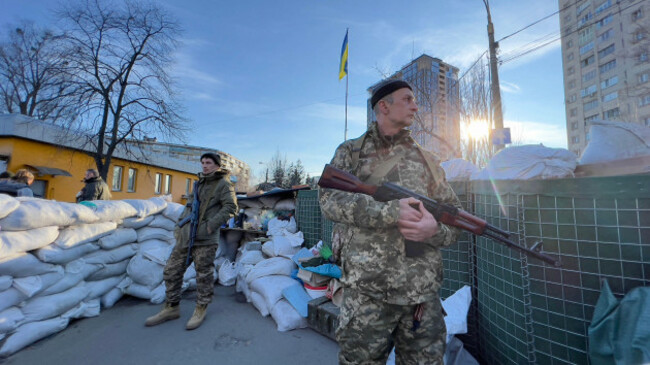
Prices climbed steadily in the months following the invasion as traders assessed how much Russian supply could be replaced.
European countries rushed to find alternative energy sources, pushing up prices worldwide.
The surge followed the impacts of the Covid pandemic, which had briefly pushed oil prices as low as $9 a barrel in April 2020.
The price jump was also passed on to the forecourts in Ireland, contributing to the cost of petrol here surpassing €2 per litre for the first time in June 2022 (the increase was also partially due to the introduction of a carbon tax on petrol in 2021).
Ultimately, it’s going to depend on how long the conflict lasts, and whether disruptions to global energy supplies ease.
The indirect effects could be significant here though, similarly to the previous crises.
As columnist Paul O’Donoghue explained, fuel prices are already rising sharply, with petrol and diesel exceeding €2 per litre in many forecourts.
Higher oil prices can also push up the cost of transport, food and other goods.
The Central Bank has previously estimated that a sustained 13% rise in oil prices could reduce Ireland’s GDP by about 0.5%, while prolonged energy shocks can feed into higher inflation.
Need more clarity and context on what is happening in the Middle East? Check out our FactCheck Knowledge Bank for essential reads and guides to finding good information online.

To embed this post, copy the code below on your site













have your say