Sign in. It’s quick, free and it’s up to you.
An account is an optional way to support the work we do. Find out more.
Sign in. It’s quick, free and it’s up to you.
An account is an optional way to support the work we do. Find out more.
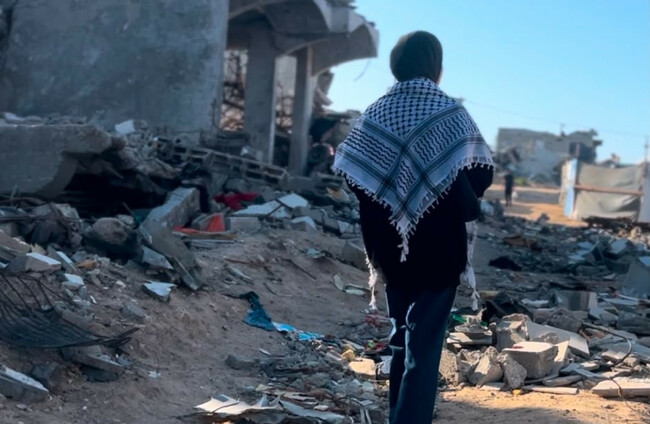
PALESTINIAN STUDENT MOHAMMED has told of how he had to climb to the roof of his building in Gaza to access a strong enough internet connection to apply for college and scholarships.
He said the dangerous task made him vulnerable to snipers from the Israeli Defence Forces, but he was determined to further his education and someday use it to help rebuild his home country.
The 24-year-old has been accepted into the master’s of biomedical engineering at University College Dublin (UCD) and has been awarded a scholarship covering his living expenses.
Mohammed told The Journal he’s due to begin his studies on 7 September, but he’s still waiting to find out if the Department of Justice will approve his visa application to study here.
More than half of a group of 59 Palestinian students awarded scholarships have been refused permission to enter the country. The scholarships are fully or partially funded by Irish third-level institutions and are run through a ‘Universities of Sanctuary’ initiative.
Trinity College Dublin (TCD) has called the refusals “deeply concerning” and the Labour Party and Social Democrats have called on Justice Minister Jim O’Callaghan to urgently review the visa decisions.
For Mohammed, waiting to find out his visa status has been the “most stressful” part of the long application process.
He is urging the government to grant Palestinian students the visas they need to study here.
“Let us study. Give us a chance to prove ourselves. We are the future of our country,” he said.
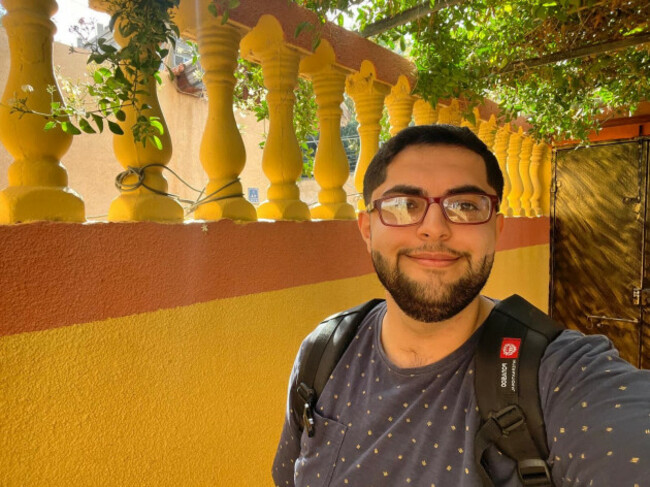
The Journal spoke to several Palestinian students denied visas despite being offered scholarships.
Reem, a 26-year-old from the now-destroyed city of Beit Hanoun, is due to start the master’s of structural and geotechnical engineering at TCD next month.
Reem was awarded a full scholarship for the degree, and planned to use what she learned in Ireland to help rebuild the infrastructure of Palestine.
Three days ago she found out her visa was rejected.
“I am deeply shocked, devastated, and completely heartbroken by this profound injustice,” she said.
“To have survived relentless bombardment, overcome impossible odds, and earned a fully funded scholarship, only to be turned away by a bureaucratic decision after months of waiting, is a betrayal I cannot put into words.”
She said the visa system questions gaps in educational and employment histories, while “failing to see that an ongoing genocide has completely destroyed our universities, workplaces, and entire cities”.
Reem believes visa rejections citing financial insufficiency are “deeply unjust”.
“Many of us, including myself, have secured fully funded scholarships that cover tuition, living stipends, health insurance, and flight tickets — fully satisfying Ireland’s financial criteria,” she said.
“To receive a visa rejection under these assumptions feels deeply demoralising, especially coming from Ireland, a nation whose people we have always looked up to for solidarity and support.”
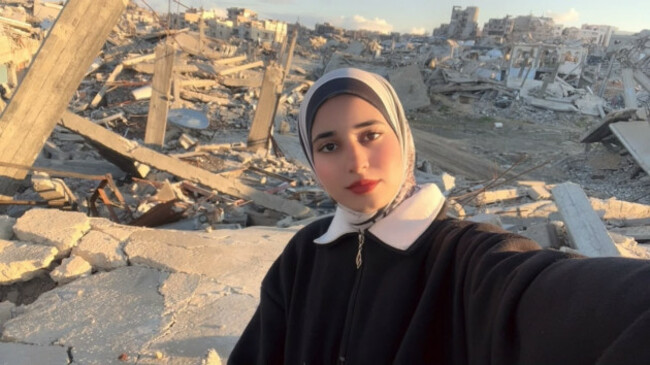
Haya (26) has also had her visa application denied. She was accepted into the master’s of public health at UCD and awarded a full scholarship.
She recounted how she walked three kilometres each day while living in a tent in Khan Younis, a city in the Gaza Strip, to find an internet connection and work on her college applications.
Eventually, she received unconditional admissions in many countries, as well as partial scholarships in some. However, she chose Ireland because of “it’s principled and supportive stance toward Palestine”.
She said being awarded a scholarship is the “best thing” that has happened to her in three years.
“I still feel like I am dreaming,” she added.
Abdullah (25) was accepted into the master’s of development practice at Trinity and awarded a full scholarship after graduating from college while displaced in 2024.
“I completed my graduation project during a period when having food was my biggest concern. I would go out at 3am to wait in a long line for bread,” he said.
He then began the journey to further pursue his education, and was granted several unconditional offers from universities in the UK and Ireland.
“I would go out early in the morning to get water for the house, then take my laptop and search for any location with electricity and internet access to look for scholarships and submit my applications to universities,” he said.
Now he feels ”deeply frustrated and disappointed” after receiving the news that his visa application has been rejected.
“It feels like all my months of hard work, day and night, have been for nothing. I hope I can complete my studies before it’s too late,” he said.
Heba, a teacher in Gaza, is still waiting to find out if her visa application will be approved so she can study English language teaching. She has been accepted into master’s at both UCD and Trinity.
She said that throughout the war she continued teaching to offer a “sense of routine and hope” for her students, and help support her family financially.
“After everything Gaza has been through, I feel an even stronger responsibility to help students rebuild their confidence through education,” she said.
“This master’s degree will help me develop better teaching methods and learn how to design educational programs for children who have experienced war, trauma, displacement and loss.
“My dream is to return to Gaza and contribute to rebuilding education by supporting students and training future English teachers.”
The students asked that their full names not be used, but the names are known The Journal.
A spokesperson for the Department of Justice said student visas have been granted to 41 Palestinian nationals so far this year.
“In common with the position for all non-EU nationals, entry of Palestinian nationals is undertaken through the existing legal immigration pathways available,” they said.
“Palestinian nationals are visa required and must have a valid Irish visa before they seek to enter Ireland.
“There has been no change to the requirements to obtain a visa this year. Each application, regardless of nationality, is decided on its own merit.”

To embed this post, copy the code below on your site














have your say