Sign in. It’s quick, free and it’s up to you.
An account is an optional way to support the work we do. Find out more.
Sign in. It’s quick, free and it’s up to you.
An account is an optional way to support the work we do. Find out more.
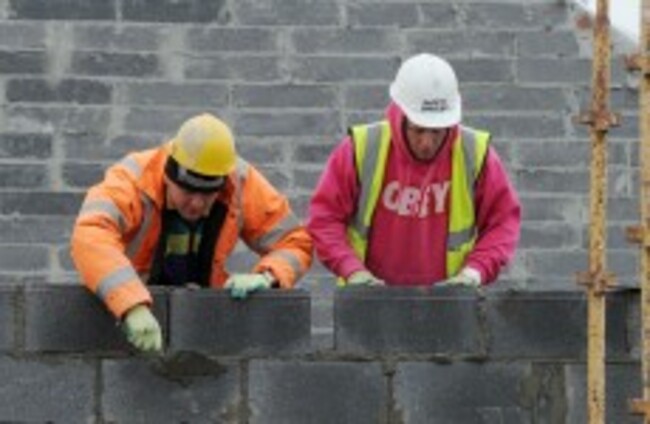
A REPORT BY The Pensions Board has said that a considerable part of its time has been spent investigating and prosecuting cases where employers in the construction industry failed to pay contributions to a pension scheme after deducting it from employees’ wages.
The board said its work in 2012 had resulted in a significant number of prosecutions and convictions of companies, and in many cases directors, and these have continued in 2013. Chief Executive Brendan Kennedy said that the board has been investigating other offences with a view to prosecutiont as soon as possible.
In the board’s annual report, Kennedy said that the construction industry prosecutions have been the result of whistleblowers by scheme trustees and others, and the number of these alerts it now falling sharply.
“This means that the Board will be able to devote more time in 2013 to proactive supervision and we can focus our attention on other areas of non-compliance,” he said.
Kennedy also said that there has been no overall improvement in the position of defined benefit and defined contribution schemes, in which a lump sum is agreed upon with employers at the beginning and paid to the worker on retirement.
“The majority of such schemes have considerably less assets than are needed to meet the funding standard, and must prepare and submit a recovery plan to the Board by mid-2013″, he said.
The objective of the funding standard is to ensure that each scheme member has a reasonable chance of receiving the benefits set out in the rules of the scheme. Without an adequate standard, there is a substantial risk that by the time that younger members retire, the scheme assets will have been exhausted in paying the benefits of those who retired before them; the longer that schemes put off meeting the standard, the greater is this risk.
Kennedy expressed concern at “poor administration and record keeping”, which could result in members not receiving all of the benefits to which they are entitled.
Last year the board carried out 28 on-site investigations and Kennedy said that in four cases, the standard of adminstration was so low that had remedial action not been taken, the board would have cinsidered withdrawing the registration of the administrator involved.
He said that the level of compliance is “unacceptably low” when it comes to the submission of annual scheme information by trustees.

To embed this post, copy the code below on your site














have your say