Sign in. It’s quick, free and it’s up to you.
An account is an optional way to support the work we do. Find out more.
Sign in. It’s quick, free and it’s up to you.
An account is an optional way to support the work we do. Find out more.
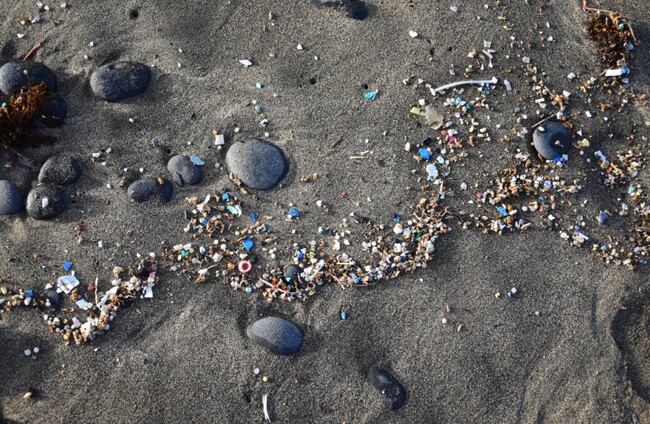
LEVELS OF PLASTIC in the Atlantic Ocean are “much higher” than previously estimated as a result of plastic debris hidden beneath the ocean’s surface.
A study published by the journal Nature Communication has found that there are between 12 and 21 million tonnes of microplastic suspended in the top 200 metres of the Atlantic Ocean alone.
The study measured pollution from three plastic types commonly used for packaging – polyethylene, polypropylene, and polystyrene – at 12 locations across a 10,000km stretch of the Atlantic Ocean.
The researchers, who are from the UK’s National Oceanography Centre, collected samples of the microplastics on an expedition from the UK to the Falkland Islands, identifying up to 7,000 particles per cubic metre of seawater.
Previous estimates of plastic mass in the Atlantic since 1950 had suggested that were 17 million tonnes of plastic were floating in the ocean.
If the samples taken from the highest 200m of the ocean are representative of the concentration of plastics at other depths of the Atlantic, it means there are an additional 178 million tonnes of plastic in the ocean compared to previous estimates – ten times more than previously thought.
 Oceanography Centre / Twitter
 / Twitter
Oceanography Centre / Twitter
Oceanography Centre / Twitter / Twitter
Dr Katisaryna Pabortsava, lead author of the paper, said that “previously, we couldn’t balance the mass of floating plastic we observed with the mass we thought had entered the ocean since 1950″.
“This is because earlier studies hadn’t been measuring the concentrations of ‘invisible’ microplastic particles beneath the ocean surface,” she said.
“Our research is the first to have done this across the entire Atlantic, from the UK to the Falklands.”
The seawater samples were collected between September and November 2016, and plastics were then detected and identified using spectroscopic imaging.
Co-author Professor Richard Lampitt said that “if we assume that the concentration of microplastics we measured at around 200 metres deep is representative of that in the water mass to the seafloor below with an average depth of about 3000 metres, then the Atlantic Ocean might hold about 200 million tonnes of plastic litter in this limited polymer type and size category”.
“This is much more than is thought to have been supplied,” Lampitt said.
“In order to determine the dangers of plastic contamination to the environment and to humans we need good estimates of the amount and characteristics of this material, how it enters the ocean, how it degrades and then how toxic it is at these concentrations,” he said.
“This paper demonstrates that scientists have had a totally inadequate understanding of even the simplest of these factors, how much is there, and it would seem our estimates of how much is dumped into the ocean has been massively underestimated.”
The study identified that plastic plays an important role in daily lives with features that are not matched by other materials.
However, it said that plastic’s durability has negative ramifications when it is released into the environment through poor waste management practices.
“To date, a key uncertainty has been the magnitude of contamination of the ocean and our findings demonstrate that this is much higher in terms of mass than has been estimated previously,” the study said.
“As plastics are likely to be widely used for many years to come, the need to quantify this material in terms of its sources, sinks and the processes responsible is a matter of considerable urgency,” it said.
“Without this fundamental knowledge, evidence-based conclusion about harms associated with exposure to plastics as well as decisions about the ways society produces, uses and disposes of this very valuable and extraordinary material will not be possible.”

To embed this post, copy the code below on your site














have your say