Sign in. It’s quick, free and it’s up to you.
An account is an optional way to support the work we do. Find out more.
Sign in. It’s quick, free and it’s up to you.
An account is an optional way to support the work we do. Find out more.
LAST UPDATE | 21 Apr 2025
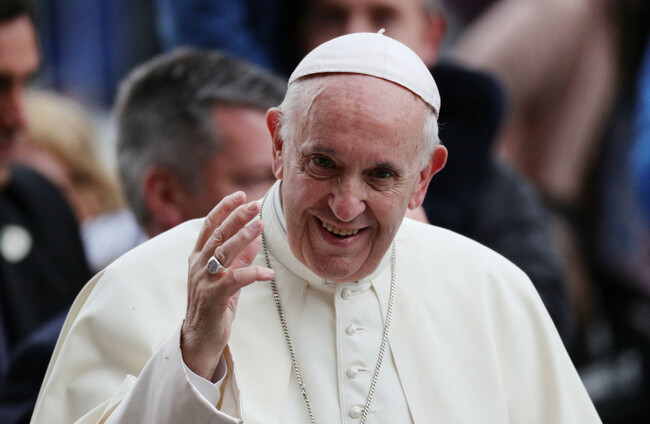
POPE FRANCIS HAS died at the age of 88.
In a statement, the Vatican said: “Pope Francis died on Easter Monday, April 21, 2025, at the age of 88 at his residence in the Vatican’s Casa Santa Marta.”
He was born Jorge Mario Bergoglio on 17 December 1936, in Buenos Aires, Argentina.
His Italian grandparents emigrated to Argentina in 1929, travelling third-class on a boat while his grandmother hid her possessions in the lining of her jacket.
Francis was also the head of the Jesuit order in Argentina from 1973 to 1979, during the country’s brutal military dictatorship.
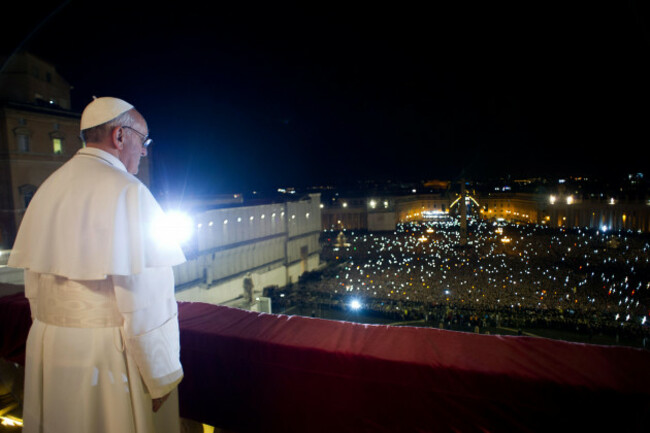
Following the resignation of Pope Benedict XVI on 28 February 2013, a papal conclave elected the then-Argentine cardinal as his successor on 13 March 2013.
He was the first pontiff to adopt the papal name Francis, and did so in honour of St Francis of Assisi, the patron saint of the poor and animals.
Francis was also the first Jesuit to become pope.
Francis was admitted to the Gemelli hospital in Rome on Friday 14 February for bronchitis and his hospital stay was later extended due to a “complex clinical picture”.
The Pope asked for more openness about his health as he received treatment and evening updates provided by the Vatican revealed the seriousness of his condition in stark terms.
Francis’s bronchitis later developed into pneumonia in both lungs, which sparked widespread alarm as he had part of a lung removed as a young man.
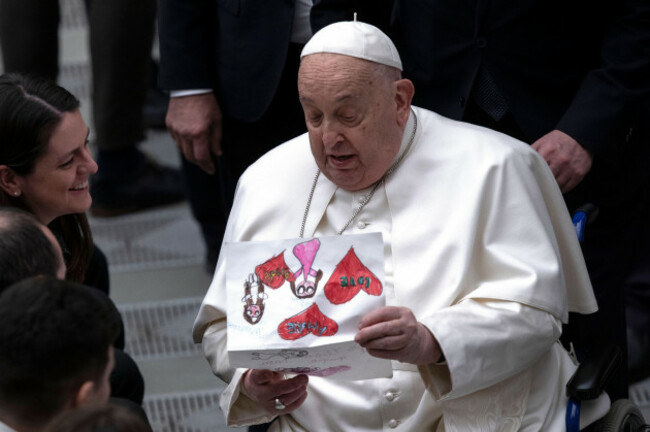
Francis spent 38 days in hospital before he was released on 23 March, and he had faced two “critical episodes” while hospitalised which put his life in imminent danger.
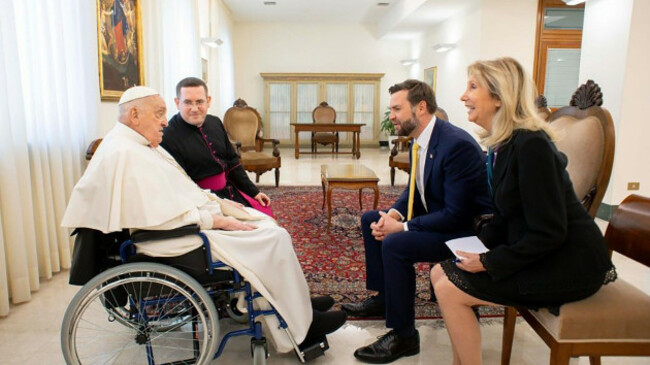
He was seen in St Peter’s Basilica recently, greeting people without his usual papal attire on 10 April. He also met with US vice-president JD Vance yesterday and also wished the crowds on St Peter’s Square a “Happy Easter” as he waved and in his traditional “Urbi et Orbi” (“To the City and the World”) benediction he called for freedom of thought and tolerance.
This morning, Cardinal Kevin Farrell, sadly announced the death of Pope Francis, with these words:
“Dear brothers and sisters, it is with deep sorrow that I must announce the death of our Holy Father Francis.
“At 7:35 this morning, the Bishop of Rome, Francis, returned to the house of the Father. His entire life was dedicated to the service of the Lord and His Church.
“He taught us to live the values of the Gospel with fidelity, courage and universal love, especially in favour of the poorest and most marginalised.
“With immense gratitude for his example as a true disciple of the Lord Jesus, we commend the soul of Pope Francis to the infinite merciful love of the One and Triune God.”
Francis made tackling climate change one of the cornerstones of his papacy and published an encyclical in 2015 titled Laudato Si, which called for “swift and unified global action” to tackle climate change.
Earlier this year, he became the first sitting pope to publish a memoir and in it, he hit out at the “hypocrisy” surrounding his decision to allow blessings for same-sex couples and labelled some of Israel’s actions in Gaza as “terrorism”.
Francis was working right up to his hospitalisation and in one of his last public actions, he weighed in on US politics, criticising US president Donald Trump’s deportation plans.
He also explicitly rejected vice president JD Vance’s attempts to use Catholic theology to justify the administration’s crackdown on immigration.
Francis continued to work while in hospital, spending 20 minutes with Italian Prime Minister Giorgia Meloni, keeping in contact with the only Catholic parish in Gaza, and working with his “closest collaborators”.
Indeed, doctors initially said they were afraid to send him back to the Santa Marta apartments as they feared he would “start working again as before”.
In October, Francis named 21 new cardinals in a move that cemented his mark on the group that will soon gather to elect his successor.
One of the people elected to the College of Cardinals by Francis was Father Timothy Radcliffe.
Radcliffe has often publicly challenged the Catholic Church’s teaching on LGBTQ+ issues and publicly raised the issue during the first phase of the Church’s historic Synod in 2023.
In his autobiography, Francis revealed that he had a “feeling” that his papacy would be “brief, no more than three or four years”.
“I never imagined that I would have made all those journeys to more than sixty countries,” he wrote.
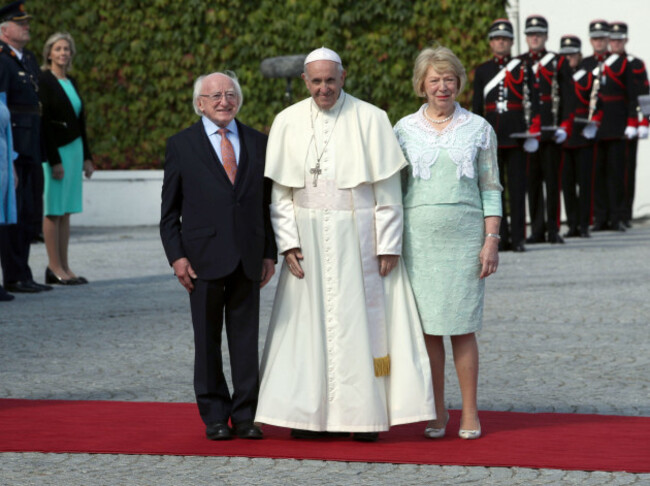
One of these countries included Ireland. Francis arrived for a two-day visit in August 2018 as part of the World Meeting of Families, a Catholic festival held every three years in a different country to discuss what it means to be a Catholic family.
During a mass in the Phoenix Park, the pope asked forgiveness for “abuses in Ireland, abuses of power, conscience and sexual abuses” perpetrated by Church leaders.
Elsewhere in Dublin, a large crowd marched in silence to remember abuse victims and express their anger and hurt over the Catholic Church’s historical role in Irish life.
Francis also revealed in his autobiography that he will not be buried in St Peter’s Basilica, writing: “The Vatican is the home of my last service, not my eternal home.”
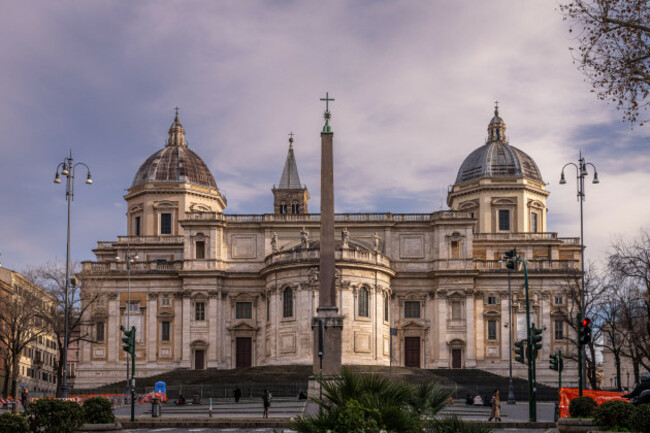
Instead, Francis will be buried at the Santa Maria Maggiore, one of four papal basilicas in Rome.
He also described the funeral service planned for him as “excessive” and “arranged with the master of ceremonies to lighten it”.
“No catafalque, no ceremony for the closure of the casket, nor the deposition of the cypress casket into a second of lead and a third of oak,” wrote Francis.
“With dignity, but like any Christian, because the bishop of Rome is a pastor and a disciple, not a powerful man of this world.”
In his memoir, Francis said he had received many blessings but when reflecting on his own mortality, he asked “the Lord for just one more”.
“Look after me. Let it happen whenever You wish, but, as You know, I’m not very brave when it comes to physical pain… So, please, don’t make me suffer too much.”
And further reflecting on his own death, Francis wrote: “Our time is pressing: When you want to seize today, it is already yesterday; and if you want to seize tomorrow, it is not yet there.
“These years of my papacy have been a life of tension, looking beyond.
“The journey of the Church, our lives, the foundation of our joy, the reason for our hope – these are dependent on the Lord, and certainly not on convenience or trends.
“And when we are rather more tired, the Lord knows even when to take us in his arms.”
Official health updates provided to the media during the pontiff’s hospitalisation stressed that Francis had been regularly sitting in an armchair in his room, and he was said to be in good spirits in the days after his admission in mid-February.
However confirmation that he had developed pneumonia in both lungs sparked widespread alarm, especially because he had part of his right lung cut away when he was 21, after developing pleurisy that almost killed him.
He had been using a wheelchair since 2022 because of persistent knee pain and then used a cane during rare moments standing up.
In recent years, Francis also had colon and hernia surgery.
While Francis said that “even during the days of surgery I never thought of resigning”, he nevertheless acknowledged that resigning was “always a possibility” and that had he resigned, he would have remained in Rome, “as emeritus bishop”.
Francis also wrote in his memoir that he “had the feeling” his papacy would be “brief, no more than three or four years”.
“I never imagined that I would have made all those journeys to more than sixty countries,” he wrote.
To embed this post, copy the code below on your site







have your say