Sign in. It’s quick, free and it’s up to you.
An account is an optional way to support the work we do. Find out more.
Sign in. It’s quick, free and it’s up to you.
An account is an optional way to support the work we do. Find out more.
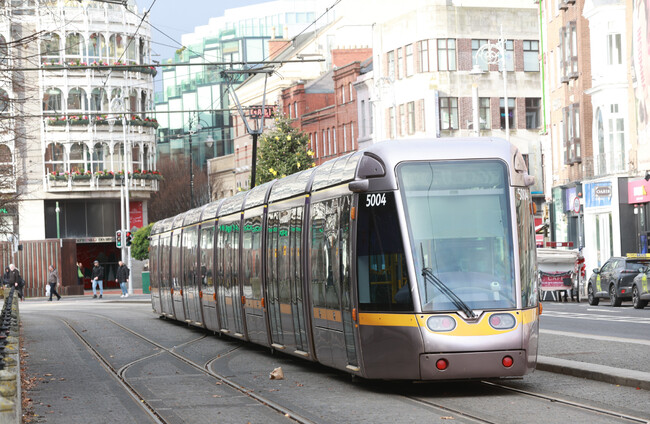
JUNIOR TRANSPORT MINISTER Seán Canney told the Dáil that public transport passenger numbers would grow next year, even though an internal budget scenario projected a decline if planned fare increases happened.
Adult fares on buses and trains nationwide are set to increase by an average of 15% from 1 January.
An August budget scenario released by the National Transport Authority (NTA) under the Freedom of Information Act projected a decline in passenger numbers in 2027 with the proposed fare increases in place.
The analysis was carried out after Minister for Transport Darragh O’Brien signed off on the average 15% increase.
A spreadsheet of figures titled ‘Public Policy Impact’, which set out expected outcomes under a budget scenario incorporating the 15% increase, predicted a 1% drop in passengers on Dublin Bus, Luas, Bus Éireann’s public service obligation (PSO) routes and other PSO services.
PSO services receive State funding to operate routes that are considered socially necessary but which would not generally be commercially viable on fare revenue alone.
The forecast also predicted a 3% drop in Irish Rail users and those availing of the Rural Transport Programme next year.
Overall, the August budget scenario projected a 1% decline in passenger numbers on State-subsidised services in 2027, despite anticipating increased capacity on bus, rail and Luas services.
Capacity was measured by the number of seats provided, and the distance travelled, which can increase through additional services or larger vehicles. The spreadsheet did not specify which changes would deliver the extra capacity.
The Transport for Ireland network recorded 363.5 million passenger journeys in 2025, meaning a change of 1% would represent several million journeys on a network of that scale.
The following month, Canney told the Dáil that “steady passenger growth is expected to continue throughout 2027″ despite the fare increases.
“Ongoing expansion and enhancement of services are anticipated to attract additional users and further strengthen public transport demand, outweighing any moderate reduction in demand associated with higher fares,” he said.
On the day the measures were announced, NTA chief executive Anne Shaw told The Journal that the fare increases would allow the NTA to invest in services and provide more choice, leading more people to avail of public transport.
She also pointed out that Irish public transport fares will remain lower than in many other major European cities, comparing Dublin fares to those in Vienna, Berlin and Brussels.
Meanwhile, other documents also show that O’Brien told the NTA not to announce the rise in public transport fares in September, despite personally confirming the increase in July.
Internal departmental correspondence seen by The Journal shows that O’Brien approved the 15% hike on 28 July – five weeks before the changes were made public.
The minister’s sign-off came on the same day that he responded to a parliamentary question by Sinn Féin TD Mark Ward about plans to increase fares, in which he said he was “not involved in the day-to-day operations of public transport”.
“Under the Dublin Transport Authority Act 2008, the NTA has the statutory responsibility for regulating fares for services provided under PSO [public service obligation] contracts, and publishes an annual fares determination,” the minister told Ward.
“As such, any future fares determination is a matter for the NTA.”
However, an email between Department of Transport assistant secretary Eamonn Murtagh and the department’s secretary general Ken Spratt on 30 July noted that O’Brien approved the changes two days earlier on 28 July.
“The Minister’s confirmed to us both on Tuesday [28 July] the following,” Murtagh wrote.
“1. 15% fare increase to apply from 1 January 2027, with any annual increases to apply from 1 January each year thereafter.
“2. That the NTA should not publicly communicate the increase until 1 September.”
Murtagh also said he would contact Shaw to ensure the announcement did not become public until 1 September.
He said the delay would allow for details about international comparators and the impact on commuters to be prepared “for communication purposes”.
The Journal asked the department and O’Brien’s spokesperson about the minister’s role in approving the increase and why he instructed the NTA to delay its announcement until September.
The department and Canney’s spokesperson were also asked what analysis supported his assurance of passenger growth in 2027, whether the August projections had been revised and what the latest forecasts showed.
No responses had been received at the time of publication.

To embed this post, copy the code below on your site













have your say