Sign in. It’s quick, free and it’s up to you.
An account is an optional way to support the work we do. Find out more.
Sign in. It’s quick, free and it’s up to you.
An account is an optional way to support the work we do. Find out more.
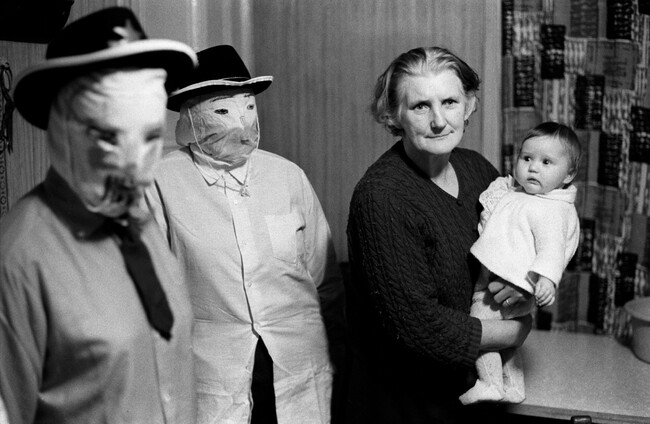

WHEN I THINK of St. Brigid’s Day, I think of white clothes, straw hats and the peculiar joy of stepping into a tradition that felt both ancient and alive. Growing up in Kilgobnet, Co. Kerry, 1 February marked more than just the turning of the season.
It was a time of small transfigurations, where the ordinary became luminous. The school hall, with its scuffed floors and faint smell of chalk, became a space of ritual. We gathered after the final class, our little Biddy group rehearsing polkas and sets until our feet ached, the rhythm of the brush dance pulsing through the room like a heartbeat.
We stitched straw hats and Brigid crosses with patience and laughter, our fingers learning to coax order from chaos. In this way, we wove ties of friendship that now feel eternal. It was never just about the merriment and fun — it was about belonging, the way this tradition folded you into something larger, something that hummed with memory and light.
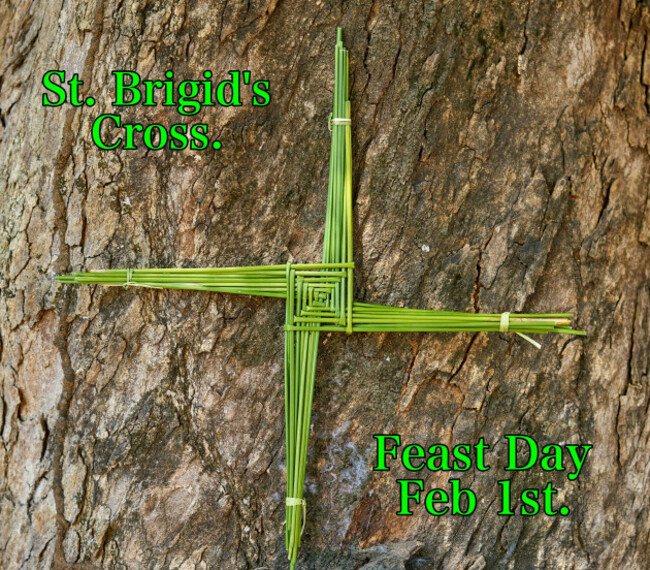
The Biddy tradition, like so many rituals, feels suspended in the tension between the past and the present. Its origins lie in Imbolc, the Gaelic festival marking the beginning of spring, a festival of fire and fertility, poetry and renewal. Long before Brigid was a saint, she was a goddess, one of those liminal figures who exist as both a presence and a possibility.
Imbolc was her celebration, a time to bless the land and the hives, to invite light into the darkness. Christianity in Ireland, as it did so often, wove itself into these older threads, transforming Brigid the goddess into Brigid the saint.
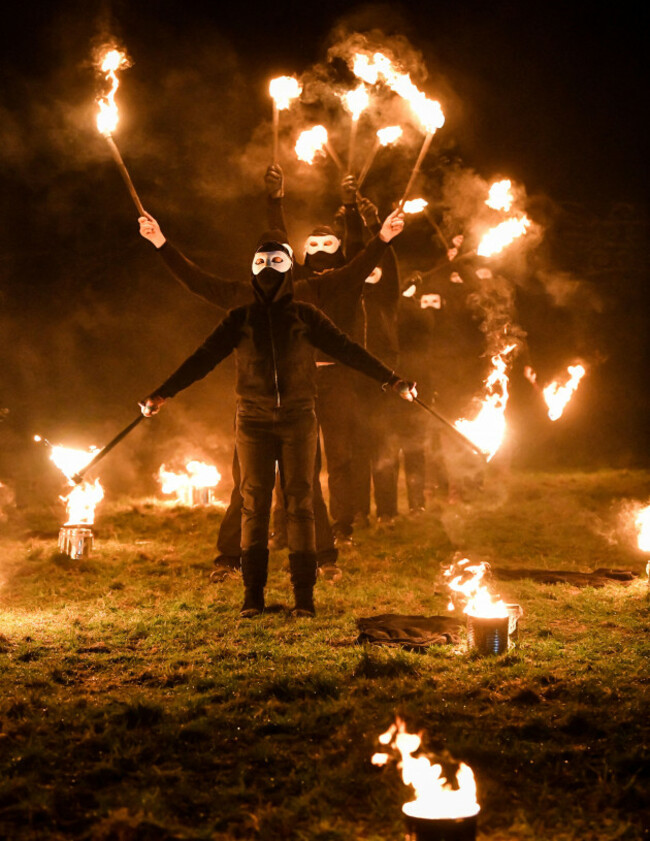
And so the Biddy remained, carrying echoes of pagan roots into the folds of Christian devotion, a ritual shaped by the tides of history but alive with its own peculiar fire.
In mid-Kerry as I was growing up, the Biddy wasn’t just a tradition; it was a living, breathing practice. Each townland had its own group, masked and dressed in white, adorned with straw hats that seemed to carry the weight of the fields from which they came.
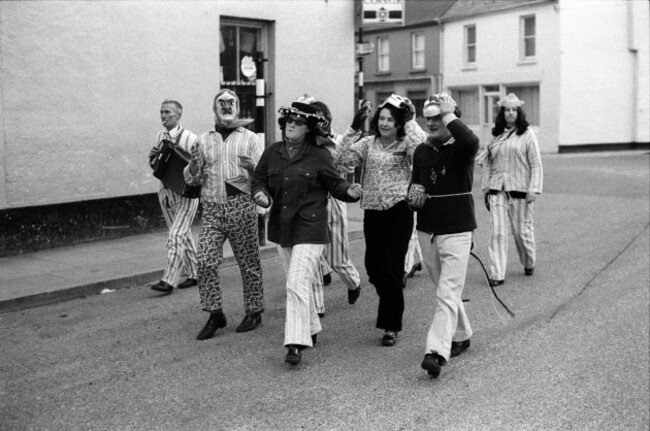
We carried a Brídeóg, an effigy of Brigid, her small form imbued with the task of keeping evil at bay. The nights of the Biddy unfolded as a procession — house to house, door to door, carrying music, dance and blessings into the heart of winter.
The ritual began with a question, the Biddy captain asking, “Is the Biddy welcome here?”
The answer was always yes, and with that yes came joy: the sound of bodhráns, the quick steps of the brush dance, the laughter that rose to meet the frostbitten air.
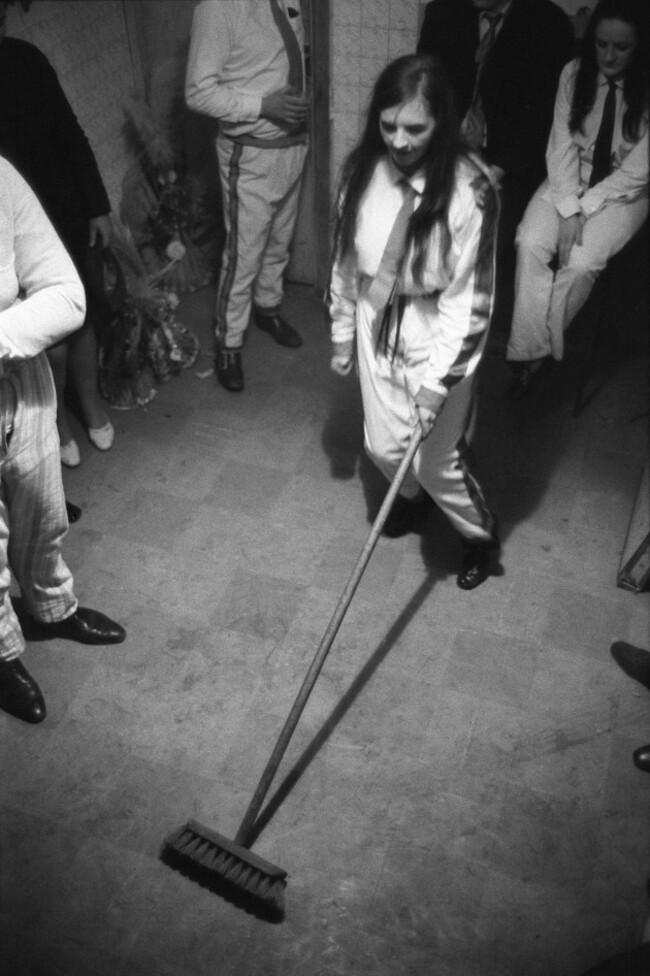
Over the years, I found myself with the role of the brush dancer for our small Biddy group, tasked with spinning the humble broomstick in quick, precise rhythms that danced alongside the bodhrán’s pulse.
The brush, its bristles worn and splayed, became a partner in this small ritual — a performance both playful and profound. Feet stomped around me, the chant rising above the music:
Some say the devil is dead, the devil is dead, the devil is dead,
Some say the devil is dead and buried in Killarney.
More say he rose again, more say he rose again, more say he rose again,
And joined the British army.
To be the brush dancer was to command the room, to weave laughter and movement into the heart of the gathering. It wasn’t just a role; it was a spark, a fleeting moment when tradition felt alive in your very body, the rhythm connecting you to something both ancient and entirely your own.
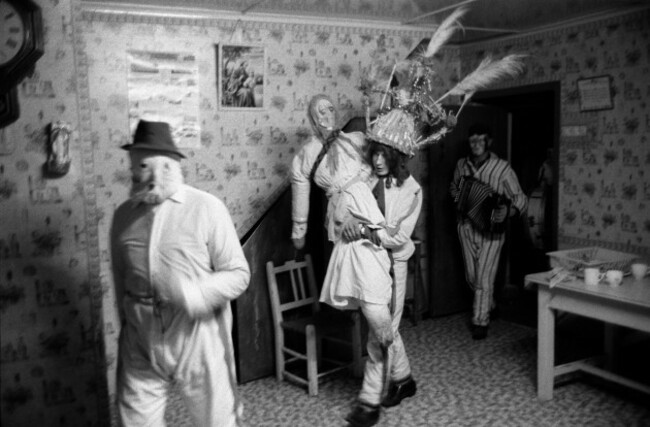
For me, those nights are a constellation of images and feelings – at this time of the year, they insist on visiting me. Driving through the dark roads of Kilgobnet in someone’s parent’s car, the Brídeóg balanced carefully on the seat beside us.
The way our white clothes made us feel both sacred and silly, as though we’d stepped out of time. The straw hats, their intricate patterns woven with care, perched like crowns.
The warm kitchens where we danced, where strangers became neighbours and neighbours became kin. As the late Conor Browne, one of my sister’s closest friends and a poet and cultural activist deeply rooted in this tradition, wrote in his children’s book A Very Kerry Year:
“Twas one night till Biddy’s and I couldn’t sleep,
I tried drinking warm milk, I tried counting sheep,
A straw hat was ready, all plaited and golden,
My Saint Brigid’s cross so perfectly woven.”
Conor’s words capture that peculiar restlessness, the way the Biddy seeped into your bones, your thoughts, your dreams.
By 2016, this ancient tradition had begun to fade, with only two active groups left in mid-Kerry. But traditions, like fire, can be rekindled. Thanks to the tireless work of volunteers and visionaries like Conor, the Biddy’s Day Festival in Killorglin sparked a revival.
Workshops on hat-making, cross-weaving and Brídeóg crafting revived the crafts that had once risked being lost. Torch-lit parades lit up the town, a testament to the power of community. By 2018, eleven groups had reformed, and the Biddy’s future looked brighter. Conor’s efforts didn’t stop there — he campaigned for the tradition to be recognized by UNESCO as part of Ireland’s intangible cultural heritage. He knew, as so many of us do, that this was more than a tradition; it was a lifeline, a connection to the past and a hope for the future.
The work done in Killorglin is extraordinary, not just for its preservation but for the way it anchors us in the present. It reminds us that these rituals, though shaped by history, remain alive in their ability to adapt.
In 2023, Ireland declared St. Brigid’s Day a national bank holiday — the first to honour a woman. This recognition feels as much a political act as a cultural one, marking a shift in how we think about care, resilience and the role of women in our shared history. Brigid’s light, once confined to fields and hearths, now illuminates the complexities of a modern Ireland striving for equality and solidarity.
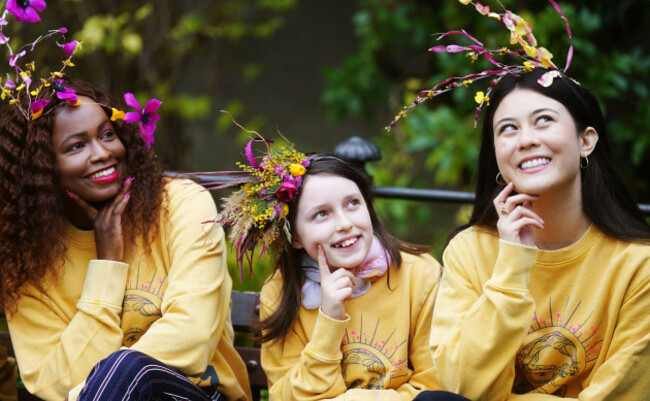
Indeed, Brigid herself feels particularly relevant in this moment of global crisis. As a figure of both poetry and fire, she embodies the tension between creation and destruction, a reminder of the delicate balance we must navigate. She is a symbol of thresholds — between winter and spring, past and future, darkness and light—and she challenges us to imagine what it means to stand at the edge of change.
Her association with renewal, healing and care resonates deeply in a world grappling with polycrisis — climate collapse, political unrest and deep social fractures. Brigid, with her duality as goddess and saint, reminds us that cycles of creation often emerge from destruction, that healing is rarely linear, and that care, at its most radical, is a form of resistance.
The politics of Imbolc, with its focus on cycles and solidarity, feels especially urgent now. It is a festival that doesn’t shy away from the dark but instead honours its role in the larger rhythm of renewal. The lessons of Imbolc — and of Brigid herself — invite us to consider how we hold space for renewal without erasing the scars of the past. To navigate crises today, whether they take the form of environmental degradation or the rising fractures in our social fabric, requires an act of collective imagination — a commitment to care not only for what has been but for what might yet be.
Brigid’s politics are rooted in action as much as reflection. She is a figure of sustenance and protection, her blessings extending to the hives, the flocks and the fields. Her fire is a generative one, sparking creativity, hope and the resolve to rebuild.
In this sense, Brigid speaks to the urgency of solidarity. She reminds us that the individual is never enough—that it is through community, through collective care and action, that we create the conditions for renewal. In a world that often feels fragmented, her legacy asks us to stitch those fragments together, to find meaning in connection and possibility even amidst uncertainty.
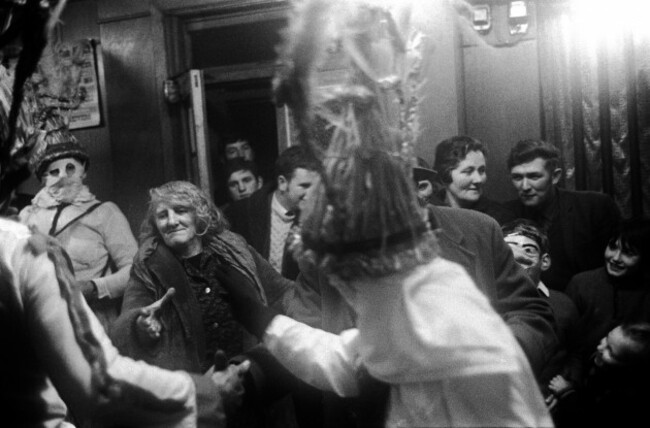
In her duality, Brigid also offers us a way to think about complexity without resolution. She is both of the earth and of the divine, both pagan and Christian, both ancient and enduring. She refuses to be boxed in, to be rendered neat or singular. Her multiplicity feels especially resonant in this moment, where simple answers so often fail us. Brigid reminds us that renewal isn’t about clarity — it’s about living in the tension of what is and what could be, about tending to the fires that sustain us while lighting new ones for the future.
In celebrating Brigid, and in reviving traditions like the Biddy, we are also making a political statement: that renewal is possible, that care and community matter, that even in the face of destruction, we can create something meaningful. The politics of Brigid are, ultimately, the politics of hope — not a passive hope, but one forged in action, in care, and in the persistent belief that we can move forward together. In her light, we are invited not just to survive but to imagine anew, to gather in solidarity and dance.
To dress in white, to carry the Brídeóg, to dance through the frostbitten Kerry fields and winding roads — these acts, small and fleeting as they may seem, carry a profound weight. They speak to the quiet power of ritual, its ability to tether us to something larger than ourselves.
Ritual binds us in community, marks the passage of time and carves out spaces for joy even in the midst of uncertainty. As the frost gave way to firelight and the Brídeóg passed from hand to hand, I remember feeling part of a rhythm that stretched far beyond our little troupe in Kilgobnet, one that held echoes of those who came before us and whispers of those who would follow.
The Biddy tradition, with its roots in both pagan reverence and Christian adaptation, offers a model for how we might navigate the complexities of our present. It teaches us how to step into the new without discarding the old and how to find resilience in continuity.
As I reflect on these memories, I feel their resonance now more than ever. The Biddy was never just a simple tradition; it was a practice of care, of community, of being attuned to the cycles of the world around us. It showed me that renewal isn’t abstract — it’s embodied in the small, deliberate acts of coming together, of holding space for one another, of honouring what sustains us. These traditions passed through generations, remind us of the threads that hold us together, even as the fabric of the world seems to fray.
In my childhood, the Biddy was a celebration of light and laughter, of frost cracking underfoot and hands clapping in rhythm. Now, it feels like a quiet directive: to carry what matters, to nurture the fire, to hold the threads with care.
In a world that often feels fractured, traditions like the Biddy invite us to step into the light, to remember what binds us, and to dance. Always, to dance.
Dr Fiona Murphy is an anthropologist based in the School of Applied Language & Intercultural Studies at Dublin City University.
To embed this post, copy the code below on your site













have your say