Sign in. It’s quick, free and it’s up to you.
An account is an optional way to support the work we do. Find out more.
Sign in. It’s quick, free and it’s up to you.
An account is an optional way to support the work we do. Find out more.
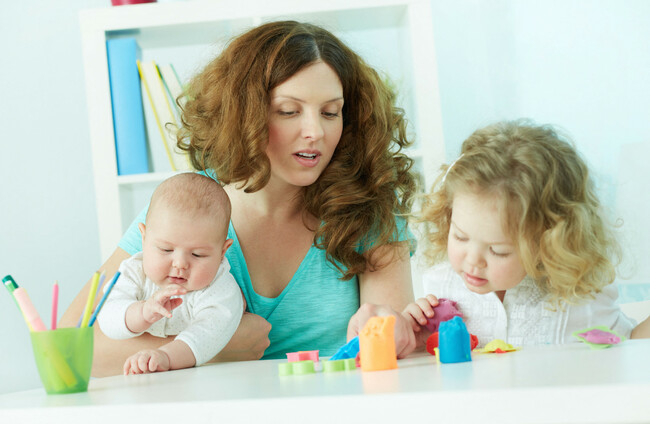

CHILDMINDERS, CRÈCHES, THREE hours a day ECCE places, au pairs, after-school care…
It’s a mind-boggling juggling act trying to find childcare that meets the needs of my family where I live.
I have been a parent for almost a decade, and I am a mother of four. I am perpetually looking for jobs that suit my situation, pay enough to cover the costs associated with leaving my children and household for someone else to manage Monday to Friday, and are flexible enough that we can all thrive.
This has not been possible, save for short contract work to keep my CV up to date. But even short-term contract work is no longer practical or cost-effective since my fourth child came along.
A couple of years back, I was offered my dream job. But after much to-ing and fro-ing, I had to turn it down because it simply wouldn’t have been worth the cost of the childcare. That’s a devastating experience, and one that I suspect happens to women much more regularly than it does to men.
And it’s not just my career that is affected. I am very active in my local community – I sit on committees for community groups and volunteer as much as time will allow. But it’s not easy to do without childcare.
I play music and regularly have to skip practice or performance opportunities because I don’t have childcare. Even spending time with friends is complicated, and often I end up bringing my kids along.
Many parents rely on expensive full-time crèches, after-school clubs and willing grandparents offering their time and energy. My family cannot call on a grandparent, and there are no crèche places locally. We had a live-in au pair before our third child was born, but we have long since run out of room in our house for another adult. The opportunity to purchase a larger home won’t be open to us without a dual income.
In short, it’s all so deeply, deeply frustrating.
Last year, our local preschool faced a risk of reducing its hours, meaning my son would have had a partial preschool experience. There is always worry among parents when childcare facilities like this close or put up prices. Inevitably, it is women who end up having to take career breaks, or holidays, or unpaid leave to bridge these gaps.
In my professional life, I have had the opportunity to work on unionising with the early years sector, where I co-authored reports on pay and conditions that badly need improving. Despite lots of positive attention for the plight of professionals within the childcare sector, it remains underfunded, fragmented, and its services are geographically unequal.
While the government has made a substantial commitment to improving the sector, including increases in budget allocation, the situation is that Ireland spends just 0.2% of GDP on Early Years – the OECD average is 0.9%. We fall far behind other advanced nations in funding and providing Early Years Education and Care that is high-quality, affordable and widely available.
In 2024, I joined the Together for Public Alliance, which is a group of over 40 organisations and more individuals who want to see the government establish a public model of childcare. I made the decision to share my story then, in the hope that hearing from parents like me would make a difference to the government decision. I said then that in all my years as a parent, the struggle to find suitable childcare has been the most difficult. Over two years later, nothing seems to have changed.
What hope is there for women in the workplace now, promised during our school days that our third level educations would pay off? That if we worked hard, we would be able to have a home, a rewarding career and a family? For me personally, all I can do is wait a few more years for my children to grow a little more and need less intensive care. But is that really it? I can give up the advocacy at that stage – but is that really the point?
We need a system that is built on fairness and equity. We need the government to seriously commit to funding, staffing, resourcing and providing physical infrastructure for Early Childhood Education and Care in a meaningful and timely manner.
A public model of childcare would guarantee a place for every child through legislation, starting from whenever the parents need it and including school-aged childcare. It would be not-for-profit, with all investment directly benefiting children’s education and care.
It would be accessible and available to all children, including children with additional needs, children living in rural areas and children in disadvantaged areas.
It would ensure decent pay and working conditions for early years educators. It would provide flexibility and choice for parents, and would allow women in particular to fully participate in society.
Without it, I might still be waiting for this when my grandchildren are born.
Amy Greer Murphy is a freelance social researcher and a mother of four.
To embed this post, copy the code below on your site

















have your say