Sign in. It’s quick, free and it’s up to you.
An account is an optional way to support the work we do. Find out more.
Sign in. It’s quick, free and it’s up to you.
An account is an optional way to support the work we do. Find out more.

LAST UPDATE | 19 Sep 2024
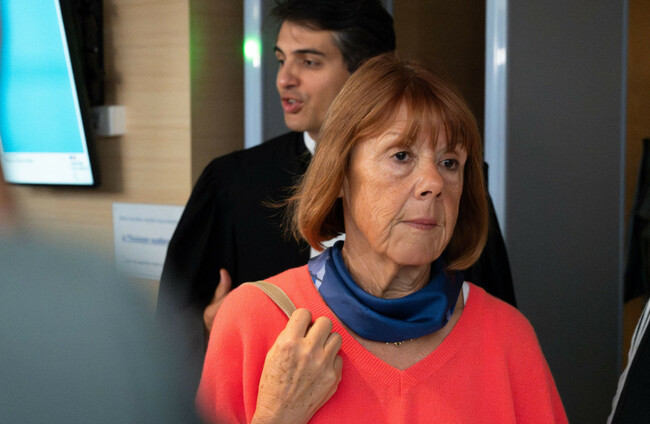
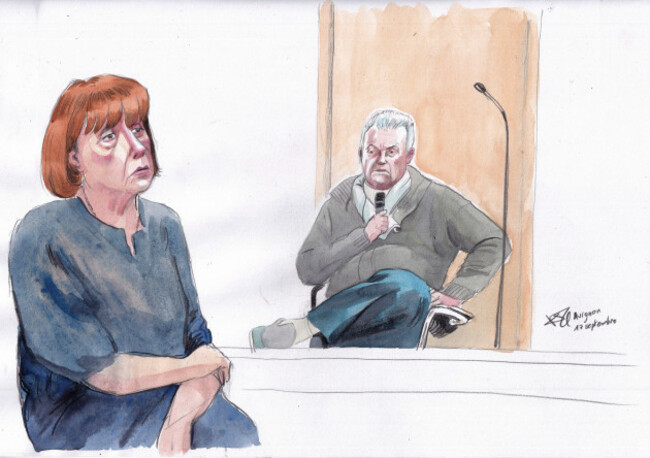
THIS MONTH, 71-year-old French woman Gisèle Pélicot took to the stand in the trial against her ex-husband Dominique, who is accused of repeatedly drugging her unconscious over the course of a decade, so he could invite men into their home to rape and assault her, while he filmed it. At least 50 other men are standing trial on charges of aggravated rape and face up to 20 years in prison.
In Switzerland, Kristina Joksimovic, a 38-year-old former model, was found dead in her home in February, after being murdered by her husband. This month, the court reports revealed that he dismembered her, put the body parts into a blender, and tried to dissolve them in a chemical solution.
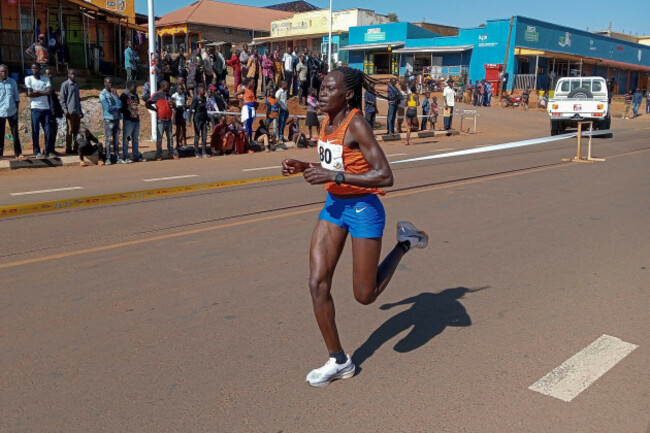
Recently, 33-year-old Ugandan Olympic athlete and mum of two Rebecca Cheptegei was doused in petrol and set on fire by her ex-partner in her home in Kenya as she returned from church with her children. She died from her horrific injuries, suffering burns to over 80% of her body.
At times like this, I can see why women say they would ‘choose the bear.’
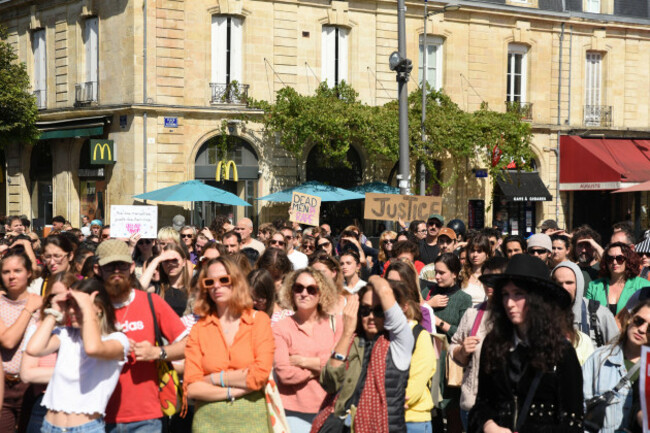
The trend, which emerged on TikTok earlier this year, began as a hypothetical question; if you were alone in the woods, who would you take your chances with? A bear or a man? The responses poured in and soon mushroomed into a mass movement where women shared their experiences of harassment, sexual assault and violence at the hands of men.
Of course, on the surface choosing a wild animal that could kill you seems senseless, but women’s responses revealed deeply unpalatable truths. While all were different, all were almost universal in their messaging…
Women still routinely feel unsafe, threatened, or harassed by men.
If you meet a bear in the woods, there is a chance it will kill you. There’s always a chance you could escape. Death by bear though would no doubt be painful and violent but would somehow fit into the natural order of things. Human meets wild animal, human loses. What a bear wouldn’t do, however, is carry out any of those acts described in the opening of this article to you. Acts that are carried out every day by members of our own species.
The countless women who shared their experiences on social media repeatedly pointed out that bears wouldn’t carry out years of coercive control or domestic violence. A bear wouldn’t assault them and tell them they’d asked for it, or film it and upload it to the internet. In addition, it wouldn’t set the woman ablaze, pour acid in her face, or perform a series of other dark, manic and despicable fantasies at her expense.
According to Women’s Aid, 267 women have died violently at the hands of men in Ireland between 1996 and the present. 137 women are killed by femicide across the world every day. The figures for the number of women killed by bears are not known, but it’s safe to assume it’s much lower. If that sounds facetious, maybe it is, because maybe women are sick of seeing statistics like this and cases outlined in the outset.
Donegal woman Jenna McGonagle, understands this better than most. In 2019, her sister and mum-of-one, 28-year-old Jasmine McMonagle was brutally murdered by her partner Richard Burke in her home. She was found in a pool of blood in the kitchen, following a three-hour standoff between Burke and Gardaí. He was found guilty of manslaughter and last year was sentenced to 14 years in prison.
Jenna, who was eight months pregnant at the time, had to step in and become mum to her sister’s 18-month-old girl. She now raises both children. She and her mum set up Smile for Jasmine as a way to keep her memory alive, but also to ensure the conversation about ending violence against women is kept on the agenda.

“It is absolutely shocking to see the rising cases in femicide and the increasing more horrific ways that women are being murdered,” Jenna says. “It needs to be taken seriously, as what is being done now to prevent violent crimes against women is not enough,” she adds.
“There are some wonderful advocates for the cause out there, but perhaps it’s time for more people and more men to get involved in teaching new generations what is right and how women need and deserve to be treated.”
When women say they’d ‘choose the bear,’ it’s often the culmination of years of microaggressions and cultural narratives around women needing to ‘be careful.’ It’s that onus that’s placed on us and the many risk assessments we carry out on a daily basis. Those extra precautions, those extra anxieties, and checks we must factor into almost everything we do on an unconscious level.
Don’t run with headphones on or if you do, only cover one ear. Always text someone to say you made it home safe. Make that ‘I’m fine’ call from the back of a taxi. Hold your keys in your hand in a dark car park. Think twice about running in the dark in winter. Be very careful about which seat you go for on a bus. Never walk home alone at nighttime. Think twice about what you wear on a night out. These are things men rarely ever factor into their lives, but for women, it’s standard practice. It’s the norm to be prepared for the fact that a man might attack you.
Debates like this or women saying they would ‘choose the bear’ often provoke a defensive response from some men, who get angry at the inference that it means all men are bad, worse than a wild animal, or are predators. However, getting angry or pointing out the senselessness of taking your chances with a bear, is to miss the point entirely.
Men need to listen. We need men to validate and acknowledge the experiences of women and the statistics themselves. Men need to recognise there is something seriously wrong with the world if women in their droves would choose to encounter a bear over a man.
Of course, not all men are predators, and most of us are lucky enough to have good men in our lives. We need those good men in our lives to be our allies. To call out toxic behaviour where it starts. Yes, even those seemingly harmless jokes or WhatsApp messages can sow the seeds of casual gender-based violence or sexual assault. To stop the ‘sure it’s grand,’ or ‘it’s harmless,’ or ‘it’s just a joke,’ attitude because it does matter. Those small things grow into the foundation of beliefs and outlooks that can view women as lesser or somehow acceptable targets of rage and anger.
I’ve no doubt, the men who carried out the acts mentioned in the opening, also probably considered themselves to be good guys at some point. Each of them had women in their lives they cared about. Mothers, partners, sisters, aunts, grandmothers, cousins, friends. But something went very wrong along the way, and we need to face up to it together if we want to end femicide and gender-based violence.
Niamh O’Reilly is a journalist and writer.
To embed this post, copy the code below on your site















have your say