Sign in. It’s quick, free and it’s up to you.
An account is an optional way to support the work we do. Find out more.
Sign in. It’s quick, free and it’s up to you.
An account is an optional way to support the work we do. Find out more.


LAST UPDATE | 3 Nov
AS VOTERS GO to the polls across the US today, one election issue that politicians didn’t see coming was the rising anger over data centres. Until recently, communities across the US may not have known what data centres were, but a major increase in their construction, driven by the global AI race, has prompted many to push back against these energy-guzzling mega-structures.
Data centres have now become what some are calling ‘political napalm’, with concerns ranging from their use of resources like water and energy to noise pollution and worries from local farmers about the impact on their land. Even in deep MAGA country, data centres are a tough sell, offering very little return for struggling communities during a cost of living crisis.
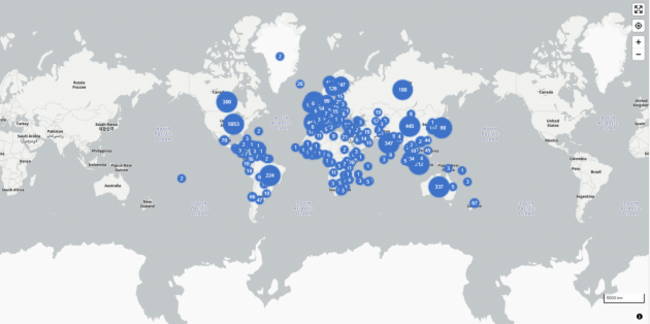
According to the global Data Centers Map, there are over 13,000 data centres in the world today, with over 5,000 in the US alone. But drill down into the global figures, and you will see an interesting picture emerge in relation to Ireland.
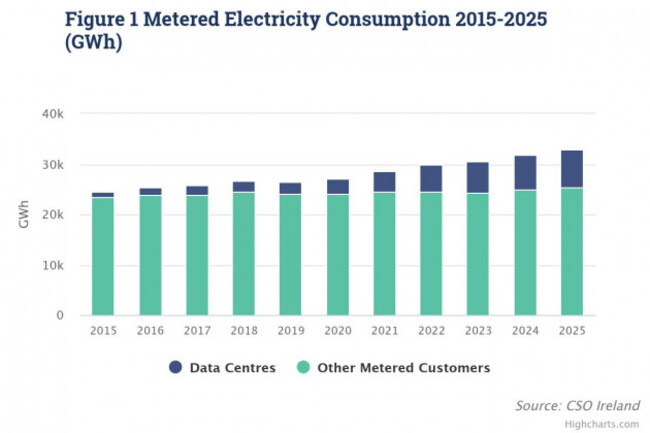
We now have an estimated 135 data centres in this country, which positions Ireland as a major player in the EU when it comes to the construction of these structures. Almost a quarter (23%) of electricity goes to data centres in Ireland, the highest per capita in the world.
If all the data centres in the planning pipeline received permission, it would add approximately 700MW of energy demand in a few short years. That is similar to dropping a county the size of Cork onto our grid, just for Big Tech, at a time when we are already, according to the UN, a “cautionary tale” when it comes to data centre development.
That rapid development in Ireland has brought a fresh concentration of minds here, too, with some communities now mobilising against the planning and construction of data centres in their area.
Such concerns over the impact of data centres on energy use and the environment are far from a “conspiracy theory” or a “hoax”, as the tech sector would have you believe.
Coming at a time of rising electricity bills and increasingly severe climate breakdown, this public relations message from the data centre lobby, and its dismissal of community concerns over data centres as “disinformation”, seems a strange way to try to win back trust from communities in Ireland who are not convinced by big tech’s buildout.

Amongst the claims made by the lobby groups is that communities opposing data centres are funded by China, and that famous Irish authors who object to data centres in their hometown are hypocrites.

These claims are a very cynical attempt to undermine not just the democratic planning process, but also to mask the very real and well-documented impacts of the industry on energy security, cost of electricity and rising pollution, issues which people are feeling deeply in their local communities.
While lobbyists undermine communities worried about big tech’s buildout, data centre developers in many cases simply refuse to give basic information on their resource use, with only one in six data centre operators in Ireland submitting data to the EU Energy Efficiency Directive.
The industry’s claims come at a time of rising organised protest against more data centres. On 7 November, this week, Ireland will see its first-ever national protest against data centre expansion as part of a European day of action organised by over 85 groups across 10 countries.
Across the country, pressure is mounting on the government to bring in a moratorium. Two recent opinion polls – one an Ipsos B&A poll in the Irish Times and the other a Red C poll in the Business Post – revealed exactly the same result – that 61%, or two-thirds of respondents, want to see a halt on the building of new centres.
Companies behind bigger and more energy-intensive developments are either applying for planning permission or waiting to break ground in several parts of the country, including Waterford, Clare, Louth, Kildare, Westmeath and Derry.
Expansion is also happening in Dublin, with Google recently granted permission to build in Grange Castle despite the area being under severe electricity constraints.
In recent weeks, Naas residents gathered in support of a motion by councillors to review land zoning which currently parcels off a land bank of over 50 hectares in the town for data centre development only. In Waterford, Kilmeadan residents organised over 300 objections to a data centre in their village which is so gas intensive that if built, it would consume over 7% of the electricity sector’s carbon budget in just one year. Permission was refused last week on the basis that it would impact the “character” of the village.
An Coimisiún Pleanála has officially overturned planning permission for a €1.5 billion data centre in Killala, County Mayo, citing a lack of electricity capacity in the area for a development which would use as much energy as Westport.
Similar demonstrations have been organised by communities in Drogheda, Derry and Ennis over the past number of weeks. These protests are not a flash in the pan. They are born from a very deeply felt belief that ordinary people are being asked to bear the cost of big tech’s expansion but share little in the gains. Far from being motivated by conspiracy theories, they are rooted in the desire to see a better future for the people who live in these communities.
Against these worries, the government is struggling to provide an answer. Earlier in the year, the Department of Trade and Enterprise commissioned a report by KPMG on the benefits of data centres. It emerged that not only did the Department censor a number of the report’s conclusions on the harms of the industry, but the methodology behind the report was itself deeply flawed.
The industry likes to frame any challenge to its expansion as economic sabotage, while avoiding the central question of who benefits, who pays, and who gets a say. Recent research from the Wall Street Journal suggests that just seven tech giants, including the likes of Meta and Nvidia, have amassed over $3 trillion dollars (€2.67 trillion)’ worth of debt in their gambles on AI. Companies are expending unprecedented amounts of capital on increasingly big and energy-intensive data centres in the hopes of salvaging these costs.
The cost of this expensive gamble is being passed on to the public. In May of this year, research by Dr Seán Fearon showed that households in Ireland have paid over €715 million extra on their bills due to the pressure data centres have put on the grid and the price of energy, a figure that is projected to rise to over €1 billion across the next 10 years if demand from data centres is not capped.
Statements from the Climate Change Advisory Council warn that data centre demand is at risk of “cannibalising” clean energy, diverting homegrown renewables to feed the demand of big tech instead of reinforcing energy security for workers faced with a rapidly rising cost of living. Ireland is now the fourth highest in the EU in terms of dependency on imported fossil fuels.
Climate change is growing in intensity. The destruction left in the wake of Storm Éowyn showed how vulnerable so many of our towns and cities are to extreme weather caused by fossil-fuelled climate breakdown, and how fragile our energy system is.
The government can allow Big Tech to continue their rampant buildout for an AI bubble which could burst at any time. Or it can put the brakes on the industry and focus on building out a cleaner, fairer, public energy system that makes careful use of land, brings benefit and security to everyone who uses our grid and lets us bring down bills.
The data centre lobby needs to engage more respectfully with the people asking difficult questions, and start answering them. Public scrutiny is not disinformation. Community opposition is not a conspiracy.
And Ireland’s energy policy cannot be dictated by an industry that treats democratic accountability as an obstacle to growth. On 7 November, people across the country will send a clear message to government as to which course of action they prefer.
Rosi Leonard is Data Centre Campaign Lead with Friends of the Earth Ireland.
To embed this post, copy the code below on your site













have your say