Sign in. It’s quick, free and it’s up to you.
An account is an optional way to support the work we do. Find out more.
Sign in. It’s quick, free and it’s up to you.
An account is an optional way to support the work we do. Find out more.

ON THE INTERNATIONAL stage, the story of Irish fashion this year has been a successful one. Designer Michael Stewart won the prestigious Louis Vuitton Savoir-Faire Prize for his modern womenswear brand Standing Ground and Jonathan Anderson continued to reign supreme at luxury fashion house Loewe. But for smaller brands, working and operating out of Ireland, success has proven much harder to come by.
Recently, amidst an outpouring of dismay and disappointment, Irish activewear brand Peachylean announced its closure. The company, known for its brightly coloured leggings and message of body positivity, was founded by Sharon Keegan in 2018 and had a large and loyal following on social media. Memorably, Keegan secured an investment of £100,000 on Dragon’s Den back in 2021.
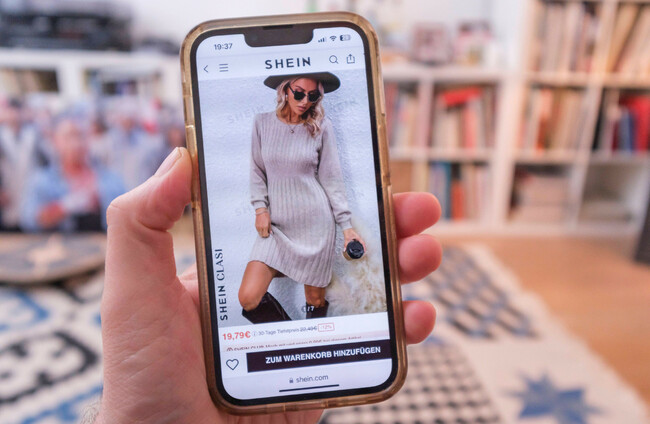
Unfortunately, none of this was enough to compete with the fast fashion giants like Amazon and Shein, which Keegan says have priced her out of business. Founded in China in 2008, Shein sells clothing for prices as low as €2.50 — the price of a share bag of crisps — encouraging the idea that clothing is disposable and replaceable.
When Shein set up its European headquarters in Dublin last year, the decision was applauded for bringing investment into the country and the red carpet rolled out. Then Minister for Enterprise Simon Coveney cut the ribbon at the opening ceremony, welcoming the 30 new jobs. What he didn’t mention, however, was the detrimental impact that Shein, like its competitors Temu and Amazon, has on independent fashion brands or indeed its questionable supply chains or environmental impact. Shein reportedly emits more pollution than the country of Paraguay each year. At the time, when questioned on the company’s move to Ireland, Eamonn Ryan, Minister for the Environment, claimed he was ‘unfamiliar’ with the retailer.
Peachylean wasn’t the first small fashion brand to close its doors this year, and it’s unlikely to be the last. With soaring rents and rising operational costs, business insolvencies are forecast to reach 900 by the end of the year, running 35% above 2023 rates. What can only be described as predatory pricing by ultra-fast fashion brands does little to help our already struggling independent designers.
Fast fashion is nothing new. The term can be traced back to 1989 when the New York Times used it to describe a new fashion retailer with a mission to create a garment – from an idea in the designer’s mind to being sold in stores in just 15 days. In Ireland, the fast fashion business model has been one of our biggest success stories in the form of Penneys, which operates across 16 countries and for many years was the world leader in the field. It also provides clothing options for those who might not otherwise be able to afford them, and is the most practical choice for children who grow out of clothing at lightning speed. But companies like Shein and Temu have turbo-charged fast fashion, creating a business model that operates akin to Penneys on steroids, all underpinned by a host of legal and ethical questions.
Basic economics dictates that it’s impossible to produce entire outfits for the price of a pint without engaging in dubious labour practices of some description. A 2022 Channel Four documentary, filmed on hidden camera and conducted in Chinese factories which form part of Shein’s supply chain, showed employees working 18-hour days for less than 575 Euros per month. In August, Shein’s own sustainability report revealed cases of child labour in its supply chains. And, according to a U.S. congressional report from June 2023, there is an “extremely high risk” that some of the products sold on Temu are linked to forced labour. It’s difficult to reconcile the celebration of 30 jobs being created in Ireland when the same company interacts with a supply chain that exploits so many workers in other countries.
Labour issues and predatory pricing aside, fast fashion companies have a long history of copying the designs of independent brands and reproducing them for a fraction of the price. For many designers, it can require years of practice, study and work to develop the necessary skills before launching their own fashion business. However, skipping these steps and creating the same designs appears to be a key element for ultra-fast fashion brands. The technological advances available allow them to monitor the sales patterns of small brands online, and quickly copy and reproduce the most popular styles.
Customers are then subjected to a constant barrage of advertising via social media, offering them copycat styles for a fraction of the price. For the fast fashion conglomerates, settling copyright cases appears to be a part of their business strategy.
Rather than pay a designer to license a design, it simply works out cheaper for them to steal a design and if they are sued, they’ll settle with the plaintiff.
While the growth of fast fashion appears unrelenting, a parallel rise in the circular fashion economy offers hope that we’re not doomed to a future of anything but cheap, disposable polyester destined for landfill. Recently, Vinted, Europe’s leading platform for second-hand fashion, launched in Ireland. The company allows customers to buy and sell pre-loved clothing to each other, encouraging the message that fashion is not a cheap, disposable commodity but something that can be cherished, and if the quality is good enough, have a long life in a new wardrobe.
For independent designers, the struggle continues and for many, the Christmas season will be the make-or-break point for their business. The cost-of-living crisis remains a challenge for most, but being mindful with our purchases and shopping small and local will go a long way in keeping small Irish businesses alive and thriving.
Elaine Maguire O’Connor is a writer and consultant working in fashion law.
To embed this post, copy the code below on your site












have your say