Sign in. It’s quick, free and it’s up to you.
An account is an optional way to support the work we do. Find out more.
Sign in. It’s quick, free and it’s up to you.
An account is an optional way to support the work we do. Find out more.


THIS WEEK SAW a magical end to our Grow at Work campaign which kicked off way back in mid April when we launched a search for companies to take part in a workplace food growing challenge, sponsored by Cully & Sully.
In the end nearly 450 teams took the pledge to give peas a chance and grow some of the lovely legumes on their desks at work. This being an inter-company challenge, competition was intense and the stakes were high – the winning team of growers would win a GIY garden worth €3,000 which they could donate to a charity or community group of their choice.
From our point of view the point of all this is quite simply to get a new wave of people to have their First food growing experience.
We know that many people who are interested in growing their own are a little daunted by the whole thing – afraid to start, afraid to make a bags of it, afraid they don’t have green fingers and that they will kill something (they probably won’t but if they do, it’s no big deal, trust me).
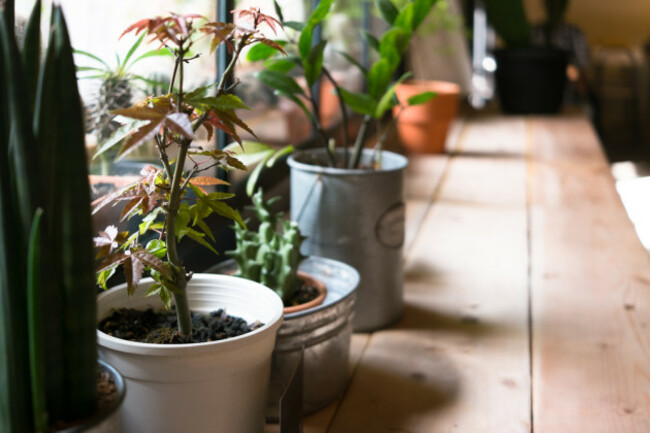
Here in GIY we are big believers in the power of even small food growing experiences to change lives and get people reconnected to their food in a meaningful way. Keeping it really quick and really easy-peasy (sorry) is a great way to get people started. Pea seeds are easy to handle, and when grown as pea-shoots, they are quick to grow in a pot – from seed to salad in about a month.
Why at work? Well, why not? We spend a lot of time there and it’s an environment that can often be terribly sterile. Bringing living, growing, green things in to the equation at work can help reduce stress and make us more centered, mindful and hopeful. In fact food growing has such a powerful effect on our mental health that it’s been called the new Prozac.
I also love the idea that growing some food on your desk at work challenges the assumption that food growing is a pastime only open to culchies with ten acres! In reality you can grow food in even the smallest of spaces, limited only by your imagination.
All sorts of companies have taken part, with their employees growing food in the most unlikely of places – from train drivers to bankers, solicitors to security guards, post office workers to journalists.
I’m a little disappointed we didn’t get the International Space Station to sign up but perhaps next year! The nominated charities all deserved a GIY garden – hospices, housing associations, Men’s Sheds, children’s groups, schools and more. But as they say, there can be only one winner and it is (drum roll please) – Optimal Chiropractics in Cork and their nominated charity, Cork Association for Autism.
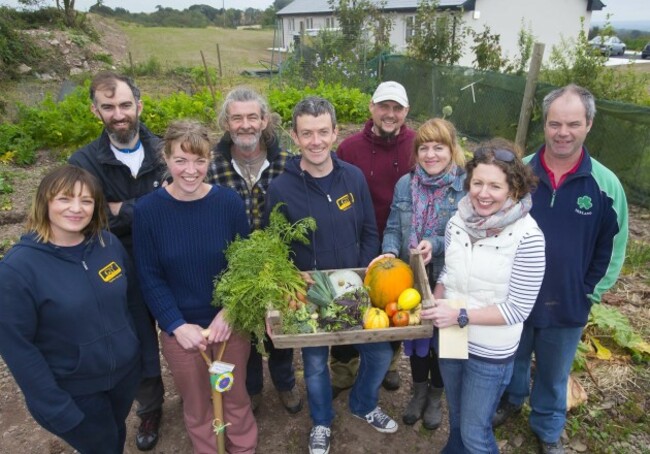
This week we were honoured to visit the charity’s wonderful new day service centre in Mogeely and to see the incredible work they do for adults with autism (including, fittingly, a horticulture therapy programme).
We will be re-visiting with a posse later in the winter to put in their new GIY garden.
We can’t wait. A huge thanks to Cully & Sully and all the teams that took part – we will be back next year with a brand new growing challenge! In the meantime if you want to talk to us about how we can help your company to GIY@Work, take a peak here.

Pot up herbs to grow inside over the winter. Continue to lift crops that have finished harvesting and clean up the beds. Sow over-wintering green manures. If you are going to cover empty beds down with manure for the winter, the earlier you do it the better.
Try and find a good source of farmyard manure if you don’t have your own – cow, horse, pig, sheep and chicken manure are all great sources of nitrogen, phosphorus and potassium for your soil. Cut autumn fruiting raspberry canes down to the ground.
You can sow hardy varieties of peas and broad beans later this month for an early spring crop but only do so in well-drained soil. In the polytunnel get a crop of cauliflower and carrots going over the winter. Plant selected varieties of garlic and winter onion sets.
Depending on the weather, the harvest may well continue in to October – pumpkins, squashes, courgette, apples, pears etc. It’s the last hurrah however for peas, beans, tomatoes, cucumbers, aubergines, peppers and chilli-peppers. Continue to harvest wild mushrooms, elderberry, blackberries, sloes, carrots, potatoes, parsnips, swedes, celeriac, turnip, beetroot, celery, marrows, leeks and cabbage.
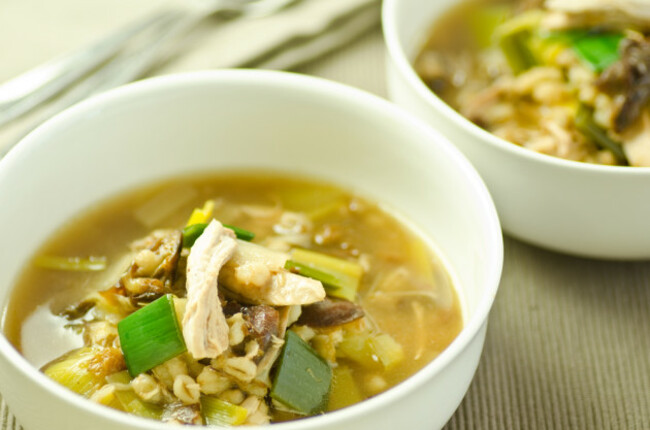
This is James Martin’s version of the healing Scottish soup. I always think that the word “soup” doesn’t do it justice – it’s really more of a chicken and leek stew.
Ingredients
• 1 tbsp vegetable oil
• 1 medium chicken, jointed into pieces
• 180g smoked bacon lardons
• 2 carrots, chopped
• 2 celery sticks, chopped
• 1-2 leeks, washed and cut into thick rounds (tops reserved)
• splash of white wine
• 2 bay leaves
• ½ bunch thyme sprigs
• 15-20 stoned prunes
Directions
Heat the oil in a large heavy-based saucepan. Fry the chicken pieces in batches until golden brown, then remove and set aside. Add the bacon, carrots, celery and leek tops, and fry for 5 mins until it all starts to brown.
Pour off excess fat. Splash in the wine and boil rapidly, scraping the bottom of the pan. Return the chicken pieces with the herbs and add enough cold water to cover.
Slowly bring to the boil, then simmer for 40 mins until the chicken is tender. Remove the chicken to a plate, cover with foil and leave to cool slightly. Strain the soup into a clean saucepan and discard all the other ingredients.
Leave to stand for a few mins and skim off any fat that rises to the top. Pull the meat from the chicken bones and tear into large chunks. Simmer the soup with the chicken, leeks and prunes for another 20-30 mins. Season to taste and serve with really good bread.
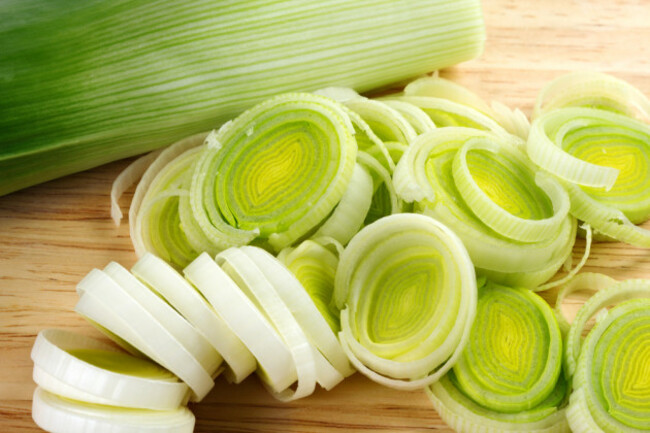
Leeks have to be earthed up during the growing season – this process encourages the bleaching or whitening of the stem. If you don’t earth up you will be left with leeks which are predominantly green with just a small amount of edible white stem.
Be careful not to get soil in to the heart of the leek when earthing up – this can be a nightmare to get out when cooking. I’ve heard of GIYers who use kitchen roll inserts to “earth up” leeks – pop the insert over the leek and it does the same job as earthing up. Nice idea.
Michael Kelly is a freelance journalist, author and founder of GIY.
To embed this post, copy the code below on your site














have your say