Sign in. It’s quick, free and it’s up to you.
An account is an optional way to support the work we do. Find out more.
Sign in. It’s quick, free and it’s up to you.
An account is an optional way to support the work we do. Find out more.
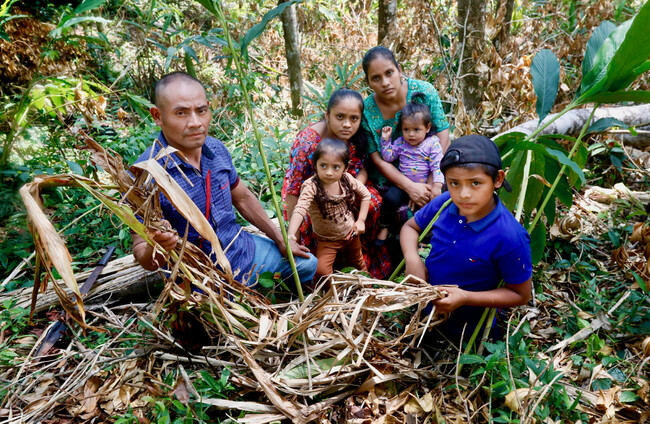

GUATEMALA, A COUNTRY of breathtaking landscapes, is under siege—not just from multinational corporations eager to exploit its natural resources but from a climate crisis that is devastating communities, deepening poverty, and threatening Indigenous ways of life.
My name is Alejandra Castillo. I am a programme manager with Trócaire in Guatemala. I joined Trócaire in 2020 and have spent 25 years working in human rights. Living in a large city, I was somewhat protected from the reality of the brutal 40-year conflict targeting the indigenous people of my country, who were murdered or disappeared.
It wasn’t until I began university that I was exposed to the whole truth of Guatemala’s past; this fuelled my commitment to working for justice and human rights. Although there was open conversation in university, silence took over society for many Guatemalans after the war.
The war was a taboo. No one talked about it. This silence made it difficult for society to acknowledge and process what had happened. Like any conflict, there are different truths — the official truth that does not recognise the genocide in Guatemala and the survivors’ truth who lived the human rights violations in the communities.
The scars of conflict still shape Guatemala today. Over 6.5 million Indigenous people —40% of the population — face systemic racism, exclusion, human rights violations and violence.
At Trócaire, we work alongside local partners to support these communities, focusing on solidarity and empowerment. One of these communities, located in Alta Verapaz, central Guatemala, is home to 24 Maya Q’eqchi families. They settled here after enduring the conflict that saw many of their relatives murdered or disappeared. When I visited two weeks ago, Dolores Cajbom, a 65-year-old woman, spoke about the murder of her husband, whose remains were only identified in 2014 — decades after he was taken.

The quote “Those who cannot remember the past are condemned to repeat it” comes to mind every time I think about my country’s past, and this pushes me to work for the truth and a better future through supporting survivors and communities fighting for justice. Like me, Trócaire is committed to defending human rights, and I feel fortunate to love what I do, but the scars that years of conflict left on my country are more like unhealed wounds that continue to be poked and prodded at. For the indigenous people, the challenges are both historical and immediate, with a long history of resistance to genocide, land dispossession, and now, the escalating climate crisis.
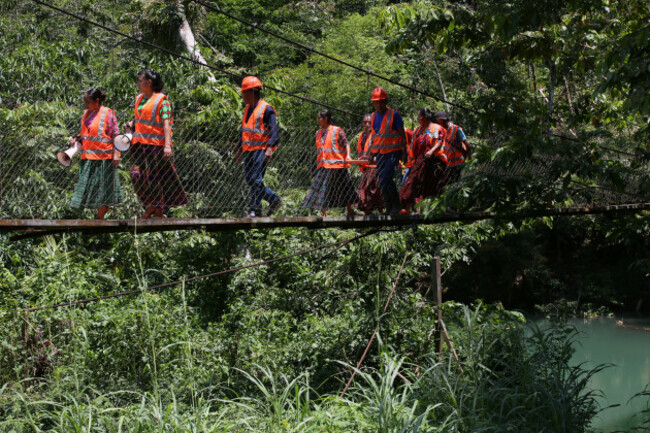
Despite their suffering, the people of this village remain resilient. They understand that “Mother Earth” controls everything and that they must adapt to survive the changing climate. Together, we have developed disaster response systems, mapping flood zones and setting up weather monitoring stations. Women in the community lead evacuation planning, ensuring their families are safe from the increasing number of natural disasters. This level of preparedness would not have been possible without years of work on women’s empowerment and education, supported by Trócaire and our partners.
In 2020, we helped build a bridge connecting the village to the outside world, replacing the only previous method of transportation — a wooden boat. This bridge has transformed access to healthcare, education, and markets. Yet, serious challenges remain.
The community relies heavily on growing cardamom pods for income, but unpredictable rainfall has led to repeated crop failures. Families face impossible choices: pay for food or education. The village’s primary school is a single-room building with one teacher responsible for students of all ages. The dirt floor turns to mud in the rainy season, and holes in the roof let water pour in.
Still, every child attends. Thirteen-year-old Miriam stands out among her classmates. She dreams of becoming a teacher or an engineer and has started in secondary school, which is a long bus journey to and from her community every day.
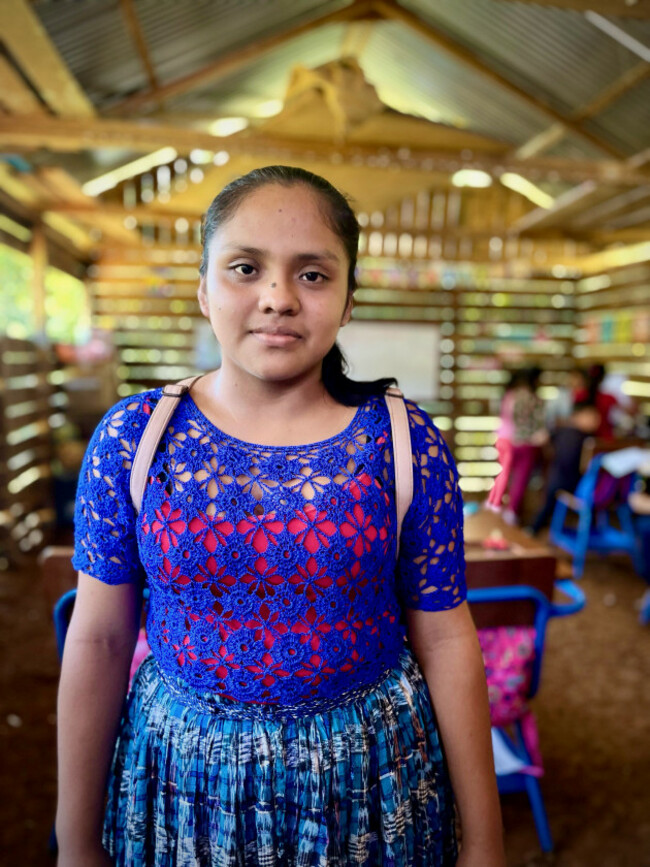
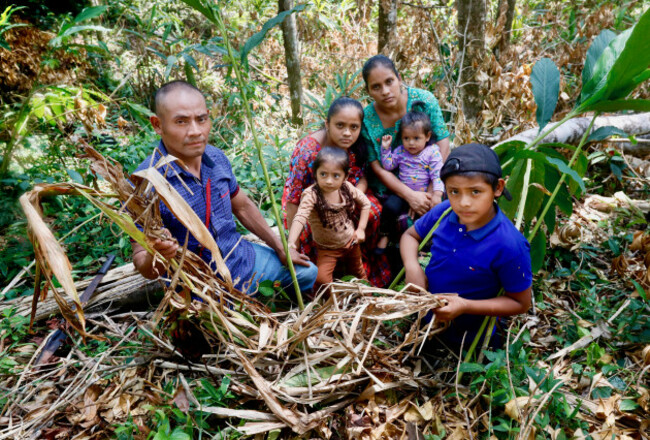
The family is currently covering the cost of this bus, but her parents, Julio and Ilma, know that they may soon have to make a heartbreaking decision — pay for the bus, so Miriam can continue school or buy food for their family of six. This story plays out in countless homes across Guatemala, a stark reminder that the climate crisis is not just an environmental issue; it is a human rights crisis, forcing families further into poverty.
The irony is gut-wrenching: those who have contributed least to climate change suffer its most severe consequences. The people of this village did nothing to cause the crisis, yet they bear its brunt.
This is why Trócaire’s work in Guatemala is more crucial than ever. Through initiatives like the Trócaire Lent Box campaign, we raise funds to support families like Miriam’s, helping them survive climate shocks, continue education and fight for justice.
However, international aid cuts, particularly to human rights funding, are making this work even harder. Although Trócaire Guatemala does not receive funding from USAID, reductions in Central American aid have ripple effects, forcing organisations like ours to stretch already limited resources even further. The pressure to do more with less is immense.
As I travel to Ireland to speak in schools about the impact climate has on these people, I am reminded of the power of global solidarity. The people of Guatemala are not just fighting for survival; they are fighting for dignity, justice, and a future.
Resistance is what connects our histories. Ireland, too, has endured difficult times, yet it continues to stand up for human rights and justice. Guatemala is doing the same. Together, we can ensure that the people of Guatemala — and others like them — have the support, resources, and agency they need to build a better future.
Alejandra Castillo is Programmes Manager from Trócaire in Guatemala. If you would like to learn more about Trócaire’s work in Guatemala and how you can help, visit Trócaire.org.
To embed this post, copy the code below on your site











have your say