Sign in. It’s quick, free and it’s up to you.
An account is an optional way to support the work we do. Find out more.
Sign in. It’s quick, free and it’s up to you.
An account is an optional way to support the work we do. Find out more.
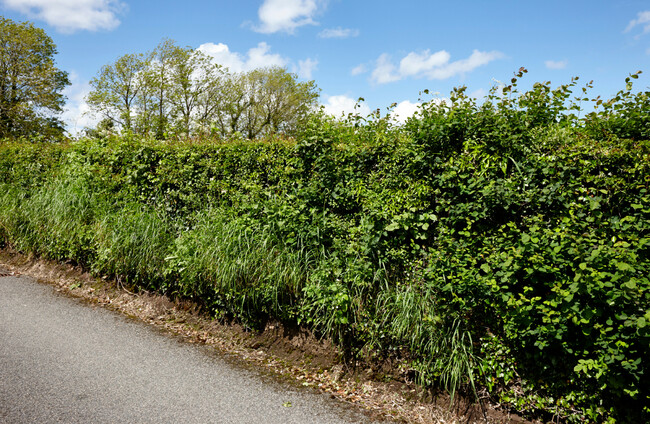

IT’S TOUGH BEING a hedge in Ireland, unless it is lucky enough to be owned and managed by someone who really cares for it. Their destruction and demise over the past 50 or so years has been significant, and it is still happening.
This weekend marks the end of National Hedgerow Week, a partnership between Teagasc and the Heritage Council. It’s an annual event to collectively celebrate the hedgerows of Ireland in all their glory and value to our society and environment. They can hold significant cultural and historical significance too – with some dating back hundreds of years.
Despite all of the national laudations of the importance of these national heritage structures, the sad fact remains that our hedges have no real protection in law (apart from during the bird nesting season of 1 March to 31 August when the Wildlife Act determines that it is illegal to cut or destroy a hedge).
Outside of the nesting season, it’s a free for all. I have lost count of the calls I’ve had over the years from distressed people, usually farmers, pleading with me to help stop the removal of a local hedge or area of habitat that has been there for generations.
Unfortunately, the answer is always the same. There is little I or anyone else can do, because the law permits it to happen.
Quite frankly, in this day and age, it’s criminal (except that it isn’t) that under current regulations, specifically the Environmental Impact Assessment (Agriculture) Regulations 2017, landowners can destroy up to 500m of mature hedgerow without needing any permission from anyone – not from the Department of Agriculture, the Department of Heritage nor the Department of the Environment.
To remove a hedgerow longer than 500m, there is a rather futile requirement for the Department of Agriculture to just screen if an Environmental Impact Assessment (EIA) is necessary, not to conduct one; and to top it all off, only for lengths of over 4km is an EIA actually necessary. It’s probably worth reading these two paragraphs again.
Rarely (if ever) has there been a case where regulations have protected a hedge from destruction, as some economic justification will usually tip the balance in favour of its removal. And the oft quoted ‘deterrent’ of the requirement for farmers in receipt of EU Common Agricultural Policy direct payments to plant double the length of any hedge they have removed is in not a disincentive either. In any case, a line or two of saplings could never replace the habitat lost in a mature hedge.
And what is perhaps most disturbing of all is that a length of mature healthy hedge can be eradicated in a matter of hours with a large digger - particularly distressing when you consider how long it takes to plant and establish one in the first place.
Creating a hedge takes time. I should know. My husband and I, with the help of our four children, planted a mere 250m of it last March on our Co Offaly farm.
It’s slow work if you do it right. This was no virgin ground either, and we went to great lengths sprinkling blood and bone meal into each of the small t-shaped hole sliced into the rough ground with our spades. It was mulched with a layer of sheep’s wool from last year’s shearing – a very worthwhile use of a natural product with little economic value.
It was my intention to strengthen the EIA (Agriculture) Regs in the last government. As Minister of State of Land Use and Biodiversity, I initiated a review and public consultation of the regulations in June of 2023, with the objective of amending them to make them more robust and effective.
The review was completed by the autumn of that year, but unfortunately the process never went any further despite many calls from myself and other like-minded groups.
And in May of 2024, my Green Party colleagues introduced a Bill aiming to protect ‘significant hedgerows’ by seeking stronger protection for these important natural structures.
But progression was stymied on both counts because of weak politicians and political cowardice ahead of the local and general elections last year.
A lot of people care for nature, and appreciate the value of hedgerows, but sadly not enough to overcome the consistent and persistent resistance to protecting nature from farm organisations, which have an overwhelming and disproportionate influence on the three biggest political parties in the Oireachtas.
“Sure, aren’t there plenty of hedges for the birds?” “Can’t they go somewhere else?” are some of the ignorant comments I have heard over the years in relation to the importance of hedges for our wildlife.
I count myself lucky to live on a farm with plenty of mature hedgerows that are allowed to flower and fruit, providing a home for birds, insects and other wildlife in which to nest, feed and shelter. Our cattle, sheep and horses also enjoy them too, not just for the shelter they provide, but for the nibbles they get – they are often seen with their heads buried in a hedge munching at something tasty!
As well as supporting nature, the benefits of a healthy well managed hedge extend to healthy field margins, healthy soil and improved water quality. And of course, they look beautiful.
Planting those saplings last March is something I hope my children will look back on in years to come with a sense of pride, and acknowledgement and respect of the effort put in to grow them. There are plenty more hedges to be planted on our farm and around the country in the years ahead, and it is promising to see farmers availing of tree and hedge planting supports under Department of Agriculture schemes.
But if right was right, now would be the perfect time to act, and to implement the changes needed to the legislation to fully protect our hedges. Alas, I doubt amending the EIA (Agriculture) Regs or any other protective legislation is on any Minister’s ‘To Do List’ in this current government.
So, as we approach the end of this National Hedgerow Week, I think it is worth re-evaluating what we as a state should be doing to protect our precious hedges. This government is only seven months old, but with no one truly committed to reversing the loss of these precious habitats, I dread to think what the next few years will bring in terms of our country’s natural heritage. If you are one of those who care about nature, please let them know.
Pippa Hackett is a former Green Party Minister of State in the Department of Agriculture, Food and the Marine. She has a PhD and runs a farming and bloodstock enterprise with her husband in Co Offaly.
To embed this post, copy the code below on your site

















have your say