Sign in. It’s quick, free and it’s up to you.
An account is an optional way to support the work we do. Find out more.
Sign in. It’s quick, free and it’s up to you.
An account is an optional way to support the work we do. Find out more.

OUR ROUTINE INSPECTIONS with foreign-origin GPs, taxi drivers, lecturers or delivery drivers are deeply woven into the fabric of everyday life in Ireland. For many, these encounters with people from diverse backgrounds have become so internalised in our collective image of contemporary Ireland that they pass unnoticed.
However, they tend to come into sharp focus whenever questions of belonging or representation arise.
This raises an important question: why does coming across a politician of migrant origin still prompt a subtle raising of the eyebrows, even if only momentarily and unconsciously?
The short answer is that we are still not fully used to diversity in politics. But, as with most social phenomena, the full picture is more complex. Political representation is deeply steeped in symbolism and long-standing convention, making change desperately gradual.
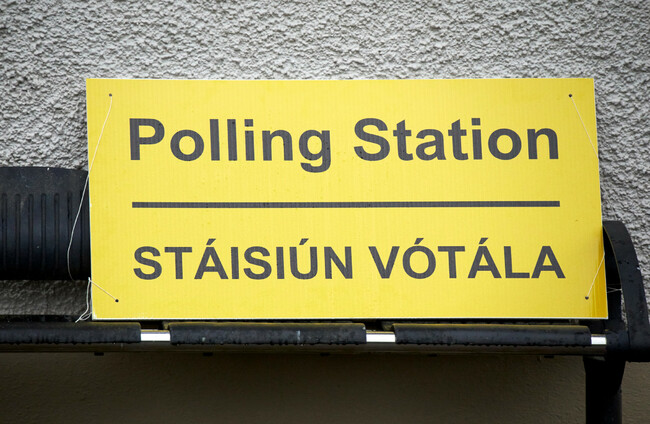
According to the 2022 national census, non-Irish citizens account for 12 per cent of the population, but this figure does not include many migrants who have adopted Irish citizenship. The participation of migrants in institutional politics — both in Ireland and internationally — remains notably low. In Ireland, all residents in the country, irrespective of their nationality, can vote and run in local elections.
The number of candidates of migrant origin in local elections has increased slightly: 37 candidates in 2009; 31 in 2014; 53 in 2019; over 120 in 2024. In the 2024 local elections, a record 21 candidates from migrant backgrounds were elected to local councils, more than doubling the nine elected in 2019.
This growing political engagement among Ireland’s migrant communities is a positive development. However, their representation still accounts for just over 2% of the country’s 949 local councillors — significantly lower than their share of the population, which stands at approximately 15%. In short, migrants are chronically underrepresented within the Irish political system.
Irish political parties have been encouraged to bring more diverse candidates into their ranks. But realpolitik is a game of interests, and parties often find themselves obliged to balance pristine democratic principles with the muddier, self-serving imperatives of an electoral machine geared toward grabbing every possible vote.
Immigration, in particular, remains an uncomfortable topic for many parties, despite the inclusive rhetoric that often dominates public discourse.
Civic society is taking the lead in political inclusion, with NGOs delivering dedicated capacity-building projects and mentoring programmes with local councillors for migrants interested in venturing into mainstream politics.
Research highlights several contributing factors to migrants’ chronic underrepresentation, including limited familiarity with the host country’s political system, pressing energy-draining challenges such as employment and housing, and a sense of detachment from institutions fully filled by Irish-born people.
The current anti-migrant climate, amplified by a small but vocal fringe and their tech-platform comrades-in-chief, further discourages engagement. As a well-intentioned senior politician acknowledged to me in private before last year’s local elections, which migrant would dare to step forward in public politics in the midst of all this anti-migrant turmoil?
The figures, however, reveal that there are a good number of heroes. But it is worth noting that democracy should not be about fearless, invulnerable individuals driven by heroic inclinations to serve their communities. Instead, it should rest on more mundane — yet increasingly endangered — values, such as freedom and equality in political participation. When access to the political field depends on extraordinary resilience, it signals a deeper imbalance that poses serious risks to the health of democracy itself.
The intentionally exclusionary attitudes of some individuals, fused with nativist pulsations, can be interpreted as an attempt to establish control of democratic institutions by excluding originally non-Irish candidates. Ultimately, these groups aim to assert dominance over institutions through racist and xenophobic means.
On a more positive note, some of the findings of one recent study are somewhat comforting and reassuring for those sensitive to foundational democratic principles.
First, exclusionary attitudes against migrant candidates while canvassing and in other electoral contexts are conscribed to a tiny minority of electors. Second, while migrant politicians might need longer efforts than Irish-born candidates to build on trust from the communities, the extra work appears to pay off in terms of building trust.
Despite the odds, Ireland remains one of the most migrant welcoming countries in Europe.
Yet, we should not become complacent. The study shows that political bias arises from misperceptions of foreignness, which are triggered by specific features of migrant candidates, such as their non-standard accents, skin colour or other markers not traditionally associated with Irish.
In the intricate process of choosing who to vote for, electors rely on a range of reasoning and personal values. However, this judgment must be exercised in good faith. Not all criteria for considering political candidates are valid. Excluding or dismissing candidates based solely on gender, race, religion, or accent is not only unjust to them, but a direct affront to the foundations of a thriving democracy.
Looking ahead, it is imperative that institutions, including political parties, take a more active role in dismantling the barriers to inclusivity in Irish politics. Alongside this, fostering greater public awareness of the rich linguistic and cultural diversity that defines modern Ireland is essential for creating a truly representative political landscape.
Dr Iker Erdocia is Assistant Professor and Director of Research at the School of Applied Language and Intercultural Studies (SALIS) in Dublin City University. He previously served as Director of the PhD Programme and currently acts as Research Integrity Advocator of the Faculty of Humanities and Social Sciences in DCU.
To embed this post, copy the code below on your site















have your say