Sign in. It’s quick, free and it’s up to you.
An account is an optional way to support the work we do. Find out more.
Sign in. It’s quick, free and it’s up to you.
An account is an optional way to support the work we do. Find out more.
THIS WEEK, THE National Council for Curriculum and Assessment (NCCA) published three modules addressing the history, legacy and literature of Ireland’s institutions – including the mother and baby institutions, industrial and reformatory schools and Magdalene laundries.
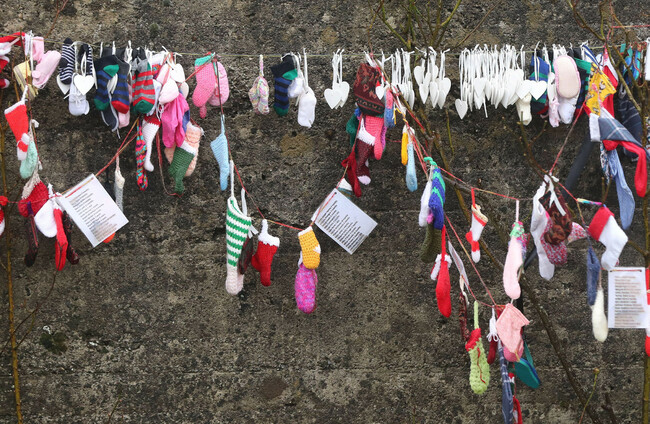
The History module and materials will examine Ireland’s ‘Mother and Baby Homes’, and have been designed for Junior Certificate students. They will engage with Catherine Corless’s work, as well as the testimonies and life experiences of survivors and affected, including individuals from the Tuam Mother and Baby Institution. They will open up a ‘Brave Space’ for young people to explore these topics, to look to their own areas, their own local, family and national histories.
It is a hugely significant development, and we are privileged to see that the Tuam Oral History Project and a recent report on language, terminology and representation have been included. The care the NCCA has taken with this module is also to be acknowledged, as is the work and advocacy from individual survivors who have shared their life stories and experiences to the betterment of us all.
Our plea here is to schools, teachers and students to engage with these materials, to enter the Brave Space and work together. Including neglected local and gendered narratives — like those of the Tuam Institution and other marginalised groups in Irish History — deepens students’ historical understanding, and facing often very painful truths in our own community helps build empathy and a more responsible engagement with our shared past and potential future.
When the revelations about the Tuam Mother and Baby Institution and Catherine Corless’s incredible work became public, I was teaching at an all-male Catholic school in Co. Galway. Realising how close the institution was to our lives, yet remarkably absent from conversations in the staffroom, made me uncomfortable. Also absent were materials on these Institutions from our history books. I understood the silence, I had grown up with it, but when is it acceptable to discuss painful histories?
Once, while teaching the Reformation, I pointed out to the class the lack of diversity among the figures we studied and my frustrations. One student very kindly said, ‘Maybe women’s history is taught in the girls’ schools, Miss.’ In response to the gap in the syllabus, I created a project asking each pupil to research and present on an overlooked woman in history, and the responses were incredible.
Around the same time, I wrote the poem History Lesson about the agreed narratives of history juxtaposed with the ordinary lives of our mothers and grandmothers to highlight how female experiences often go unrepresented in standard curricula. However, the first-person narrative is at the core of understanding history, and how often, due to many circumstances, it is never recorded. I hoped that by working on the Tuam Oral History Project, together we could affect educational change.
Many of us were born into an Ireland where our birth was defined by whether or not our parents were married. When we studied our History, we didn’t see our mothers represented, let alone our grandmothers. When we went to school, we began to realise that there were many of our classmates whose legitimacy was questioned in other ways – who were not seen to be from ‘respectable’ families, who were othered. It was something unsaid but understood.
I haven’t always been conscious of why I have studied a particular topic or what method I was using, but looking back, everything I have researched has been deeply personal. The Great White Men of History still hold a strong position, but the women, the children, the poor, the queer and the other groups historically marginalised are pushing through – in their testimonies, their songs and their words.
When I teach at university level, my students care about how it felt; they want to understand the positionality of individuals. Whether that is a person with power, or someone who is vulnerable to that power.
Every factor that affects our life course today – our gender, where we grew up, how we grew up, our education and experiences (both positive and negative – these factors affected the lives of those who lived in the nineteenth century, or before, whether the language used was the same or not. When we realise this, when we look empathetically and rigourously, we reveal how beautifully complex the ordinary and the extraordinary moments were. Potentially, we bring that care and empathy into the present.
Until the history of Ireland’s institutional past is part of our national history – taught to our young people like that of the Great Famine or the Irish Revolution – our national story is incomplete.
If we approach this history and the present experiences and challenges for survivors and those affected in an open and empathetic way, we will all benefit. The generosity, bravery and persistence of so many individuals who have advocated for themselves and for others in recent decades deserve to be acknowledged. They have shared their stories in the hope that we will learn, and it is only in the intergenerational conversations, in these Brave Spaces, that we can begin to do so in a meaningful and open way.
Dr Sarah-Anne Buckley is Associate Professor in History at the University of Galway and co-PI with Dr John Cunningham of the Tuam Oral History Project. Elaine Feeney is a writer and teacher from Galway. She has published poetry and fiction and was nominated for the Booker Prize in 2023. Her latest novel, Let Me Go Mad in My Own Way, is out on 29 May.
To embed this post, copy the code below on your site








have your say