Sign in. It’s quick, free and it’s up to you.
An account is an optional way to support the work we do. Find out more.
Sign in. It’s quick, free and it’s up to you.
An account is an optional way to support the work we do. Find out more.
LAST UPDATE | 22 Apr
PRESIDENT CATHERINE CONNOLLY has decided not to refer the International Protection Bill 2026 to the Supreme Court, signing the Bill into law.
It follows a meeting of the Council of State on Monday.
The meeting was convened to examine the Bill and determine whether the council believes the president should refer the Bill to Supreme Court.
However, a spokesperson for the President today said: “The concerns that led to the President calling a meeting of the Council of State remain.”
The spokesperson said that despite these concerns, the Bill was signed in as Article 34.3 means a Bill referred to the Supreme Court by the President cannot be examined by another court later to assess whether it is constitutional.
“In this context, the capacity of a putative litigant to take a case on the basis of facts rather than abstract grounds has to be taken into account,” the spokesperson continued.
“The President’s decision to sign this legislation thus does not close off any actions sought by any person to challenge the provisions of the Bill in the future.”
In a statement this evening, Justice Minister Jim O’Callaghan welcomed the President’s decision.
“This is the most significant reform of asylum law in the history of the State. We need to ensure that, together with our EU partners, our laws are fit for purpose, efficient and sustainable.”
He said the new rules will take effect from 12 June.
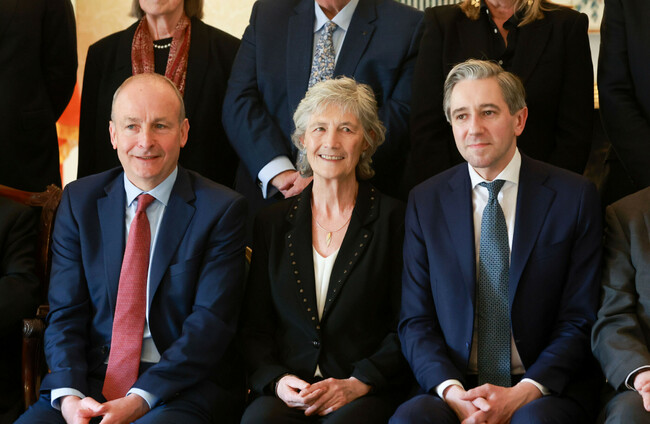
Monday’s meeting was the first convening of the Council of State under Article 26 of the Constitution since Connolly took office in November last year.
Under Article 26, the President has the power to refer any bill to the court after the Council of State has been consulted. If, following the referral, the court rules that it is not unconstitutional, it means the legislation cannot be further challenged in the future.
Taoiseach Micheál Martin said before the meeting on Monday he was “satisfied” the government’s Bill was constitutionally sound, having discussed the matter with O’Callaghan and Attorney General Rossa Fanning.
The Bill, which was passed through the Houses of the Oireachtas by government last week, will reform Irish asylum laws and aims to implement the new EU Migration and Asylum Pact.
However, the Irish Human Rights and Equality Commission (IHREC) cautioned that the Bill contained “significant human rights concerns”.
IHREC said a number of important amendments were made to the Bill during Oireachtas debates, but said it remained concerned.
It said concerning aspects of the Bill include new powers to detain applicants in order to establish elements of their claims, the absence of legal advice and representation at first instance, and amendments to family reunification.

To embed this post, copy the code below on your site












have your say