Sign in. It’s quick, free and it’s up to you.
An account is an optional way to support the work we do. Find out more.
Sign in. It’s quick, free and it’s up to you.
An account is an optional way to support the work we do. Find out more.
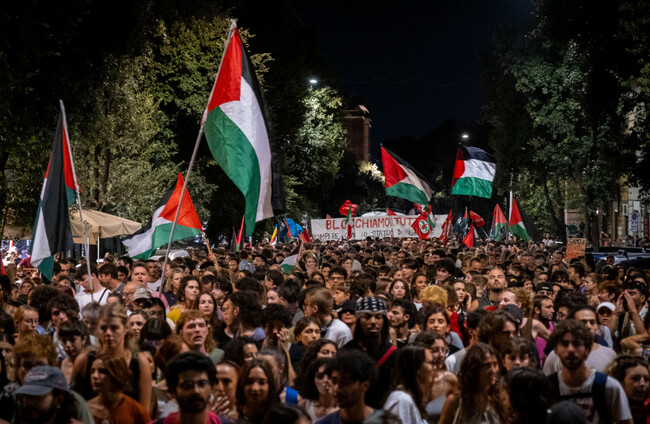

AS THE DÁIL returns from its summer recess, the Irish government faces a moral test like no other.
The destruction of Gaza City, the forced starvation of its people, and the mass killing of civilians, aid workers and journalists have now been recognised as genocide by scholars, UN officials, and leading human rights groups, including those in Israel. What is astonishing is that it took so long to see what is happening in front of our eyes and that the slaughter continues daily.
The failure of the international community to impose consequences on Israel for its actions in Palestine risks causing irreparable harm to the international rules-based system of human rights, a system already under significant strain from rising authoritarianism. Impunity for the crimes of genocide and related war crimes cannot be contemplated.
Judges at the International Criminal Court (ICC) have previously issued arrest warrants for Israel’s prime minister and former defence minister, as well as the military commander of Hamas. Ireland must continue to protect and promote the work of the International Criminal Court, which is already operating under US sanctions but whose role is so critical in a context where the Geneva Conventions have so clearly been breached.
Ireland also needs to heed growing calls for it to join international accountability initiatives, such as the Hague Group, and strengthen its support for existing institutions such as the International Criminal Court to reinforce legal consequences for perpetrators.
Our colleagues in the Palestine Independent Commission for Human Rights (ICHR), have again written to us, the Irish Human Rights and Equality Commission (IHREC), asking us to take action beyond those international legal processes.
They have asked us to appeal directly to the Irish government and the Irish people to continue to escalate our efforts to stop the killing.
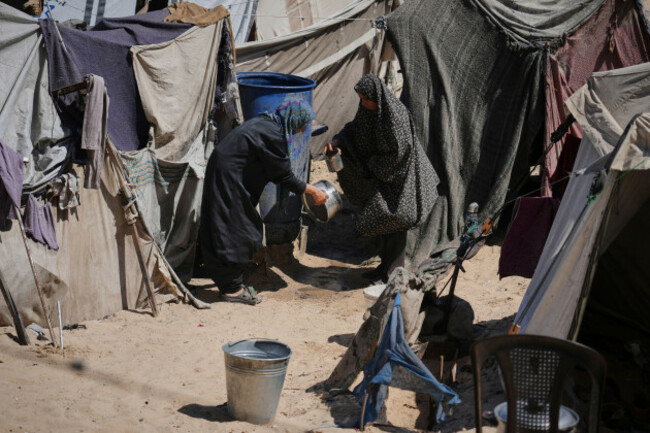
As Dr. Ammar Dwaik, director general of the PCHR, tells us: “Recognition of genocide must trigger a shift from condemnation to prevention. Prevention is not passive. It requires immediate political, legal, and diplomatic steps aimed at disrupting the structures enabling mass atrocity.”
Ireland is a signatory to the Genocide Convention. That means our duty is not only to punish genocide after the fact, but to prevent it as it unfolds. Prevention is not symbolic. It is concrete, measurable, and urgent. Words of solidarity must be met with concrete action.
The government’s immediate agenda now that it is returning to Leinster House should reflect that obligation.
First, and without delay, the Oireachtas must pass the Occupied Territories Bill.
The government then needs to move to permanently end Central Bank facilitation of Israeli bonds. Responsibility for the sale of the bonds this year has been moved to Luxembourg, but Ireland remains the default member state for Israel’s overall bond programme under EU rules, meaning the Central Bank could be asked to approve future applications.
We need to ensure trade is halted in dual-use items (that is, goods which can be used for either civilian or military purposes) that could contribute to the machinery of war and we must take all possible steps to ensure Irish airspace is not used to transport weapons or other military supplies.
Crucially, Irish authorities must also take all possible steps to ensure that Ireland’s technological infrastructure, including our data centres, cannot be used to support Israel’s military operations.
These are not radical measures; they are the minimum required to align our actions with our stated values.
Ireland has long prided itself on leadership for the protection of human rights, and while we have adopted strong principled positions within the EU, the union as a collective is failing.
The current stasis in political decision-making at the EU Commission on Gaza is eroding the moral and human rights-based underpinnings of the EU as a whole.
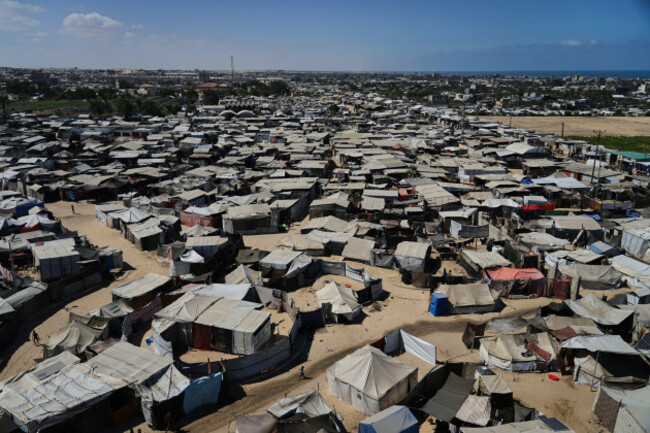
This paralysis has not gone unnoticed. The EU’s “reluctance to take serious action against Israel” in relation to its conduct in Gaza and the West Bank has been criticised by 27 former EU ambassadors to the Middle East and North Africa – particularly in comparison with the speed with which the bloc acted against Russia’s illegal invasion of Ukraine in February 2022.
Dr Dwaik notes the “political constraints within the EU, particularly the collective unwillingness thus far to impose sanctions or suspend the EU-Israel Association Agreement.”
Yet he says, “even within these limitations, Ireland can lead with integrity and impact. Ireland has a proud history of working with other principled EU member states, such as Spain, Belgium, and Slovenia, to shape collective positions grounded in international law”.
Since the days of the League of Nations, Ireland’s contributions to peace support operations, conflict resolution, and human rights promotion through international organizations like the UN and EU have inspired other, stronger international actors to ‘do the right thing’.
When the international rule of law breaks down, chaos and catastrophe follow. As we watch the blatant use of starvation as a method of genocide in Gaza, the window of time within which we can act is swiftly closing.
Now, Ireland needs the courage and leadership to use the position we hold in the global order to ensure that the international humanitarian and human rights system is enabled and supported to fulfil its core functions, from the immediate delivery of humanitarian aid to the ultimate prosecution of war criminals.
History will not remember who issued the most eloquent spoken or written condemnations. It will remember who had the courage to lead, and to act.
Liam Herrick is the Chief Commissioner of the Irish Human Rights and Equality Commission. He was previously the Executive Director of the Irish Council for Civil Liberties and worked as an advisor to President Michael D Higgins.
To embed this post, copy the code below on your site











have your say