We need your help now

Support from readers like you keeps The Journal open.

You are visiting us because we have something you value. Independent, unbiased news that tells the truth. Advertising revenue goes some way to support our mission, but this year it has not been enough.

If you've seen value in our reporting, please contribute what you can, so we can continue to produce accurate and meaningful journalism. For everyone who needs it.

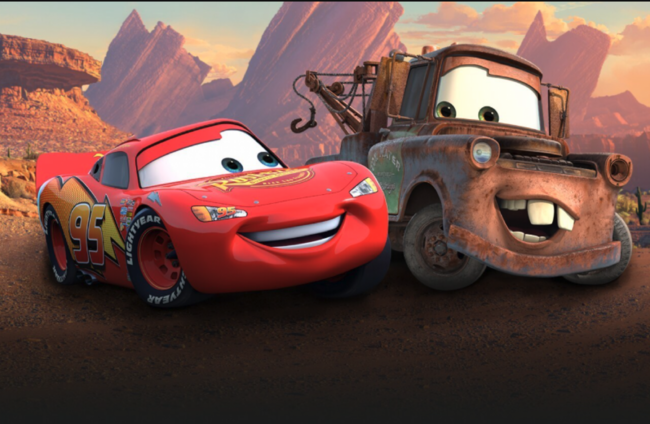
Car love I have that strange affliction of seeing cars as having personalities and souls

“Over the years, though, I’d say I’ve developed one genuinely useful skill: I can match a person to a car pretty well.”

Our resident motoring expert Paddy Comyn is starting a brand-new Car Clinic where he will answer all your motoring questions and queries. Whether it’s specific advice on an upcoming purchase or a technical question about a mooted national policy, he wants to help. If you have a query or question, please send it along with the subject line CAR CLINIC to motoring@thejournal.ie 

I’VE BEEN AROUND the car world all my life in various shapes and forms, and I’ve written here before about how it all started for me.

Growing up in the house of a car journalist and seeing my Uncle Gerry on my mom’s side with his passion for old cars was the perfect recipe for creating a car nut. Gerry died a few years ago. He was a pathologically content man who loved to tinker with old Fiats, a tradition that has passed to his son (my cousin Alan) and in turn to his son, Stephen.

We all have that strange affliction of seeing cars as having personalities and souls. Not everyone has that, of course, nor should they. We can make very boring dinner-party guests.

Over the years, though, I’d say I’ve developed one genuinely useful skill: I can match a person to a car pretty well.

I tend to be the guy people ring, and they invariably start with, “I am thinking of changing the car.” The filing system in my head starts to organise the options – not in a slick ChatGPT way, but more like the slow, methodical churnings of an early 20th-century fairground attraction.

It’s an “I know I left it here somewhere” sort of system, housed in a cluttered and scattered brain.

My best friend Colm changes his car every few years and you have never met someone who does more research on anything. He moved to an EV a few years ago (he now has two) and he now knows more about EVs than, well I do.

Yet he still has to have the full analysis of the thought process down the phone to me, which of course is delightful, but like many buyers, he has already made up his mind, but just needs someone to say yes, you’ve made the right decision.

So without having me locked in your basement. How do you buy a car?

Well thankfully, in 2026 in the new car segment, there are not really any truly terrible cars. Before, say, the 1990s there were cars that were just not very good and destined to break down, rust, or possibly fall apart.

These days you are more likely to suffer from software gremlins than engine mishaps. Sure, it does happen at times. But relatively speaking we live in a world where most cars that have been well-maintained should be pretty decent.

So when you are buying a car, where should you start?

Well try and start with your head first.

Paddy Delaney, gave me and Mark Noble the cold reality about car purchases on a recent episode of The Driver’s Republic Podcast. (Paddy, himself, has the excellent Informed Decisions podcast on all things finance and tells people to think first about how much they are willing to spend, per year, on their car.)

If you buy a €30,000 car to keep up with the Joneses (or the Murphys) and you keep it for three years and it’s worth €15,000 at the end, then outside of the substantial annual running costs (fuel, tax, servicing tolls etc) then it has cost you €5,000 per year.

If you have financed it, it has cost you more than that when you factor in interest.

If you had bought the car second-hand for €15,000 and keep it for 10 years, like he does, even if it’s worthless at the end of it, it has only cost you €1,500 per year.

Remedial-enough maths.

But you get the point he is making.

Start there, because if you have €5,000 per year, or €10,000, or €20,000 per year to spend just on having that car in the driveway, then have at it.

How you pay for it is really down to your budgets. All cars (bar a few classics and supercars) lose money, it is how you manage it.

For new cars, Personal Contract Purchase (PCP) remains the dominant force, as it has made getting into a new model much more accessible because it reduces the monthly payment for a much more manageable amount, but there is of course the tendency for people to put off that final payment at the end and get themselves into a cycle of moving on to the next car. It works fine for most people once they have their eyes open to it.

Hire Purchase (HP) is becoming popular again and manufacturers are pushing it hard again with more attractive rates, I suspect as they might have had their fingers burned with some EV values over the past few years. Your monthly payment is generally higher, but at the end of the term, you own the car outright.

Do what is best for your own budget but check the interest rates. Nissan recently launched the new Micra, a modern EV which is a cousin to the Renault 5. They both come from the same Irish distributor. The cars have the same starting price. The Nissan is offered at 5.9% on a HP (60 months) and the Renault at 0% over 48 months. Virtually the same car, but you will pay €2,807 more for the Nissan.

When we walk into the car showroom, these are perfectly designed to have us lose our sense of perspective. The shiny cars, the smell of the leather.

What car says something about me as a person?

Once you have sorted out the budget conversation in your head and discussed it with whoever else it might effect, it is time to look at your needs. Safety and running costs are usually high on the agenda for most people. You can look for Euro NCAP ratings for cars, which is the established safety rating. The higher the score the better, but it doesn’t always tell the story.

Brands like Dacia have in some cases made headlines for poorer scores, but this was because they opted not to add some of the most extravagant and not always vital safety features to their cars and their scores suffered as a result. The devil is in the detail, but structurally any car built in 2026 is going to be inherently much safer than one built in 2006.

Start your engines (or not)

The big question for a lot of people at the moment is whether or not they should go electric. The recent fuel issues has put this in sharp focus and DoneDeal Cars saw a 125% increase in searches for EVs during the height of the fuel protests.

If you have a driveway and can charge at home, this for me is criteria number one. If your daily commute is less than 200km a day (which I almost guarantee it is) – there is your number two criteria. You will save money, they are nice to drive, they are not for everyone, but make the decision after you try one.

Don’t NOT buy an EV because of a journey you do once or twice a year, base it on the ones you do every day.

If you are buying a used car then there are lots of guardrails you can use to make sure you stay safe. On DoneDeal Cars we have a Trusted Dealer Programme and you can get a Free History Check on cars from these.

History Checks provide many of the red flags that might be raised. Look for an NCT, always look for a good service history and always make sure there is no outstanding finance on the car.

Yes, you will pay a little more from a dealer, yes you will pay a little more from a franchise dealer, but they generally come with extra layers of safeguards and this can be invaluable in the long run.

There has been a lot of head and not so much heart, but this is where it does need to play a part. You will be getting into this thing most days. It will transport you from your home to work and elsewhere and there should be a little sense of pride when you sit into it.

Pick a colour you like, make sure it has the gadgets and gizmos you covet.

Apple Car Play and Android Auto is a must in modern cars. Adaptive Cruise Control (aka Radar Cruise Control) which sits your car at a safe distance from the car in front of you is such a pleasure on long journeys.

I love a manual gearbox but Ireland’s congested traffic makes automatic such a pleasure. Diesels still make sense if you travel long distances daily, Hybrid makes sense for pretty much everyone, which is why it has become so popular of late.

So how do you buy a car?

Primarily use your head. Know how much you will pay, per year for you car. Factor in running costs. Ask questions. Read reviews. Service your car on time and properly. And yes, leave a little room for passion.

Paddy Comyn is the head of automotive content and communications with DoneDeal Cars. He has been involved in the Irish motor industry for more than 25 years.

Journal Media Ltd has shareholders in common with DoneDeal Ltd

Readers like you are keeping these stories free for everyone...
A mix of advertising and supporting contributions helps keep paywalls away from valuable information like this article. Over 5,000 readers like you have already stepped up and support us with a monthly payment or a once-off donation.

View 17 comments
Close
17 Comments
This is YOUR comments community. Stay civil, stay constructive, stay on topic. Please familiarise yourself with our comments policy here before taking part.
Leave a Comment
    Submit a report
    Please help us understand how this comment violates our community guidelines.
    Thank you for the feedback
    Your feedback has been sent to our team for review.

    Leave a commentcancel

     
    JournalTv
    News in 60 seconds