Sign in. It’s quick, free and it’s up to you.
An account is an optional way to support the work we do. Find out more.
Sign in. It’s quick, free and it’s up to you.
An account is an optional way to support the work we do. Find out more.

LIKE MANY IRISH adults, I spent 14 years learning our native language in the classroom but left with the ability to only string a few very random sentences together.
They are so awkward and truncated that if I were to speak to them in English during a regular conversation with another adult, they might assume that I was having a stroke or some kind of neurological episode and phone an ambulance.
“I have one brother and a red school bag.”
“There are no clouds in the sky today.”
“I like cake.”
“Can I go to the toilet?”
I feel both ashamed and disappointed at my lack of Irish. I try to lob in a few words As Gaeilge every day, but it’s very limited. Things like uisce, mála scoile, bainne and gúna are about the height of it and the thoughts of trying to converse with a Gaeilgeoir, or even my growing children, fills me with panic.
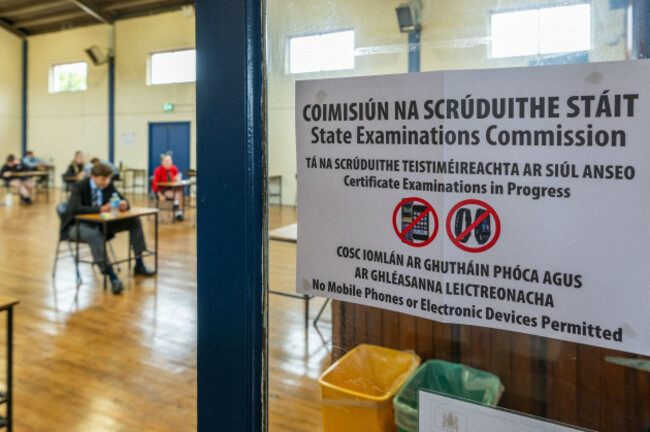
As the school term gets properly underway, so does the obair bhaile, and I’m already dreading the day when they ask me to help them with something in Irish that’s beyond my capabilities. I feel utterly stupid at the thoughts of it and am immediately transported back to my Leaving Cert Irish Oral where, after trotting out my prepared phrases, my mind went completely blank, and I froze.
My powers of speech seemed to leave me for a full minute, and I only had the ability to say Tá brón orm while I held back a weird urge to lob in some French, which I seemed to have a much better grasp of, despite only starting it in fourth class.
For most of my school days, I reasoned that I was just bad at Irish, that it wasn’t for me or that I was the problem. But when I look back and contrast it with how positive my children’s experience of Irish is now, I realise that the way the language was taught in school, and how society viewed it, was part of the problem.
From the get-go, there was little enthusiasm from the teachers in our school for the Irish language. The conversational or fun side of things was never fully explored; instead, it was treated as something confined to books.
There seemed to be a downbeat vibe that surrounded the language for most of my years learning it in the classroom. It wasn’t approached as a living, breathing or fun form of communication, and we didn’t speak it at home. To be honest, learning Irish felt like a dull, boring chore and not the passionate expression of our culture it should have been or currently is for my kids. It was only when I got into sixth class that we got a new young teacher who was excited about Irish.
It was the first time I’d seen someone so passionate about our native language, and it immediately got me interested. For the first time, I got an appreciation of what a beautiful and poetic language it is. Gone was the fear instilled into us about making mistakes around verbs and grammar. Instead, she wanted us to speak it and try it, without worrying about getting things wrong. I learned more about Irish in that one year than I did in any of the other of my school years.
Sadly, it wasn’t enough to paper over the many cracks in my foundation of the language and, once I got into secondary school, things shifted back to the learning-off method, which did little to bolster my conversational Irish skills. The shiny happy, enthusiastic approach was gone, and the fear was back.
The mere mention of the words An Modh Coinníollach, or the conditional tense in Irish used to express what would, could or should happen, was approached as something to be feared, and God help you if you made a mistake trying to take a stab at it in class.
Ultimately, I dodged going to the Gaeltacht altogether because I felt so woefully out of my depth, when in fact that experience was probably just what I needed.
As well as the lacklustre teaching approach, the content on the syllabus felt like it was a never-ending dirge of learning-off sad poems about how poor, rainy and gloomy Ireland was. None of it felt contemporary or applicable to my teenage life in the 90s; instead, it was filled with depressing stories of tortured hardship like Peig, as well as other passages of prose filled with endless laments from devastated parents crying over their children emigrating from Ireland, all of which felt alien in the Celtic Tiger era I was growing up in.
Once I’d finished school, I have to admit, I happily ditched Irish and never looked back; until now, that is, because as a parent you soon realise that you cannot escape being brought back into the classroom and facing your educational ghosts via your children for very long. So far, my two children seem to have a totally different relationship to Irish both inside and outside the classroom.
They don’t see it as an old-fashioned or out-of-touch subject that’s an abstract concept. They seem to enjoy learning it and have absolutely no hang-ups about it. To them, it’s simply another subject, as equal as maths or PE and as far as I can see it’s being taught in a much more positive, fun way. Gone are the days of Peig’s tales of woe and in are the trendy Irish podcasts, TV shows, influencers and bands.
It’s a stunning turnaround, and in a twist of classroom karma coming back to bite me in the behind, I’m slowly realising that I’m going to have to try and make an effort to improve my Irish for the sake of my kids, even though in some ways I’d rather poke my eye out with a rusty spoon than do so.
That’s the teenage fear inside me talking, of course, but it is hard to ignore the years of feeling like I was not capable. What’s also hard to overlook, however, is that while I spent 14 years learning Irish in school, I spent far fewer years learning French, but I could make a better stab at it when I am there than I would at speaking Irish in the Gaeltacht where I’d be likely to spout off no-context phrases like
“Tá ocras orm,” and “An bhfuil cead agam dul go dtí an leithreas?”
I don’t think that’s because Irish is a harder language to learn, by the way. What I do know is that I hate having to use Google Translate to find out how to spell basic Irish words and phrases whenever my children ask me for help with their homework. For now, I’m starting small.
I’ve queued up some bilingual podcasts in the hopes that something will stick. I’ve set Duolingo to Irish and checked out online resources like a newly launched website for parents who want to get better at Irish for their children called irishforparents.ie, before I even think about stepping foot back in a classroom for an evening Irish class or going on an adult Gaeltacht course.
If all else fails, maybe I just could whack on a bit of Kneecap and hope for the best?
Niamh O’Reilly is a freelance writer and journalist.
To embed this post, copy the code below on your site

















have your say