Sign in. It’s quick, free and it’s up to you.
An account is an optional way to support the work we do. Find out more.
Sign in. It’s quick, free and it’s up to you.
An account is an optional way to support the work we do. Find out more.
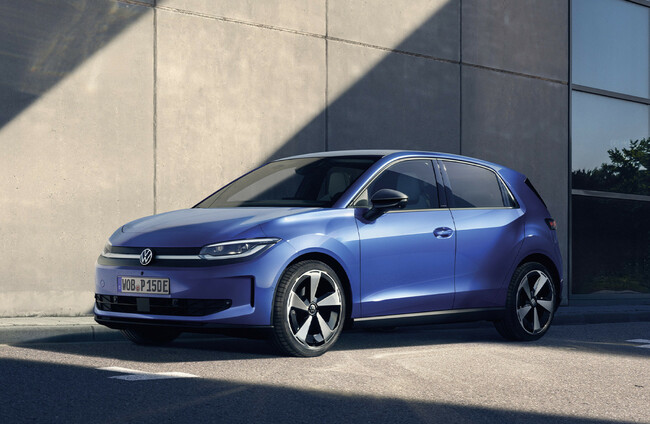

THE EV SCRAPPAGE scheme is good politics. But it might make 2026 a very strange year for the car market.
The headline number is €8,500. The buried number is €50,000. And it’s the second one that will matter more.
When the government announced the ICE2EV scheme this week, a €5,000 scrappage incentive on top of the existing €3,500 EV grant, the reaction was broadly positive. And why wouldn’t it be? On the surface it is a genuinely good idea. You have an old, polluting car. Here is money to help you replace it with something cleaner. Simple. Logical. Good politics. Except politics is exactly what it is.
The fund behind the scheme is €10 million. At €5,000 per car, that is a maximum of 2,000 vehicles. That’s in a country with an overall new car market of around 130,000 units per year.
According to DoneDeal Cars data, approximately 30,000 cars aged 13 or older were traded into garages across Ireland in 2025 alone. The scheme covers fewer than one in 15 of the people who were already in the market for a change. The CSO puts the total number of cars over 13 years old on Irish roads at around 738,000. ICE2EV, in its current form, will reach less than 0.3% of them.
Ireland has a target of 936,000 EVs on Irish roads by 2030. According to Minister Darragh O’Brien’s own announcement, there are 235,000 there today. The EPA’s most recent projections show Ireland could achieve emissions reductions of up to 25% by 2030 against a national target of 51%, with transport among the sectors furthest from its ceiling.
Against that backdrop, a scheme that moves 2,000 cars is a drop in the ocean, which is not a reason not to do it, but it is a reason to do it properly and at scale.
None of that means it won’t be declared a success. It will almost certainly run out of funding quickly, which will allow the government to point to demand as evidence of appetite. That is a fairly predictable outcome when you offer money on a first-come, first-served basis.
The person driving a 2013 car in 2026 is generally not doing so out of nostalgia. They are driving it because new cars are expensive. They change infrequently, and when they do, they tend not to spend a lot. Even the most affordable EVs on the market are sitting at €20,000 or more which is a substantial step up from a car worth €3,000 to €5,000.
The more realistic beneficiary is the household where a second car happens to be old enough to qualify, and where the family is in a position to make the jump to a small, affordable new EV.
Speaking to people across the motor industry this week, the sense is that the winners will be the manufacturers with entry-level EVs available immediately. We have already heard of cases of people coming in with a battered old Nissan Micra against a new EV SUV looking to be first on the list, but there doesn’t appear to be any way for car dealers to process anything as yet.
Here is the part that got almost no airtime.
In the same announcement, the Department of Transport confirmed that the SEAI EV purchase grant threshold drops from €60,000 to €50,000 for new applications after 31 July.
Speaking to manufacturers this week, the €50,000 threshold is cutting across a significant portion of their current EV ranges. Many told me that several models specifically priced to stay under the old threshold will now need to be repriced or lose specification.
One manufacturer’s volume-selling EV, with delivery, from 31 July sits above €50,000. That is €3,500 more expensive for the buyer, overnight. If you are in the market for a more expensive EV then you need to move fast.
The scrappage scheme adds 2,000 units to a 130,000-unit market. The threshold change affects how the entire upper half of the EV market is priced and sold. One of these decisions is policy. The other is a headline.
This is the angle I keep coming back to.
Of the people who trade in older cars each year, many will have heard about this scheme. Some will move fast and get in before the fund runs out. But what about the rest? The ones who miss the cut? A rational person who just learned there was a €5,000 incentive, that it ran dry in weeks, and that it is almost certain to reappear in the October budget, might reasonably decide to wait.
Why buy in November 2026 when January 2027 might come with another €5,000?
EV registrations outside of peak plate months are already soft. July 2025 delivered just under 4,900 EVs. By October that had fallen to 706. By December, 171. July 2026 will carry the 262 plate surge and the scrappage rush simultaneously and it could be an exceptional month. But the risk is a very strong July followed by an even weaker H2, as demand is pulled forward and potential buyers defer for a better-funded scheme next year.
There is also the potential to mess with the residual values of EVs if there are sudden large price differences in the market. The reality, though, at the moment, is that the used car market is very strong.
Without the influx en masse of used cars from the UK, we’ve seen pretty strong prices for used cars. Even used EVs, which had some shaky moments, have recovered well according to the DoneDeal Cars Price Index.
A maximum of 2,000 cheaper EVs won’t really upset the apple cart too much.
What is a real shame is that this grant doesn’t apply to used cars, which would have given a greater amount of people access to EVs. The minister, speaking on RTÉ’s Morning Ireland suggested that this was because they wanted to ensure they could stand over the vehicles and that it could be managed by dealers.
The reality is that on DoneDeal Cars just 5.5% of EVs are being sold by private sellers, out of more than 6,000 used EVs. Allowing people who were trading from an older 13-year-old or older car into a used EV seems to be a more logical transaction. Maybe this is coming?
I do think this government genuinely wants to accelerate EV adoption, and the principle behind ICE2EV is right. But 2,000 cars is not a policy. It is a pilot. The previous Irish scrappage scheme, which ran from 2010 to mid-2011, generated around 30,000 sales. That was a different order of magnitude.
If the government is serious, and I believe they are, the October budget is where the real statement gets made. A properly funded, full-year scheme in 2027 that covers used as well as new EVs would be something worth writing about. Until then, July is going to be a very busy month in showrooms. What happens in August will tell us a lot more.
Paddy Comyn is Head of Automotive Content and Communications with DoneDeal Cars. He has been involved in the Irish motor industry for more than 25 years.
Journal Media Ltd has shareholders in common with DoneDeal Ltd.
To embed this post, copy the code below on your site













have your say