We need your help now

Support from readers like you keeps The Journal open.

You are visiting us because we have something you value. Independent, unbiased news that tells the truth. Advertising revenue goes some way to support our mission, but this year it has not been enough.

If you've seen value in our reporting, please contribute what you can, so we can continue to produce accurate and meaningful journalism. For everyone who needs it.

Alamy Stock Photo

Surrealing in the Years Government could learn something from RTÉ's delayed bravery

Also this week: what our collective search history tells us about the year we’ve had.

IF YOU WANT to take the temperature of a nation, you could probably do worse than checking its collective internet history.

Now, while we can’t do exactly that, Google has issued their annual ‘What’s everybody in Ireland Googling?’ press release and, in news that will surprise nobody except maybe Peadar Tóibín, we remain incurably curious about the weather.

The extratropical cyclone Storm Éowyn remained the most popular search term in Ireland this year despite making landfall all the way back in January. As it turns out, we were concerned not only with the devastating effects of the storm, but the finer details too, as ‘How to pronounce Éowyn’ clocked in as the third-most searched for ‘How to’ term. This tells us two things: that not enough people in Ireland have seen the Lord of the Rings movies, and that some people may have been planning to negotiate with the storm and didn’t want to provoke its wrath further by saying its name wrong. 

Naturally, one of the most popular search queries of the year was ‘What is 6 7?’ — an inquiry that refers to a memetic phrase which grabbed the attention of children and teenagers across the world this year. 

Older people were left scratching their heads as to what the cryptic numerical phrase could possibly mean, demanding to know the significance of the two numbers, and what was so funny about employing them seemingly at random and with no explanation. Of course, the reality is that old people aren’t supposed to understand the humour of young people, and it would benefit us greatly as a society if Google had responded to all such queries with a gentle, “just let it go, man”, kind of message. 

Other searches included things like ‘Dubai chocolate’ and ‘What are tariffs?’ and ‘How to become best digital-only columnist in Ireland’, but, to be very fair, that last one was just me 10,000 times. 

In what is perhaps a more insightful example of this data, we learned that the second-most popular ‘How to’ Google search was ‘How to spoil your ballot’. We now know that these spoil-curious folks got exactly what they needed from Google, with the number of spoiled votes exploding in October’s presidential election, many multiples higher than in 2018. One question that does bear asking, however, is what could possibly have confused these people about spoiling their ballot? 

Were they under the impression that they had to write ‘I hereby wish to spoil my ballot’ in order for it to be counted as a spoil? Typically, spoiling anything is kind of a dealer’s choice situation. If your only intention is to mess something up, you can kind of go about it however you want. One voter covered his ballot in literal shit (whether they took their inspiration from whatever they found on Google, we will never know).

It’s also fun to imagine what these voters thought the outcome would be if they failed to spoil their ballot. Were they worried they might… double-spoil it in some way, or were they concerned that they might somehow, in the attempt, end up putting a 1 in one of the candidate’s boxes? 

These revelations do a good job of winding back the clock a month or two to a time when there was great fear, or at the very least some very well-worded pretend fear, that a Catherine Connolly presidency would in some way jeopardise Ireland’s standing in Europe. Now that she has met her Ukrainian counterpart Volodymyr Zelenskyy not only without incident but with the kind of grace one would expect from our head of state, it seems as though we can stop tossing and turning in our beds.

It was Connolly’s against-the-grain nature that so stirred the passions of commentators that many column inches were written about how the process to get onto the ballot was too onerous, and that we should be a little more loose when it comes to letting prospective candidates onto the ballot. 

In a stark contrast to Connolly’s meeting with Zelenskyy, Gareth Sheridan spent this week hanging out and posing for pictures at a party with the likes of Russell Brand and Tucker Carlson. Sheridan, along with Maria Steen, was one of the presidential hopefuls who came closest to getting his name on the ballot, so maybe, just maybe, there is some sense in maintaining such a rigorous nomination system.

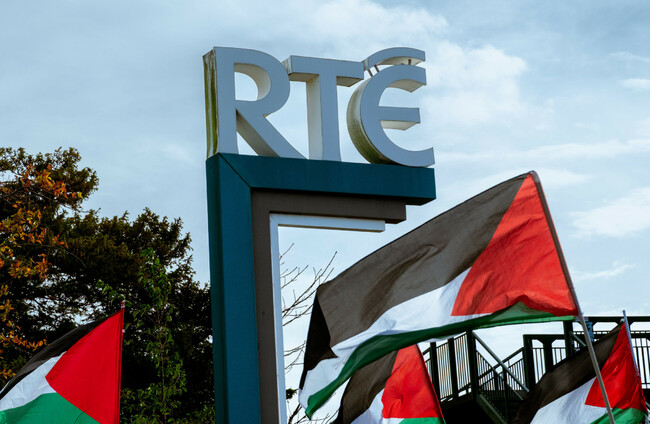
In another relatively rare W (that’s one for the 6 7 crowd, by the way. See? I’m young, I’m still young) for the institutions of Ireland, RTÉ stuck to its guns this week when it announced that Ireland would be boycotting next year’s Eurovision after the European Broadcasting Union (EBU) confirmed on Thursday that Israel would be allowed to continue to compete.

While there have been campaigns for Ireland to boycott the song contest for the last two years, RTÉ — along with its Spanish, Slovenian and Dutch counterparts — have at last drawn a line in the sand. In fact, not only will we not be competing this time around, RTÉ won’t even be broadcasting it. 

In a statement confirming the decision, the national broadcaster said: ‘RTÉ feels that Ireland’s participation remains unconscionable given the appalling loss of lives in Gaza and the humanitarian crisis there, which continues to put the lives of so many civilians at risk.’

While RTÉ’s decision could have come a whole two years earlier, its decisive action now does differentiate it from broadcasters across Europe who are content to allow Israel the soft power it achieves through its participation in the tournament, even as the state wantonly violates the ‘ceasefire’ in Gaza. 

And after all, two years is nothing compared to the nigh-on eight years that the government has had to pass the Occupied Territories Bill, a matter on which it continues to equivocate, prevaricate and delay.

This week, Simon Harris told The Journal that government leaders will meet with the foreign affairs minister Helen McEntee and the Attorney General to ‘consider how best to progress the legislation’. 

During last year’s general election campaign — back when the bill was closer to seven years old — then-Taoiseach Harris said: ‘We’re not going to wait for everyone in Europe to develop a consensus on this… If there’s more Ireland can do, Ireland will absolutely not be found wanting, and I’d be willing to work with people across the political divide in relation to this.’

This week, RTÉ showed exactly what ‘not waiting for Europe’ looks like, while the government continues to shirk its own promises in favour of more meetings with the Attorney General. Meetings which the public would be forgiven for thinking will only throw up more obstacles and excuses for why the bill can’t be made into law.

And how many excuses would that be now anyway? Six? Seven?

Readers like you are keeping these stories free for everyone...
A mix of advertising and supporting contributions helps keep paywalls away from valuable information like this article. Over 5,000 readers like you have already stepped up and support us with a monthly payment or a once-off donation.

Close
JournalTv
News in 60 seconds