Sign in. It’s quick, free and it’s up to you.
An account is an optional way to support the work we do. Find out more.
Sign in. It’s quick, free and it’s up to you.
An account is an optional way to support the work we do. Find out more.
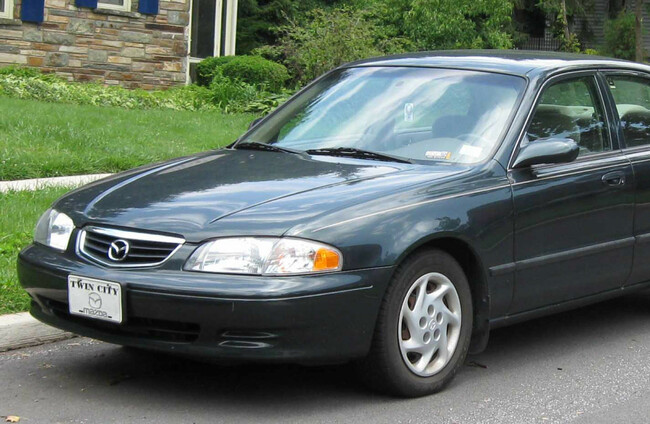

I LEARNED TO drive in my mother’s Mazda 626.
It had a gear lever that felt like stirring a bucket of gravel and a clutch that, on a hill start, tested friendships, marriages and the patience of everyone sitting behind you at the lights. But I loved it.
Most people my age have a car like that somewhere in their memory. The first car you stalled. The first car you got properly moving in third gear. The first car where you finally understood what a biting point was, usually about six months after somebody first tried to explain it to you. For millions of Irish drivers, learning to drive meant learning a manual. That is ending, and faster than most people realise.
The shift in the new car market is dramatic. In 2016, 121,661 new manual cars were registered in Ireland against just 24,989 automatics. That is roughly five manuals for every automatic.
In 2026 so far, those numbers have not just changed. They have flipped. 51,138 new automatics have been sold against 13,703 manuals. Nearly four automatics for every manual.
But the more striking number is on the second-hand forecourt — because the used market usually takes years to catch up with new car trends. DoneDeal Cars’ live inventory data, which tracks every car for sale on the platform daily, shows that for the entirety of 2022, 2023, 2024 and most of 2025, manual cars consistently outnumbered automatics on the site, often by tens of thousands. In late 2021, there were roughly 56,000 manual cars listed against just 22,000 automatics. Manuals outnumbered automatics by more than two to one.
That changed in the first quarter of 2026. For the first time in DoneDeal’s history, automatics overtook manuals on the platform. As of this week, there are 51,044 automatics listed against 41,956 manuals — and the gap is widening every month.
What is striking is not just that automatics have surged. It is that manuals have started to disappear. The number of manual cars listed on DoneDeal has fallen by more than a quarter in four years. Every month, a few thousand more manual cars are scrapped, exported, or quietly retired from the Irish road network, and they are not being replaced. The manual gearbox, in other words, is going the way of the tape deck.
Early manuals were unforgiving things. If you did not match the engine speed exactly to the gear you were selecting, the teeth ground against each other with a noise like someone dropping cutlery into a blender. They were known as “crash” gearboxes, which tells you all you need to know. It took until 1928, and a clever American engineer called Earl Thompson, to solve the problem with something called synchromesh. Cadillac fitted it first. Porsche perfected it. And that, essentially, is the manual gearbox we still drive today. A design that is almost a century old.
Here is the strange thing. The automatic is not a new invention either. General Motors launched the Hydra-Matic in the 1940 Oldsmobile. By 1957, more than eight out of every ten new cars sold in America were automatics. Eighty years ago.
So why did Europe, and Ireland, stay loyal to the manual for so long?
Three reasons, mainly. Petrol was cheap in America and expensive in Europe. Early automatics drank more fuel than manuals, sometimes a lot more. In a country where petrol cost half what it did in France, that did not matter much. In a country where it cost twice as much, it mattered a great deal.
American cars were big. European cars were small. A big American V8 had plenty of torque to waste on a slushy automatic gearbox. A 1.0-litre European hatchback did not. You had to work a small engine through the gears to get anything out of it, and that meant a manual.
And then there was culture. European driving schools taught manual. European driving tests were sat in manual. Passing your test was a rite of passage, and passing it in a manual was part of the ritual. The automatic was for Americans, or for people who could not be bothered.
That attitude held, more or less, until about ten years ago.
A few things, all at once. Modern automatics stopped being thirsty. Six-speed, eight-speed and nine-speed gearboxes, along with clever dual-clutch systems, closed the fuel economy gap and in some cases reversed it.
Automatics also started playing nicely with all the new safety kit. Adaptive cruise control, automatic emergency braking, lane keeping, self-parking. All of this works more smoothly when the car manages its own gears. A manual, in 2026, is a bit like turning up to a new office with a fax machine. And then the electric car arrived.
An EV does not need a gearbox in the way a petrol car does. An electric motor makes maximum torque from a standstill and spins happily to 15,000rpm or more. A single-speed reduction gear is all EVs need. There is, for all practical purposes, no such thing as a manual EV. As Ireland’s EV and hybrid sales have climbed and diesel has collapsed, the manual has gone down with the diesel. It is collateral damage in a bigger shift.
Under the Road Safety Authority’s rules, if you sit your driving test in an automatic car, your full licence comes with a Code 78 restriction. That means you are legally entitled to drive automatics only. Manual cars are off limits, for the rest of your life, unless you go back and sit the test again in a manual.
For decades this barely mattered. Almost nobody sat their test in an automatic. Now more and more learners are doing exactly that, often because the family car is a hybrid or an EV and there is no manual available to practise in.
Lara Lewis, an RSA-approved driving instructor based in Ashbourne, Co Meath, has watched the change happen in real time. Four years ago, she was the only instructor in her area with an automatic tuition car. “It was like a wave,” she says. “It was like a launch of people that were just looking for me and there was nobody else that could help, because there was nobody else with an automatic instructor’s car.”
Today, her problem is the opposite. “Instructors are looking to change from manual instructor cars to automatic ones because they’re not getting the same level of interest or business.” She says she rarely gets requests for manual instruction any more — “maybe one or two per cent”. And she sees exactly why, from the cars her learners are turning up in. “Most parents — the car the young person has access to is an electric, a hybrid, not a manual. They’re practising in an automatic, so they’re going to want to buy an automatic.”
A generation of Irish drivers is about to emerge with licences that legally prevent them from driving half the cars on the road today. They will not be able to drive their father’s older Golf. They will not be able to take a manual rental car in Spain. They will not be able to drive most work vans.
Most of them will not care. Why would they? The world is moving one way. But it is still a strange thing to think about. Learning to drive a manual, once the definition of being able to drive a car at all, is becoming optional. And once something becomes optional, it tends not to stay around for long.
For most drivers, yes. The manual will survive for a while in cheaper second-hand cars, and as a deliberate choice in a shrinking number of sports cars from the likes of Porsche and Mazda. But as a mainstream option, it is finished.
Mercedes stopped making manuals at the end of 2023. Volvo dropped them over a decade ago. Ferrari built its last manual, a 599 GTB Fiorano, back in 2011. Most volume manufacturers will quietly drop them from their ranges over the next few years, and almost nobody will notice at the time. Which brings me back to the Mazda 626.
I was not a better driver for learning on a manual. I am not a better person for knowing how to heel-and-toe. Nobody needs to know how a clutch works to operate a modern car, and for most people, most of the time, an automatic is genuinely better. It is easier, it is smoother, it is safer with modern assistance systems, and in an EV it is the only option that makes any sense.
But I do remember that car. I remember the stalls, the kangaroo starts, the small triumph of a clean gear change. I remember feeling, for the first time, that I was actually driving rather than just sitting there.
When my son learns to drive in a few years’ time, he will almost certainly learn to drive in an automatic. Although I will be sure to teach him how to drive a manual. The feeling of driving a Mazda MX-5 on a sunny day, flicking through its close-shift gearbox is a rite of passage I won’t deny him. He will, however, pass his test a lot faster than I did.
Paddy Comyn is the head of automotive content and communications with DoneDeal Cars. He has been involved in the Irish motor industry for more than 25 years.
Journal Media Ltd has shareholders in common with DoneDeal Ltd
To embed this post, copy the code below on your site











have your say