Sign in. It’s quick, free and it’s up to you.
An account is an optional way to support the work we do. Find out more.
Sign in. It’s quick, free and it’s up to you.
An account is an optional way to support the work we do. Find out more.


AS SOMEONE WHO researches conspiracy theories and their impact on the world, you would think I wouldn’t be surprised by bizarre reactions to big news events.
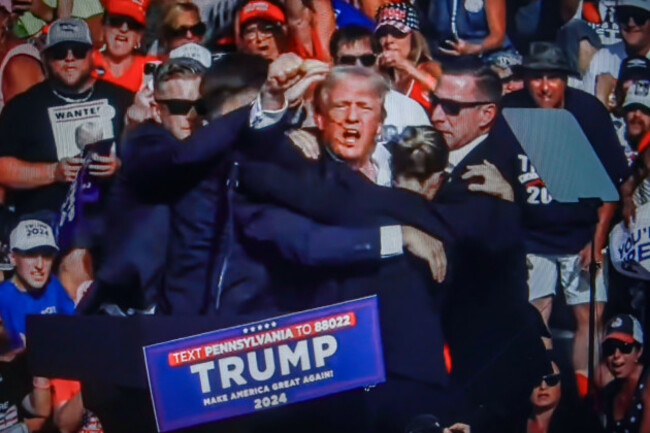
Yet on Saturday night last, as I scrolled Instagram and came across RTÉ’s video showing the attempted assassination of Donald Trump, I was genuinely shocked by the comments.
“My god, no one believes it’s real!”, I said to my partner.
Comment after comment from Irish users claimed that the shooting was “staged” or “fake”, that the crowd’s reaction wasn’t “typical”, or that the blood coming from the wound on Trump’s ear looked like “ketchup”.
Trump has spent years building a political movement based largely on belief in conspiracy theories, ranging from the claim that the 2020 US election was “rigged” against him, or that he spent his presidency waging a secret war against a cabal of Satan-worshipping paedophiles at the highest levels of power (the core belief of the QAnon conspiracy movement).
Yet seeing widespread conspiratorial reactions from people who were clearly not fans or followers of Trump or his politics should be a lesson for everyone. No one is immune from conspiratorial thinking. In fact, our brains are built to theorise in this way, and there are several reasons for this glitch in our thinking.
Proven conspiracies tend to fall apart because evidence is uncovered to prove their existence (such as the Watergate scandal). By contrast, conspiracy theories are based on speculation, cognitive biases, seeing connections where they don’t exist and, most importantly, a distinct lack of verifiable evidence. They’re based on feeling, rather than fact.
If you dislike Donald Trump and believe him to be a liar who will do anything to seize power, your default reaction to Saturday’s assassination attempt may be to believe that the event was staged to benefit his presidential campaign.
Inversely, if you love Donald Trump and see him as trustworthy and genuine, you may believe that the assassination was ordered by Joe Biden – and that he would have gotten away with it too, if not for Trump’s pesky, well-timed head tilt.

But mental gymnastics are needed to believe either version of events. You need to rationalise that two people, including the gunman, were killed. You need to believe that large numbers of people in either Trump or Biden’s team, the Secret Service and attendees at the rally were in on a complex, risky scheme. To quote Benjamin Franklin, “Three may keep a secret if two of them are dead”.
However, a quick scroll on social media in the days after the shooting showed that many are willing to embrace these versions of events. What’s more, they believed they had the evidence to prove it.
One such piece of “evidence” focused on a woman sitting in the crowd behind Trump, who immediately took out her phone to record after the first shots were fired.

People claimed that her reaction was “suspicious” and that her body language proved that she knew what was coming. This is an example of what social psychologists call illusory pattern perception, or seeing connections that don’t really exist. Our brain does this all the time, like when we find meaningful shapes in clouds.
Countless netizens connected her supposed “suspicious” reaction to an elaborate conspiracy theory which framed her as a government agent, but there is no evidence to support this. In fact, in the era where many people’s default reaction to seeing something shocking unfold in front of them is to whip out their phones to record, I would say her reaction was quite normal.
Just as conspiracy theories are based on feeling rather than fact, so too are the algorithms that power almost all social media platforms. These powerful machines are built to ensure that people’s eyes stay on their screens for as long as possible.
To do that, they target users with content that generates engagement. This is often the most outrageous, divisive and emotionally charged content, as opposed to content based on facts.
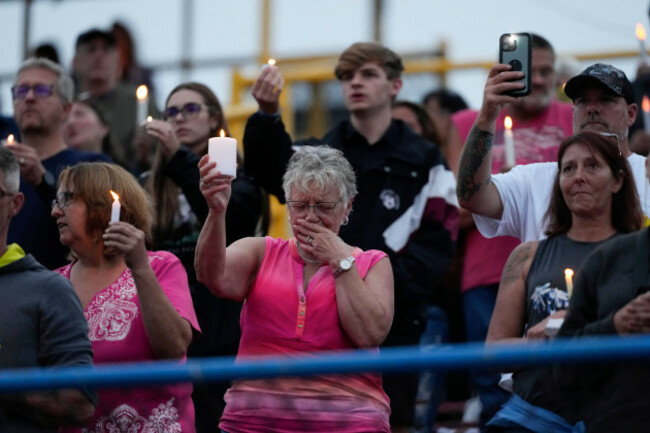
After a breaking news event like the attempted Trump assassination, where few facts are known straight away and speculation fills the void, the tendency for algorithms to push content based on emotion goes into overdrive.
An analysis from colleagues at the Institute for Strategic Dialogue (ISD) showed false and unverified claims about the shooting received more than 100 million views on X (formerly Twitter) in the 24 hours after the incident. There are still many unanswered questions about the attempt to take Trump’s life. So far, it appears that the shooter acted alone. An investigation has been launched into the security failures on the day, but the evidence is pointing to incompetency on the part of law enforcement, rather than conspiracy.
Although speculating and discussing possible scenarios about shocking events is completely natural and understandable, being bombarded with conspiratorial explanations online should not be something we ever accept.
It is increasingly clear that this feature of social media is sending people down rabbit holes where they can decide what version of reality to believe in, and leading to the breakdown of social cohesion across the world.
For that reason, we must continue to fight for a healthy information environment that champions facts over emotion.
Aoife Gallagher is a Senior Analyst at the Institute for Strategic Dialogue and author of the book Web of Lies: The Lure and Danger of Conspiracy Theories.
To embed this post, copy the code below on your site















have your say