Sign in. It’s quick, free and it’s up to you.
An account is an optional way to support the work we do. Find out more.
Sign in. It’s quick, free and it’s up to you.
An account is an optional way to support the work we do. Find out more.

I HAVE FINISHED grieving. In the midst of 35 hours without sleep, I processed what had just happened in my native country. A convicted felon who in an undamaged system would be behind bars, out of business, or banned from political office is returning to the White House. This time, rather than trying to hold power in a coup attempt, he had succeeded legally with the support of almost 73 million voters.
Upon his inauguration in January, that man will not serve the US system which he was elected to represent, but will serve one person: himself. Seeking vengeance against all his imagined “enemies”, he will try to co-opt or even tear down that system.
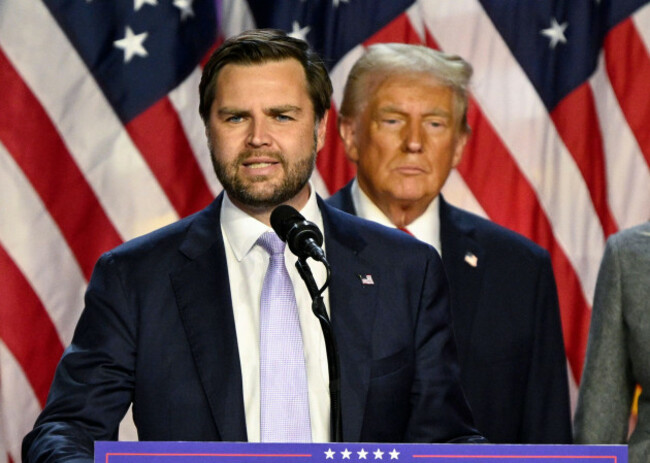
He will try to deny women their rights, rail against minorities even after courting them for their votes, and threaten the deportation of millions. With no coherent policy or even ideas, he will use those worried about their economic futures as cannon fodder. Abroad, he will sacrifice the people of Ukraine to his friend Vladimir Putin, and court the favour of autocrats rather than long-standing allies.
I grieved for all of this. And then on Thursday, I stopped.
It’s time to saddle up and ride, folks. Time to reclaim decency, respect, tolerance and an entire country — and to bolster my new home in Ireland by doing so.
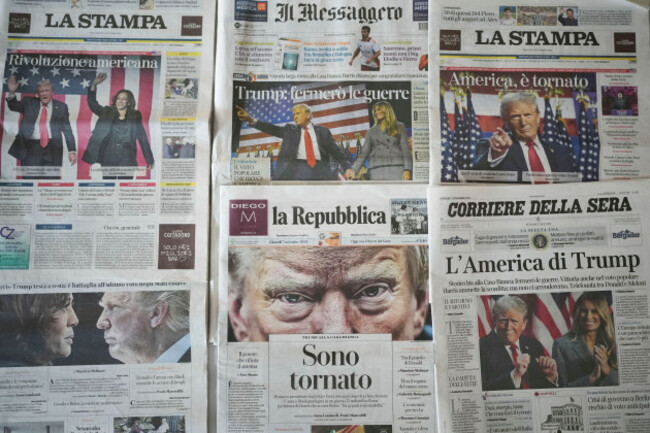
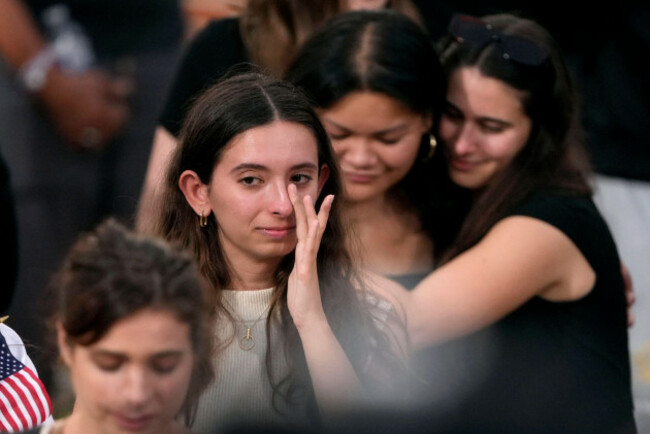
Inevitably, as the Trumpists celebrate and mock those whom they dislike, there has been much navel-gazing and finger-pointing on the other side. Some have turned their grief upon Kamala Harris, some upon Joe Biden, some upon the Democratic “machine” and the spectre of “big donors”, some upon “celebrities”.

Reflection is necessary. Even on the Trumpists’ loudest themes of the economy and immigration, the Harris campaign could claim progress: a sharp fall in inflation, a steadily growing GDP, historically low unemployment and a 77% decline in undocumented immigration across the Mexico border this year. But those facts were swamped by the sentiment of “feeling” and the Trumpist spectacle of carnage and invasion.
Perhaps more importantly, attention must be paid to the issues that should have but failed to bring out key blocs of voters. As expected, women preferred Harris by 10 points over Trump, 54%-44%, whereas men supported Trump by the same margin. But six million fewer women than men cast ballots, and despite Trump and the Republican’s assault on their reproductive rights, more young women — 40% in 2024 v. 33% in 2020 — voted for him.
Contrary to a lot of chatter in the press, Black voters stayed loyal to Harris by a margin of 86%-12%. However, in what may have been the election’s “tipping point”, 45% of Hispanic voters — defying Trump’s insults of them and their countries of origin — voted for him, up from 32% in 2020.
So, yes, a lot of contemplation is needed. But contemplation does not knee-jerk suggestions of giving up campaigns for rights and equality because Trumpists stigmatise them as “culture wars”. It does not entail superficial references to “centre” v. “left”. It does not include ceding ground on the necessity for investment in a green economy; on rights and justice being part of the address of immigrants, refugees and asylum-seekers; or for the security of those threatened by invasion abroad.
Almost eight years ago to this day, working for a UK channel, I sat in a soulless hotel room in Guildford, England. I covered the ascent of Donald Trump to the Presidency through lies, vulgarities, stalking of his rival and even a helping hand from the Kremlin.
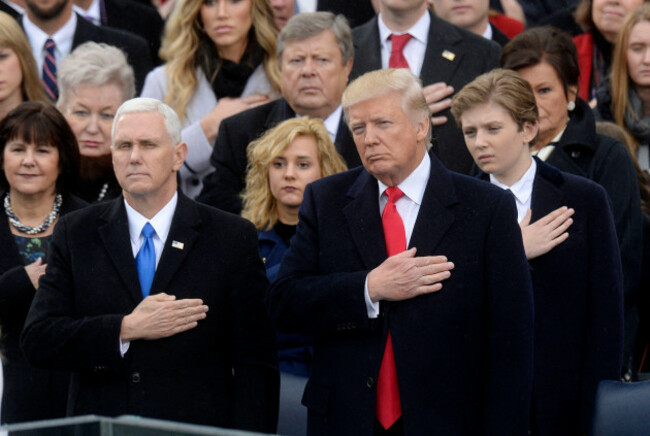
I thought then that my “America” was lost. But as Trump took the country through chaos, shutdowns, division and impeachments, as he sacrificed Americans to Covid-19 and his ego, I watched those Americans who would not accept defeat. I saw them embrace community. I saw them exercise compassion. I heard them call out the insults. I saw them comfort each other as they had to grieve.
So here we are again, with the stakes even higher than in 2016.
I won’t indulge in the platitude “darkest before the dawn” because I cannot be sure — no one can be sure — that there will be a dawn this time. The damage may be too grievous, the invective too entrenched.
But I keep with me the mantra — coined in the first weeks of the Trump dystopia in 2017 — “Nevertheless, She Persisted“.
And in my pockets are the words of James Baldwin, persecuted for his colour and his sexuality by the Trumpists of another era:
I can’t be a pessimist because I am alive. To be a pessimist means that you have agreed that human life is an academic matter. So, I am forced to be an optimist. I am forced to believe that we can survive, whatever we must survive.
Saddle up, folks. Let’s ride.
Scott Lucas is a professor of International Politics at the Clinton Institute, UCD and editor-in-chief of EA WorldView.
To embed this post, copy the code below on your site














have your say