Sign in. It’s quick, free and it’s up to you.
An account is an optional way to support the work we do. Find out more.
Sign in. It’s quick, free and it’s up to you.
An account is an optional way to support the work we do. Find out more.
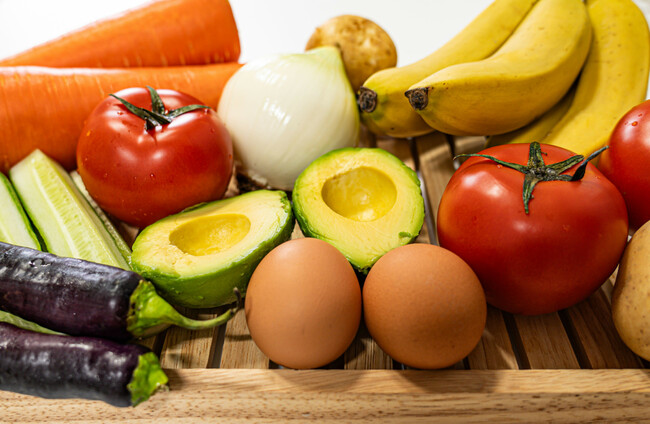

THE COST OF food is rising at almost three times the rate of general inflation. Provisional inflation figures for July from the Central Statistics Office (CSO) show that the cost of food is increasing sharply, with food prices estimated to have risen 4.6% over the last year.
At the same time, almost half of our shopping baskets (46%) are stuffed with ultraprocessed food – often layered with salt, fat, sugar and additives. Fibre and nutrients have been squeezed out to prolong shelf life and preserve taste.
The result is that about one in four (24%) of the population in Ireland is living with obesity. That’s 1.2 million people. Yet, we are loathe to attack this head-on with policies that would facilitate people eating healthy food that would prolong life and preserve physical and mental well-being. We are happy to challenge this narrative with profit-driven pharmaceuticals, but not with measures that might have an impact on the soaring profits of the food industry. But surely the number one priority of government policy should not be soaring profits but the health and well-being of its people.
If I were a Cabinet member and was concerned about obesity, chronic disease and overwhelmed health services, this is what I would bring to the table:
It takes a leap of faith to imagine a future where the dominance of junk food and takeaways on every street corner has vanished, replaced by public restaurants owned by communities serving hot, healthy food that doesn’t break the bank. Impossible? It’s been done before.
During the Second World War, the UK government opened more than 2,000 British restaurants, serving 600,000 affordable meals a day, designed to meet a third of people’s energy needs.
As well as food provision, diners could be co-designed to fulfil the social functions of food, including dignity, cultural meaning and enjoyment. And they could reduce the burden of domestic food work, including the planning, shopping, cooking and washing, all of which are increasingly costly and remain strongly gendered.
Public diners would require public investment. But because they serve a lot of food a day, costs could be kept at a minimum while maintaining quality. Imagine public infrastructure in Ireland that dispensed with fast food takeaways and facilitated public eateries where people of all backgrounds could access nutritious food at affordable prices in their own communities.
This concept is already running in several countries. Turkey has 17 public restaurants in Istanbul. For a small sum of money, hot meals based on Turkish staples – soup, legumes, rice, vegetables and meat are served to anyone who walks in.
Mexico City has 500 community-backed kitchens that operate as neighbourhood cafés serving hot, healthy meals that everyone can afford, while community bonding builds. The scheme feeds over half a million people every day.
Now Nourish Scotland is hoping to pilot a similar scheme in Dundee and Nottingham in 2026. Project Officer at Nourish Scotland, Abigail McCall said that “for other aspects of our wellbeing – water, transport, healthcare, even WiFi- we have built the public infrastructure to ensure that everyone has quality. We are missing that in relation to food”.
It’s a brilliant model that could transform community health and wellbeing.
Just about a third of adults in Ireland consume the World Health Organization recommendation of five or more fruits and vegetables a day. Because they are costly and have a limited shelf life, this figure is skewed towards the well-off, with low-income groups consuming much less.
At the same time, the demand for GP services continues to escalate beyond the capacity of the healthcare service’s ability to cope.
A recent report on GP supply and demand in Ireland from the Economic and Social Research Institute found that GP retirements in several counties will put services at risk where there is no viable replacement for them. It is predicted that GP visits will increase by as much as 30% in the next 15 years, with an extra 1,200 doctors needed to keep pace.
Meanwhile, a pioneering ‘Fruit and Veg on Prescription’ project in the UK has shown that providing fruit and vegetables free of charge to low-income groups improved physical health in the majority (eight out of ten) of participants and cut GP visits by 15%. More than three-quarters (75%) of participants met their ‘five a day’ target after nine months, compared to just a third (32%) at the start of the project.
In addition, over half (54%) of participants experienced improved mental health, attributed to their need to worry less about money for food, and feeling more supported in their community.
Now, the Alexandra Rose Charity is encouraging local authorities and healthcare leaders to take note of the scheme’s success and consider adopting similar models to support healthier, more resilient communities.
CEO of Alexandra Rose Charity, Jonathan Pauling, said that the programme shows how a small change, such as access to fruit and vegetables, can transform lives — improving health, reducing isolation and building community.
“Social prescribing projects like ‘Fruit and Veg on Prescription’ should be used as a national blueprint for success and rolled out on a national scale to support those affected by poor diet.”
Fruit and vegetables are not as trendy, nor do they have the astronomical profit margins that are seen by Big Pharma with weight loss treatments. Yet, the robust evidence behind their ability to improve health and wellbeing, reduce the risk of chronic disease and demand for health services, suggests it is time to consider a pilot rollout of a similar scheme in Ireland.
Every teen should know how to cook. Teen cooking camps can take young people from baked beans to brilliance, teaching them the essentials of cooking in just a couple of lessons – an intensive week-long course in the summer or a couple of hours once a week for the school term.
Private cookery classes are available for teens across the country, and while popular, are costly — available only to the privileged few who are likely least in need.
A really good public course would include the basics. How to bake bread. How to make a good seasonal soup. How to roast a chicken with all the trimmings. How to make a fruit salad – learning which fruits work well together. How to make a salad dressing from scratch. Porridge. Hassle-free Bolognese sauce. Homemade béchamel sauce – the perfect base for mac and cheese and topping for lasagne. A classic sponge cake filled with jam or cream. Grilled or baked fish. Oven-baked chips, Crème caramel. Fish pie topped with mashed potato. Fruit crumble. Scones – fruit, brown, plain. The secrets of delicious vegetable soups.
Public eateries, fruit and vegetable vouchers and public teen cooking classes are about more than just money. They are even about more than just health, as we are reminded of what we have lost.
We are allowed to fall in love with real food all over again as we relish the prospect of eating together, nourishing bodies and minds and souls, and creating lasting, lifetime memories.
Dr Catherine Conlon is a public health doctor in Cork and former director of human health and nutrition, safefood.
To embed this post, copy the code below on your site














have your say