Sign in. It’s quick, free and it’s up to you.
An account is an optional way to support the work we do. Find out more.
Sign in. It’s quick, free and it’s up to you.
An account is an optional way to support the work we do. Find out more.
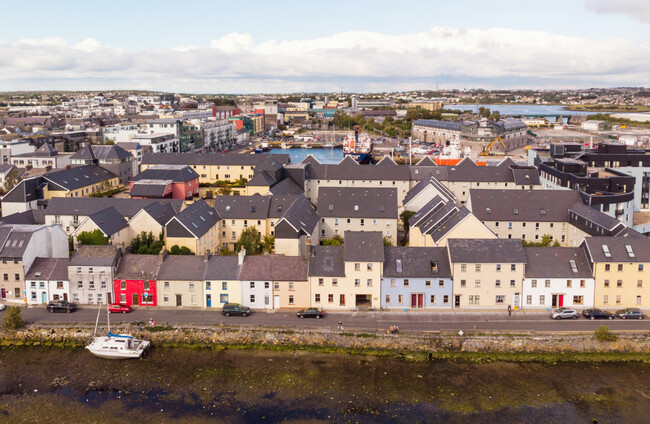
A NEW REPORT by Daft has shown that rents in the cities of Cork and Galway rose by an average of 10% last year – and rent in Limerick city has risen by as much as 19%.
The rising rents indicate that change is needed in terms of rental controls, its author asserted.
The report, published today, is the Rental Price Report for Q4 of 2024. It shows that the average cost of market rents is continuing to increase across the country, particularly in cities, and a shortage of rental properties has contributed to soaring rates.
Limerick city has seen the fastest-growing rate of inflation, according to the report. Market rents rose by an average of 5.7% during 2024. This is slightly down on the 6.8% figure seen the year prior.
Average market rents, and year-on-year change, 2024 Q4
The average open-market rent nationally in the final quarter of 2024 was €1,956 per month.
This is up marginally quarter-on-quarter and 43% higher than before the outbreak of Covid-19, the report stated. It also added that the inflation of rent prices in Dublin is continuing to move closer to rates seen across the country.
In the capital, rents in the final quarter of the year were 4% higher than 2023. Outside Dublin, they were 7% higher on average – the smallest gap in almost two years.
Rental costs of properties within cities in Ireland have continued to climb, but outside the cities, rents increased 6.2% on average.
While the availability of homes to rent improved during most of 2023 and 2024, according to figures from Daft, in recent months, the number of homes available to rent on the open market has fallen.
On 1 February, there were fewer than 2,300 homes available to rent across the country, down one quarter on the same date a year previously and well below the 2015-2019 average of almost 4,400.
Commenting on the report, its author Ronan Lyons, Associate Professor in Economics at Trinity College Dublin, said:
“With rents continuing to increase, as this report shows, and with a shortfall of at least 150,000 rental homes around the country – and perhaps as much as 200,000 – reform is needed sooner rather than later”.
Lyons added that the “acute shortage” of rental housing “continues to plague the market” and is a key factor in rents skyrocketing in various areas. He said that rent prices for people who have moved home has “increased by almost half” since rent controls tightened in 2021, while rents for people who have stayed has risen by 7% in the same time.
This, he said, has driven a wedge between people who benefit from rent controls and those who don’t.
Earlier this month, Taoiseach Micheál Martin said that the government was prepared to “examine” change in terms of the rent caps.
Rent Pressure Zones (RPZ) are in parts of the country where rents are highest and rising, and where households have the greatest difficulty finding affordable accommodation.
Rents in an RPZ cannot be increased by more than 2% per year.
They were first introduced in Dublin and Cork in 2016 for a period of three years, but RPZs have since been expanded across the country.
They were to remain in place until 31 December 2024 but last May, the government agreed to extend them until 31 December 2025.
The government has hinted at changes to RPZs, but has insisted that it has yet to come to a conclusion on whether it will scrap such caps.
Lyons said that “significant reform” is needed to rent controls as the rental crisis enters its second decade. This reform, he said, is needed both to avoid a situation where the market pressure falls on renters and to ensure that new supply comes on stream over the coming years.
“Rising rents are a signal of a shortage of rental housing,” Lyons said. “The ultimate solution to that shortage is to ensure new rental housing is built. This must be central to housing policy for the new government.”
Sinn Féin hit out at successive governments for their “failure” to deliver a sufficient supply of social and affordable homes, saying it’s forced people into a private rental sector that does not meet their needs.
TD Eoin Ó Broin said: “Instead of fixing the problem of public and private for purchase supply, government is considering whether to allow landlords to hack up rents even further to attract institutional investment.
“Any move in this direction would be a disaster for renters. Renters are already paying for the housing failures of government. They simply cannot pay any more.”
Rory Hearne, TD and Social Democrats Housing spokesperson said rent prices are beyond a reasonable level, and the situation in Dublin is “particularly bleak”. He called for a “reset” in housing policy, where affordable homes are prioritised.
The Labour Party said the Daft figures show that the private rental market in Ireland is “utterly broken”.
Journal Media Ltd has shareholders in common with Daft.ie publisher Distilled Media Group.

To embed this post, copy the code below on your site













have your say